

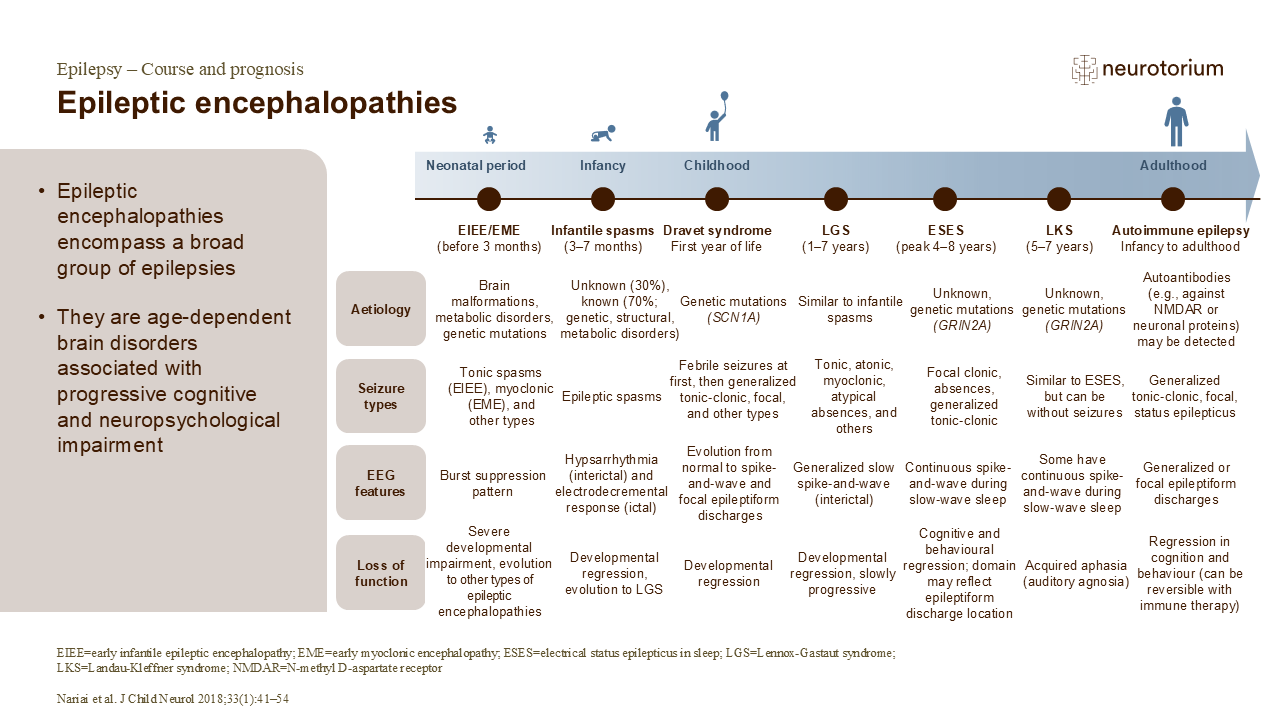
The shared clinical characteristic of epileptic encephalopathies is that they are associated with progressive loss of neurologic function, which may occur rapidly (e.g., infantile spasms, Landau–Kleffner syndrome), or gradually over years (e.g., Lennox–Gastaut syndrome).1 The neurologic changes are separate from the seizures themselves.1 As it is assumed that the electrical epileptic activity itself is contributing to the progressive disturbance of brain functions (particularly in infantile spasms and in electrical status epilepticus in sleep), electroencephalographic abnormalities should be treated even when seizures are fully controlled or absent.1 Available data suggest that early treatment of epileptic encephalopathies is associated with better seizure control and improved cognitive outcomes.1
Reference: