








Index for
slide deck
Introduction

Introduction
Conceptual and operational definition of epilepsy
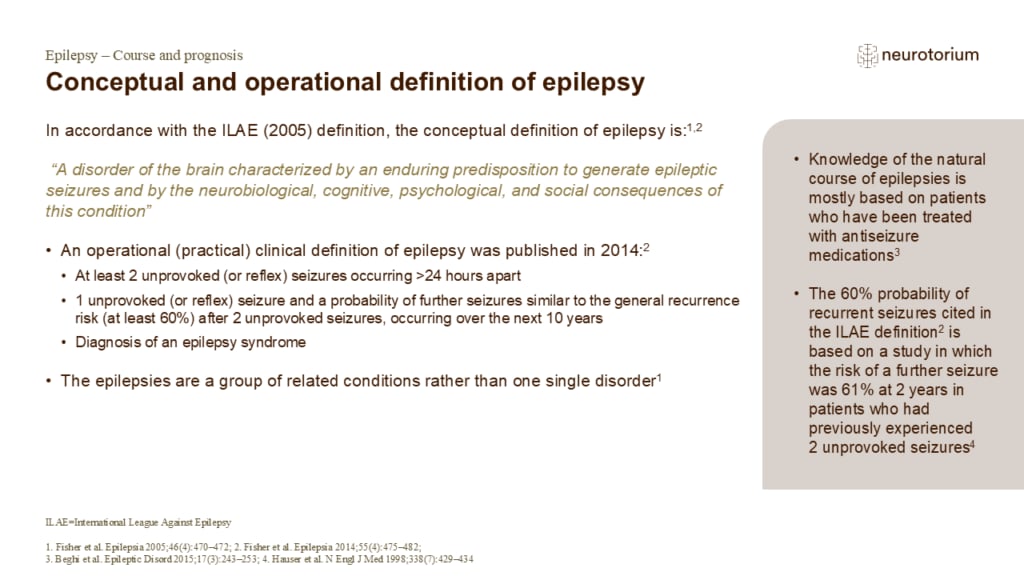
Epilepsy is a diverse group of disorders that share an abnormally increased predisposition to seizures.1 Other elements commonly associated with a diagnosis of epilepsy include enduring alterations in the brain that increase the likelihood of future seizures, and behaviou…
Seizure recurrence after a first unprovoked seizure
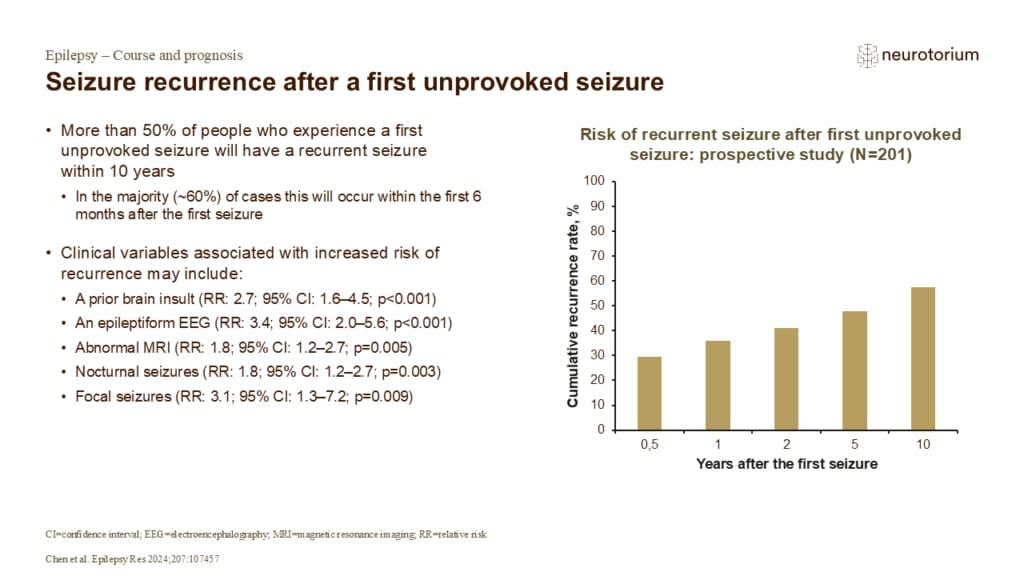
Most seizure recurrences occur within the first two years following the first unprovoked seizure, with recurrence rates of 61.2% within six months, 74.4% within the first year, and 82.6% within the initial two years.1 Clinical variables associated with an increased risk o…
Epilepsy is a common disorder with a substantial burden
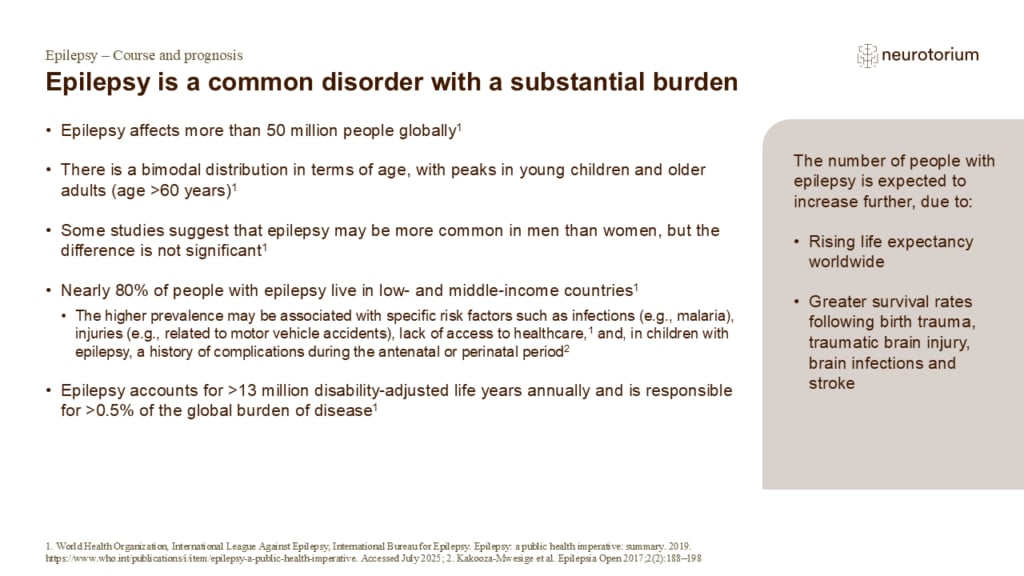
In 2019, WHO published a snapshot of the global epidemiology and burden of epilepsy.1 Although epilepsy affects more than 50 million people worldwide, it was estimated that the majority reside in low- and middle-income countries.1 It was anticipated that the burden of epi…
The course of epilepsy with treatment
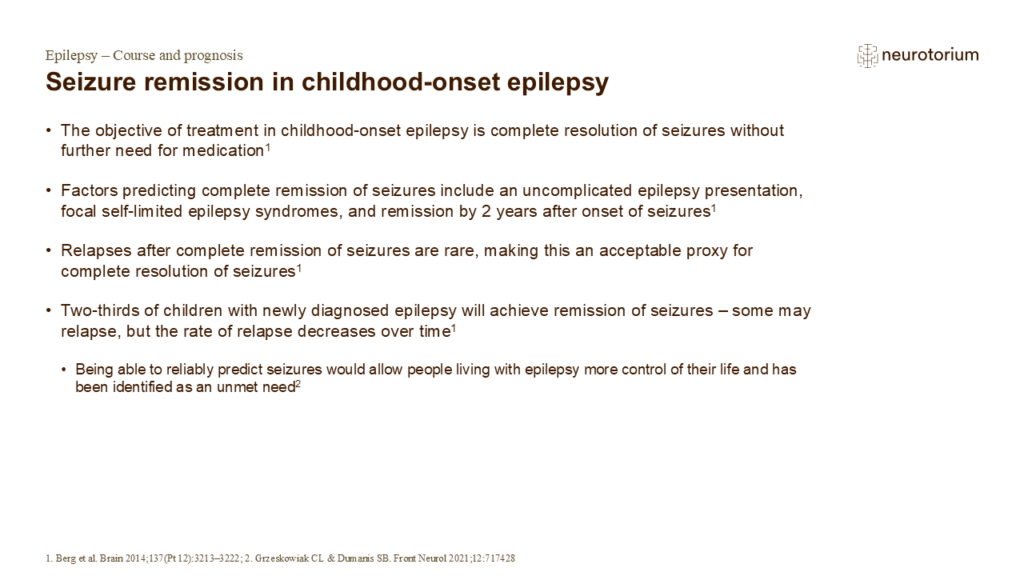
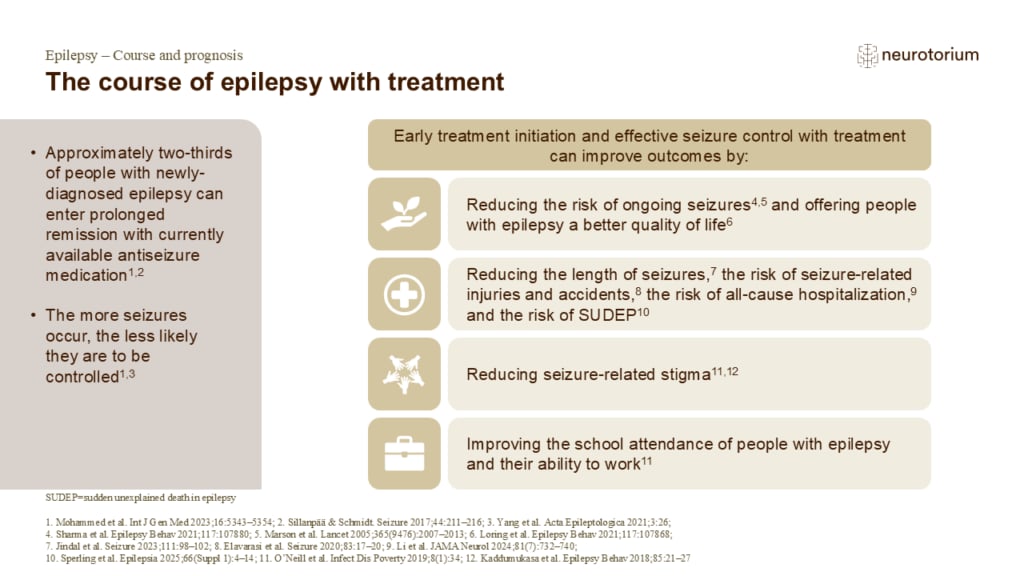
Immediate treatment is associated with lower rates of seizure recurrence and longer time to seizure recurrence than deferred treatment in patients with epilepsy, especially in those who had experienced two or more unprovoked seizures at diagnosis.4,5 However, once treatme…
The impact of epilepsy on the individual
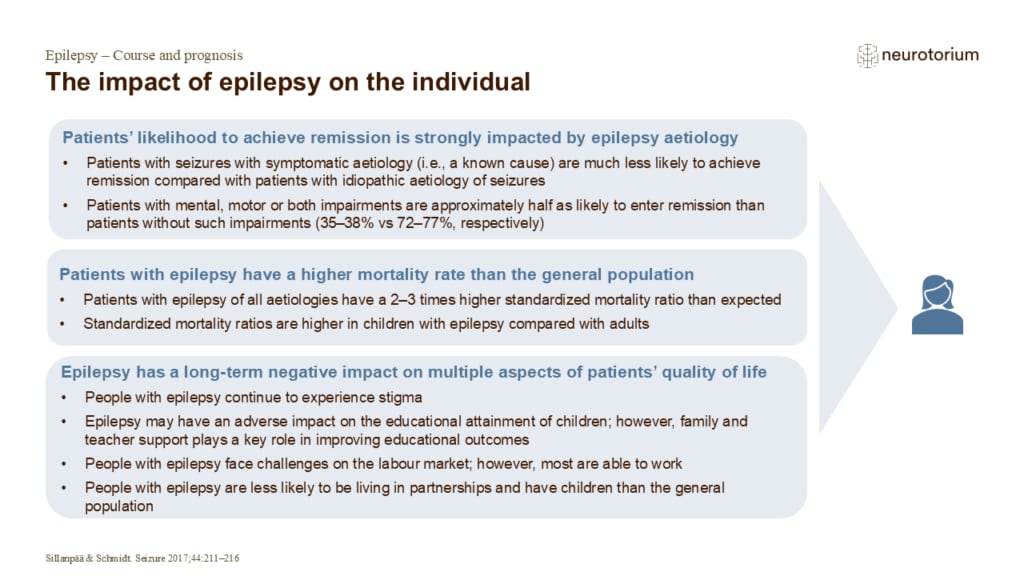
The review of the long-term outcomes for patients receiving treatment for epilepsy concluded that for the vast majority of people with new-onset epilepsy, the outlook is very good: most will become permanently seizure free on and off drugs, mostly within a few years of ph…
Natural course of epilepsy
Natural course of epilepsy
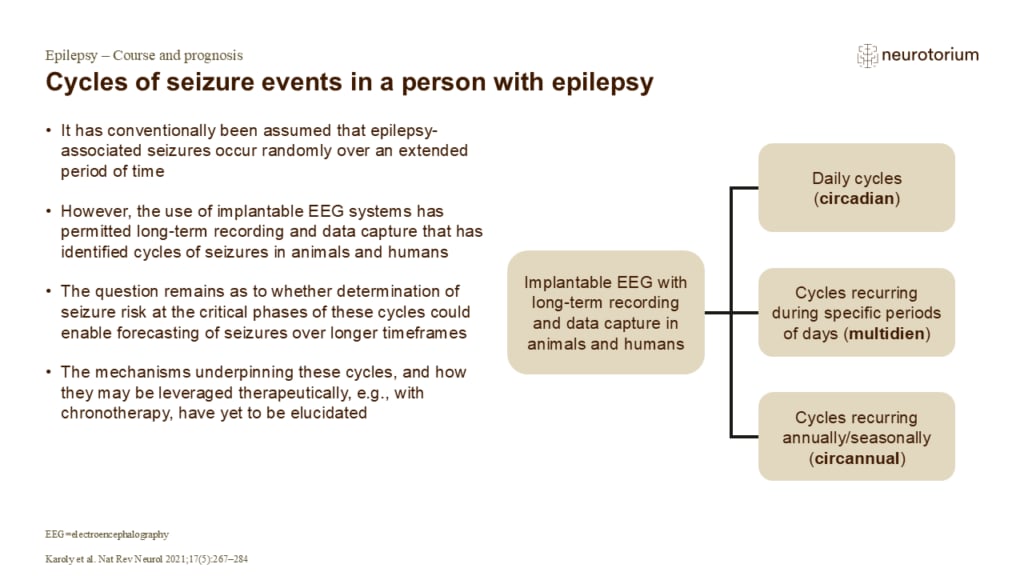
Cycles of seizure events in a person with epilepsy
Evidence suggests that the momentary likelihood of a seizure is co-modulated by cycles running on divergent timescales.1 Circadian seizure cycles are the most prevalent (~90%), with peak seizure incidence occurring at specific times of day with substantial variability, bu…
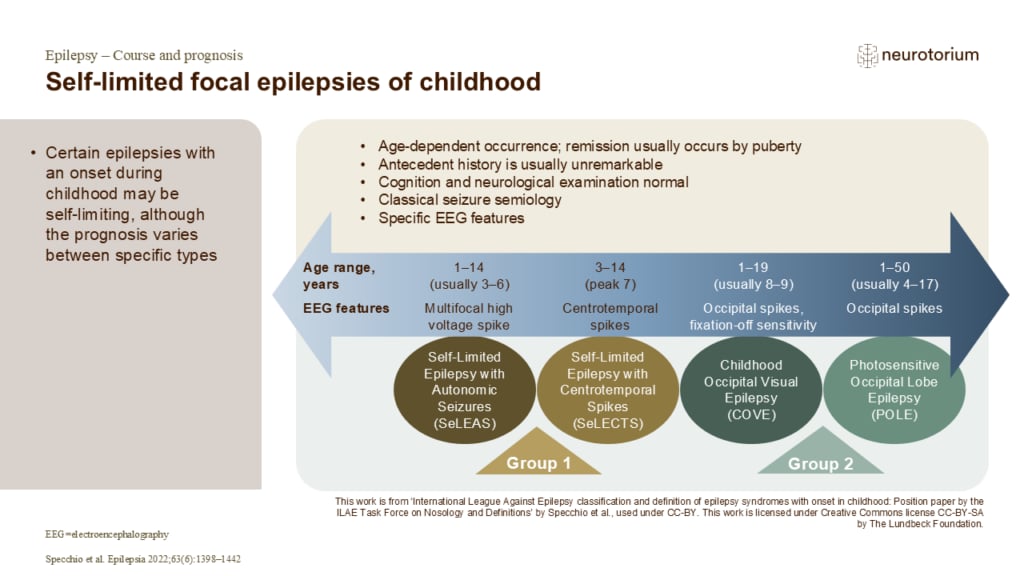
Self-limited focal epilepsies of childhood
Epilepsies beginning in childhood can be broadly divided into three main groups: self-limited focal epilepsies, presented on this and the next slide, generalized epilepsy syndromes, which are thought to have a genetic basis, and developmental and/or epileptic encephalopat…
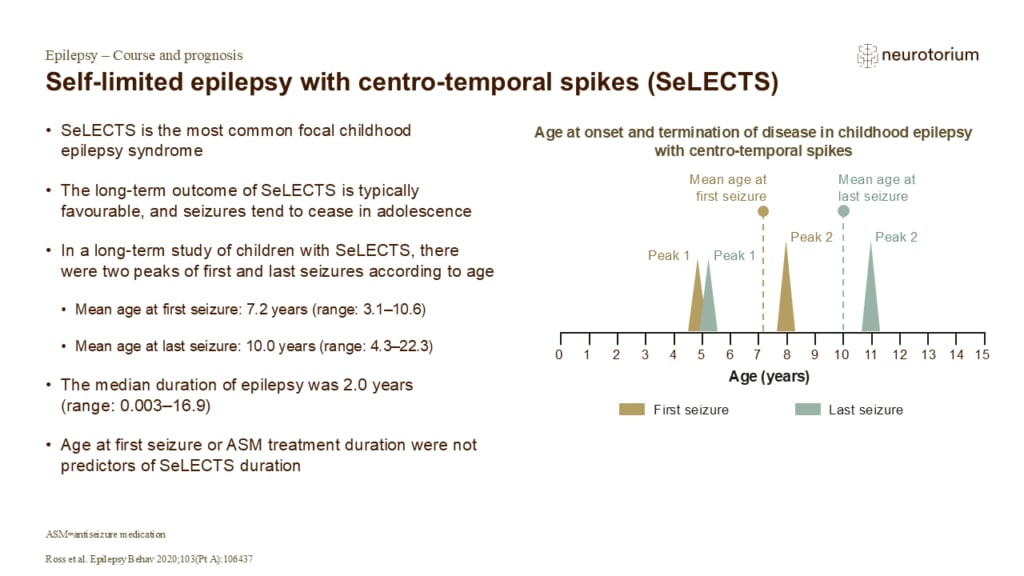
Self-limited epilepsy with centro-temporal spikes (SeLECTS)
A prospective, longitudinal US cohort study evaluated the neuropsychiatric profiles and the seizure course of children diagnosed with self-limited epilepsy with centro-temporal spikes (SeLECTS).1 The study followed 60 children for a mean period of 16 years from epilepsy d…
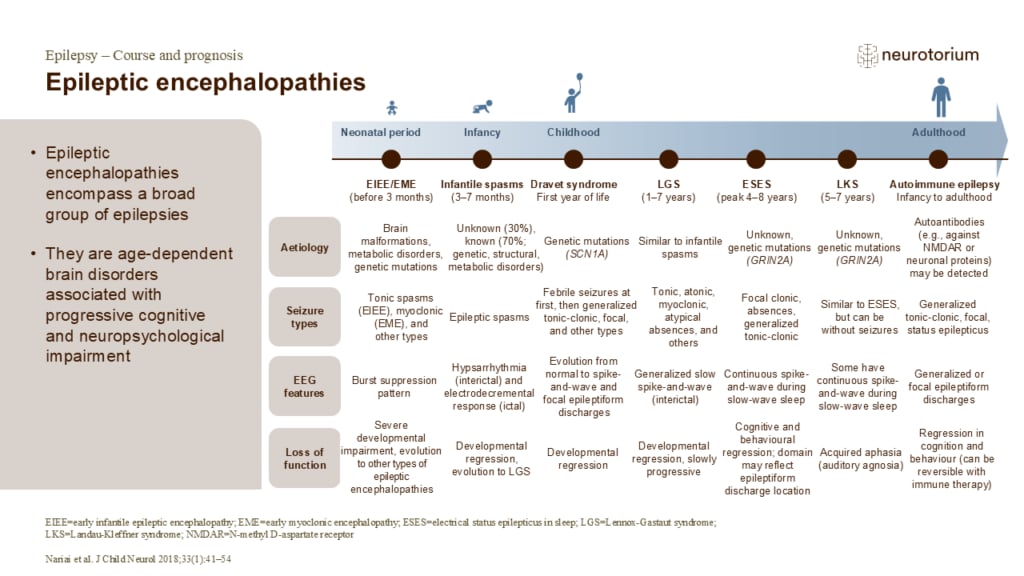
Epileptic encephalopathies
The shared clinical characteristic of epileptic encephalopathies is that they are associated with progressive loss of neurologic function, which may occur rapidly (e.g., infantile spasms, Landau–Kleffner syndrome), or gradually over years (e.g., Lennox–Gastaut syndrome).1…
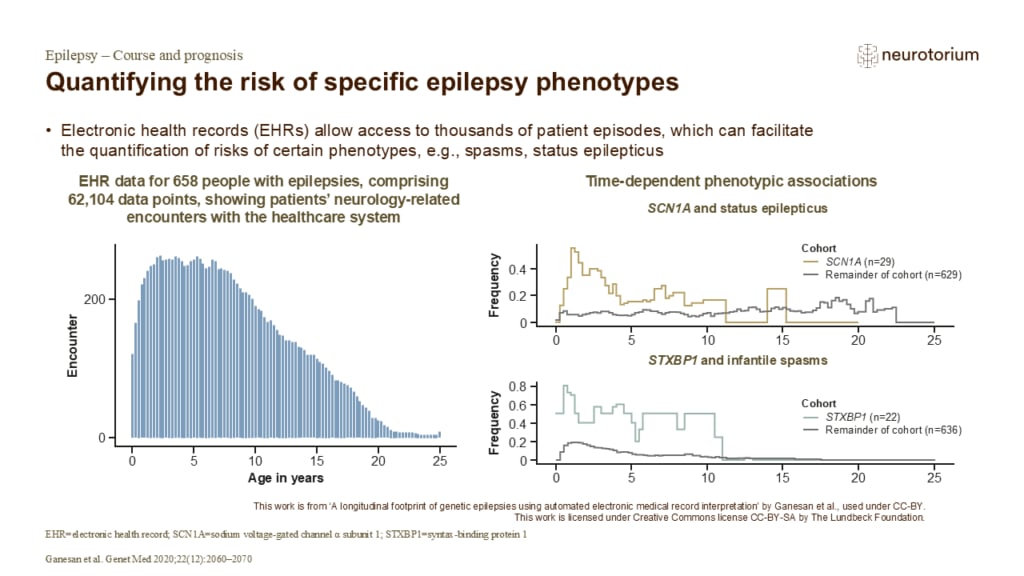
Quantifying the risk of specific epilepsy phenotypes
Electronic health record (EHR) data from a study analyzing data from 658 people with a wide range of epilepsy syndromes and genetic aetiologies showed that healthcare system usage was highest between ages 2 and 7 years.1 In addition, the EHR data showed that the distribut…
Related content
In this video, Professor Dr. Nathalie Jetté reviews depression as a common yet often under-recognized comorbidity in epilepsy.
In this video, Professor Dr. Gretchen Birbeck examines epilepsy-associated stigma as a global public-health challenge
In this video, Professor Dr. Jacqueline French reviews practical, first-line decision-making for anti-seizure medication selection