

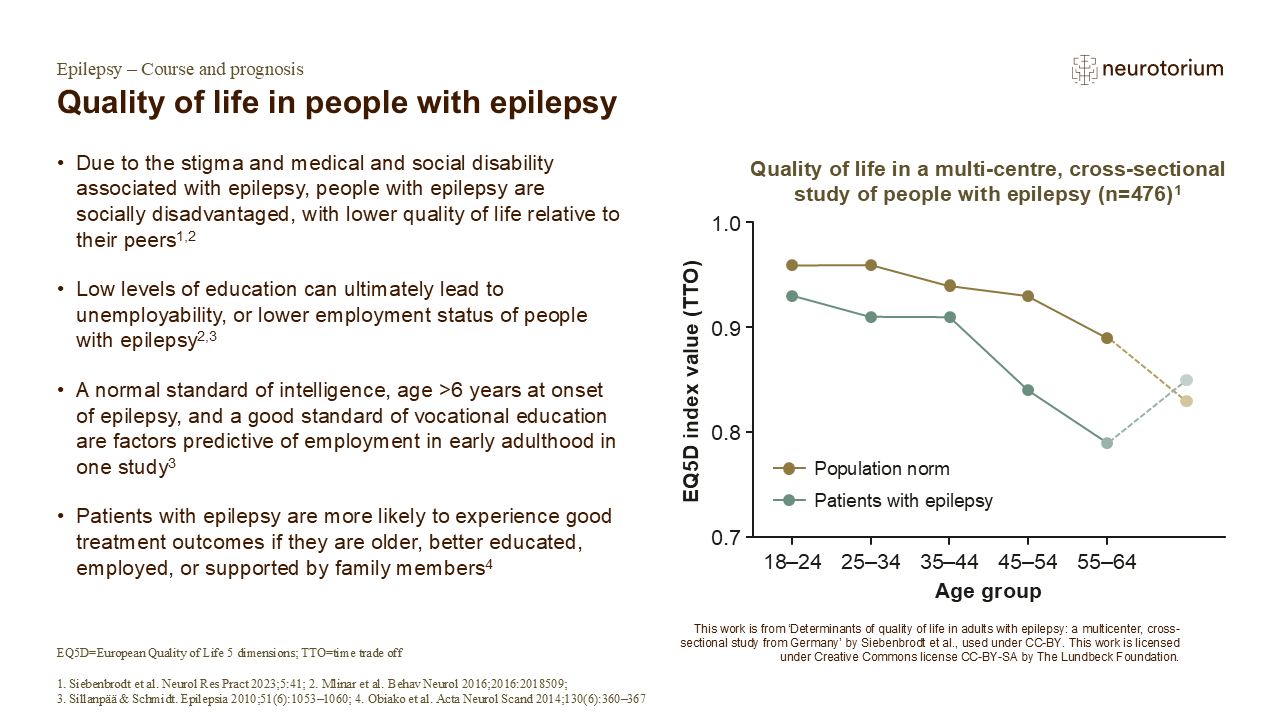
A cross-sectional German study including 476 people with epilepsy evaluated the determinants of the health-related quality of life (HRQoL) in people with epilepsy.1 Study findings showed that factors predictive of a significantly reduced HRQoL in people with epilepsy included high disease burden (specifically, high seizure frequency, poor tolerability of antiseizure medication, comorbid depression and worry about new seizures; p≤0.001 for all), and stigma (p=0.027).1
However, the type of epilepsy syndrome, duration of epilepsy and total length of hospitalization in the previous 3 months were not significantly correlated with a reduced HRQoL, suggesting that the chronicity of epilepsy is not necessarily associated with a reduced quality of life.1
References: