References:
1. Beniczky S, Tatum WO, Blumenfeld H, et al. Seizure semiology: ILAE glossary of terms and their significance. Epileptic Disord 2022; 24 (3): 447‒495.
2. Nascimento FA, Friedman D, Peters JM, et al. Focal epilepsies: update on diagnosis and classification. Epileptic Disord 2023; 25 (1): 1‒17.
3. Goodin DS, Aminoff MJ. Does the interictal EEG have a role in the diagnosis of epilepsy? Lancet 1984; 1 (8381): 837‒839.
4. Tatum WO, Rubboli G, Kaplan PW, et al. Clinical utility of EEG in diagnosing and monitoring epilepsy in adults. Clin Neurophysiol 2018; 129: 1056‒1082.
5. Harden CL, Huff JS, Schwartz TH, et al. Reassessment: neuroimaging in the emergency patient presenting with seizure (an evidence-based review): report of the Therapeutics and Technology Assessment Subcommittee of the American Academy of Neurology. Neurology 2007; 69 (18): 1772‒1780.
6. la Fougère C, Rominger A, Förster S, et al. PET and SPECT in epilepsy: a critical review. Epilepsy Behav 2009; 15: 50‒55.
7. Krey I, Platzer K, Esterhuizen A, et al. Current practice in diagnostic genetic testing of the epilepsies. Epileptic Disord 2022; 24 (5): 765‒786.
8. Fisher RS, Acevedo C, Arzimanoglou A, et al. ILAE official report: a practical clinical definition of epilepsy. Epilepsia 2014; 55 (4): 475‒482.
9. Pellinen J, Foster EC, Wilmshurst JM, et al. Improving epilepsy diagnosis across the lifespan: approaches and innovations. Lancet Neurol 2024; 23 (5): 511‒521.
10. Wolf P, Benbadis S, Dimova PS, et al. The importance of semiological information based on epileptic seizure history. Epileptic Disord 2020; 22 (1): 15‒31.
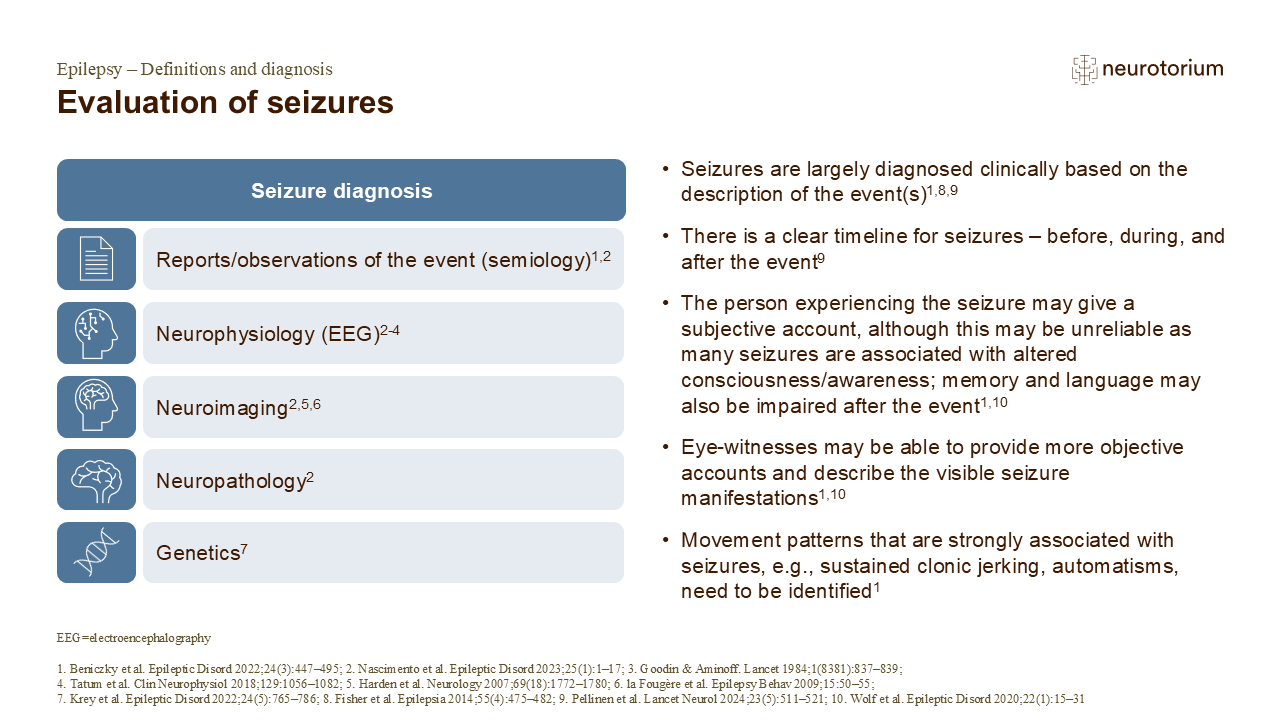
Evaluation of seizures