

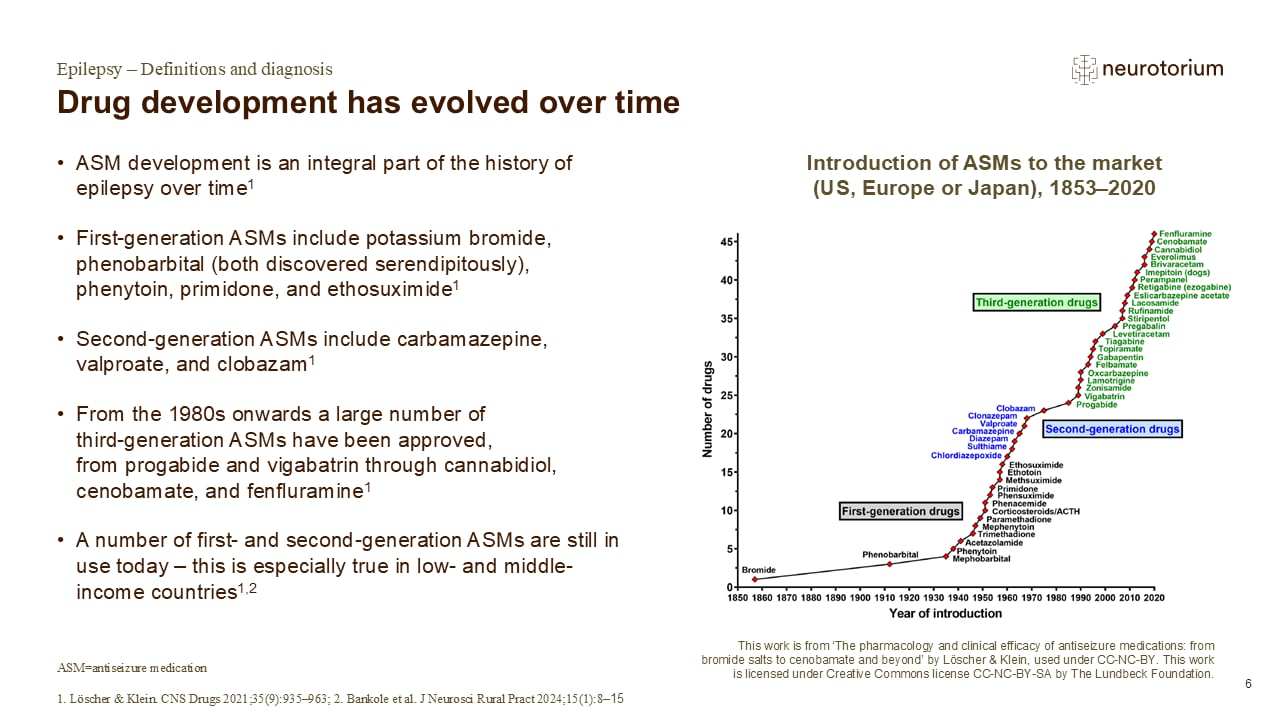
Whereas the effects of phenobarbital and potassium bromide in epilepsy were identified by chance, the discovery and development of phenytoin in the 1930s initiated a systematic search for chemically related and unrelated compounds with efficacy against seizures.1 The first generation of ASMs, which were based on the structure of barbiturates, also include primidone and ethosuximide.1 Phenytoin and ethosuximide are still used for the management of focal seizures and absence seizures, respectively.1
The second generation of ASMs began with the discovery of commonly-used agents such as carbamazepine, valproate, and benzodiazepines between 1960 and 1975.1
The most recent generation of ASMs began with the development of targeted drugs such as vigabatrin, and has continued until the present day.1 The rationale for these ASMs includes more favourable pharmacokinetics, fewer drug‒drug interactions and improved long-term safety profiles.1 However, the percentage of patients achieving seizure freedom with the third-generation ASMs has not increased.1
References:
1. Löscher W, Klein P. The pharmacology and clinical efficacy of antiseizure medications: from bromide salts to cenobamate and beyond. CNS Drugs 2021; 35 (9): 935‒963.
2. Bankole NDA, Dokponou YCH, De Koning R, et al. Epilepsy care and outcome in low- and middle-income countries: A scoping review. J Neurosci Rural Pract 2024; 15 (1): 8–15.