

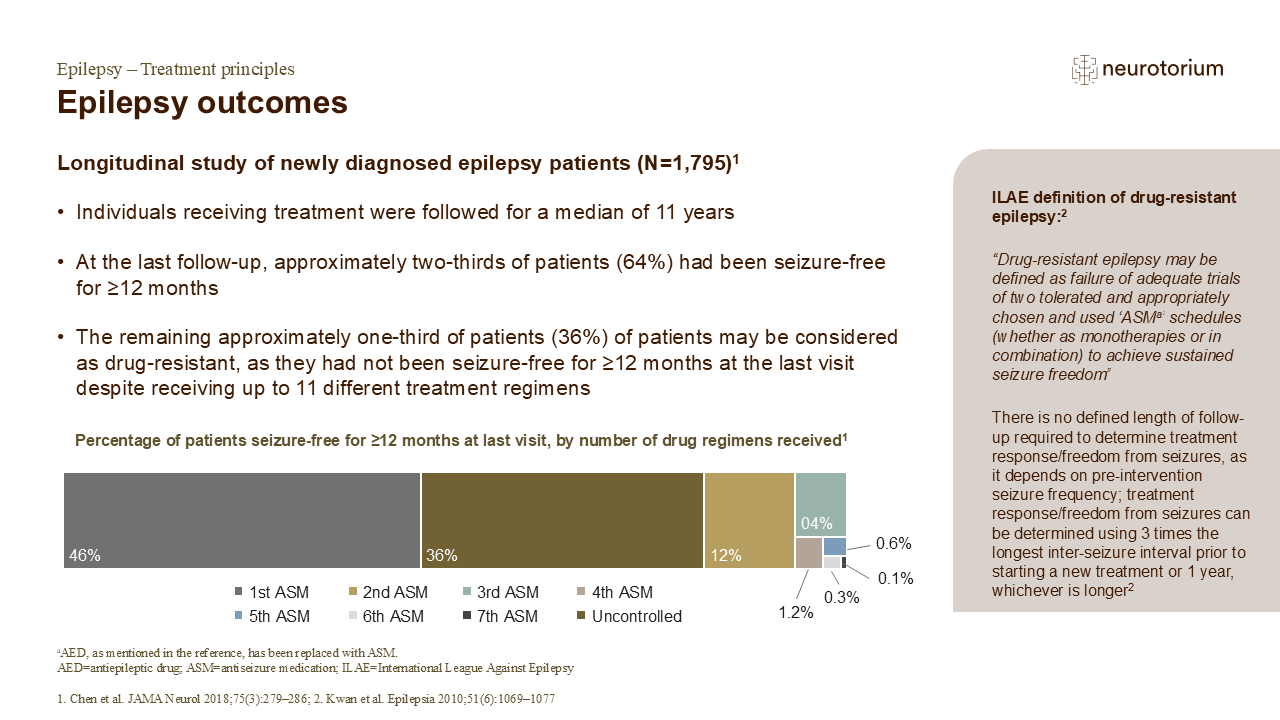
Seizure freedom is defined as freedom from seizures for a minimum of three times the longest pre-intervention interval between seizures (determined from seizures occurring within the past 12 months) or 12 months, whichever is longer.2 Treatment failure is defined as recurrent seizure(s) after an intervention has been adequately applied.2 If a patient has been seizure-free for three times the pre-intervention inter-seizure interval but for less than 12 months, seizure control is considered undetermined.2 If the patient experiences another seizure before the end of the 12-month period, the treatment is considered to have failed, even if the seizure frequency has reduced compared with baseline.2 Even a therapeutic intervention that does not deliver freedom from seizures may thus provide a clinically meaningful reduction in seizure frequency.2
Other dimensions of treatment outcome in epilepsy may include factors such as psychosocial outcomes and the level of patient satisfaction.2 From a patient-centered perspective, patients’ satisfaction with their treatment should be the ultimate criterion defining the success or failure of a particular therapeutic approach.2
References: