

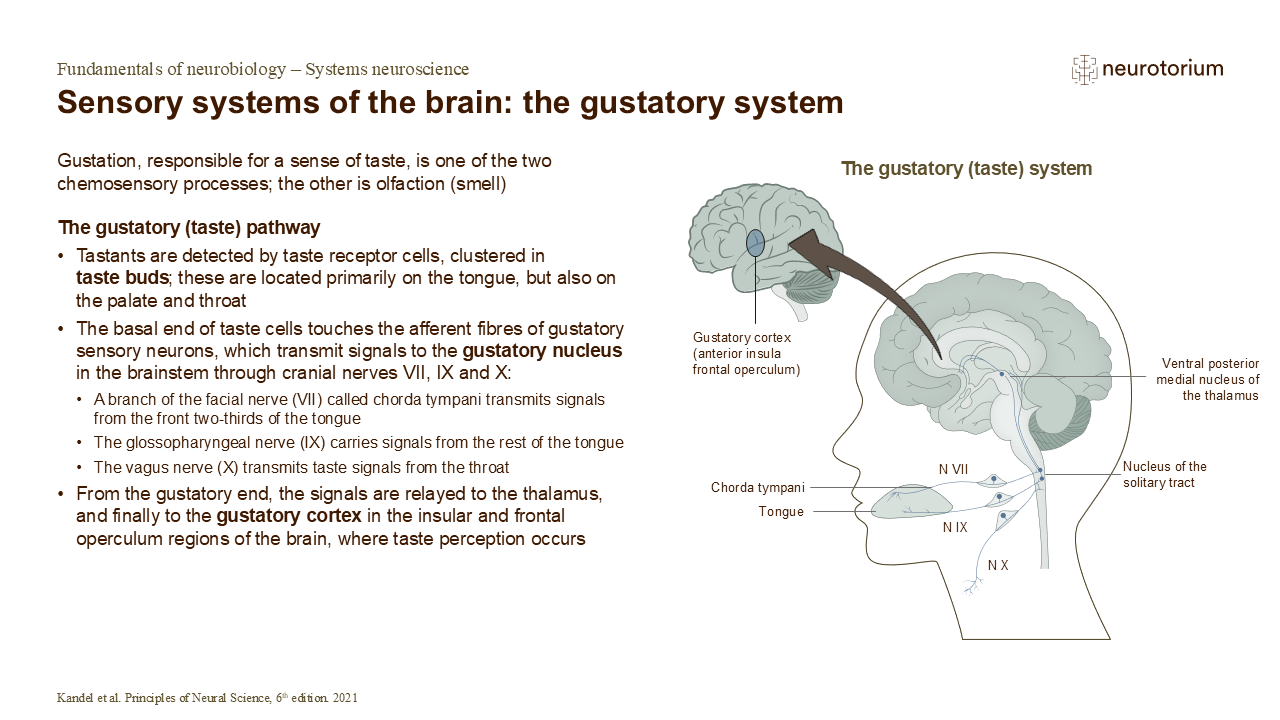
The gustatory system is a specialized sensory system dedicated to evaluating potential food sources, and is the main driver of feeding decisions.1 In contrast to the olfactory system, which can distinguish millions of kinds of odours, the gustatory system can only distinguish five basic taste qualities: sweet, salty, bitter, sour, and umami (the flavour associated with the ‘savoury’ taste of amino acids).1 While limited, this taste palate is sufficient to meet all essential dietary requirements:
- Sweet taste promotes the consumption of foods rich in energy;
- Salty taste promotes a diet with correctly balanced electrolytes;
- Bitter taste offers warning against the ingestion of toxic or otherwise noxious compounds;
- Sour taste suggests the ingested food may not be fully ripe, or may be fermented;
- Umami taste promotes sufficient intake of protein.1
Taste is often used interchangeably with flavour.1 However, while taste only refers to the five basic qualities recognized by the gustatory system, flavour is a result of the integration of multisensory inputs from gustatory, olfactory and somatosensory inputs.1