

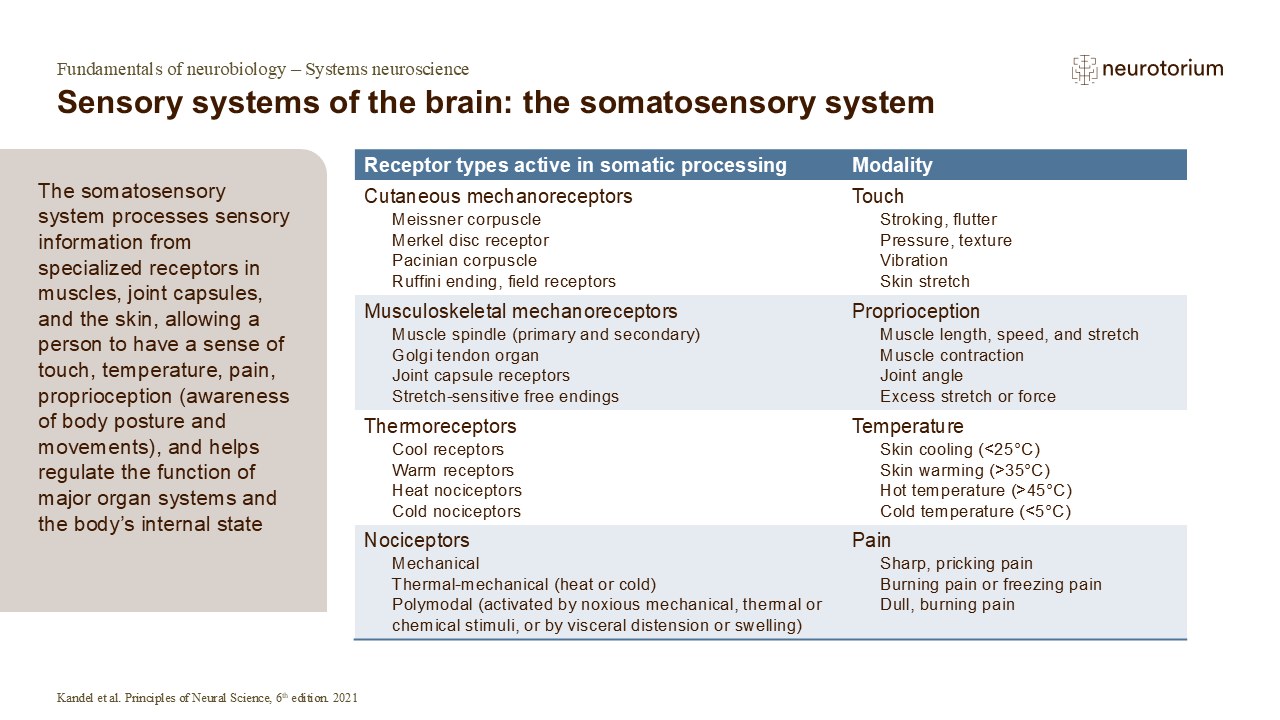
The primary sensory cells of the somatosensory system are the dorsal root ganglion (DRG) neurons.1 Individual neurons within a DRG respond selectively to specific types of stimuli because of specific morphological and molecular features of their peripheral terminals.1
When a mechanical, thermal or chemical stimulus is registered by its corresponding somatosensory receptor in the skin, muscle or viscera, it is converted into a depolarizing receptor potential and subsequently a stream of action potentials, which travel down the peripheral nerve fibre from the distal terminal of the DRG neuron to its cell body, contained within a ganglion on the dorsal root of a spinal or a cranial nerve, adjacent to the spinal cord or brainstem.1
Peripheral nerve fibres are divided into four functional groups based on their axon diameter and myelination, conduction velocity, and whether they are sensory or motor in nature (sensory fibres from muscle [Group I-IV] are classified based on their diameter from large to small, whereas sensory fibres from the skin [Aα, Aβ, Aδ, or C] are classified by conduction velocity from high to low).1 Group I/Aα fibres innervate primary muscle spindle receptors and Golgi tendon organs, Group II/Aβ fibres innervate secondary spindle endings and receptors in joint capsules, and Groups III/Aδ and IV/C signal thermal or painful stimuli.1