

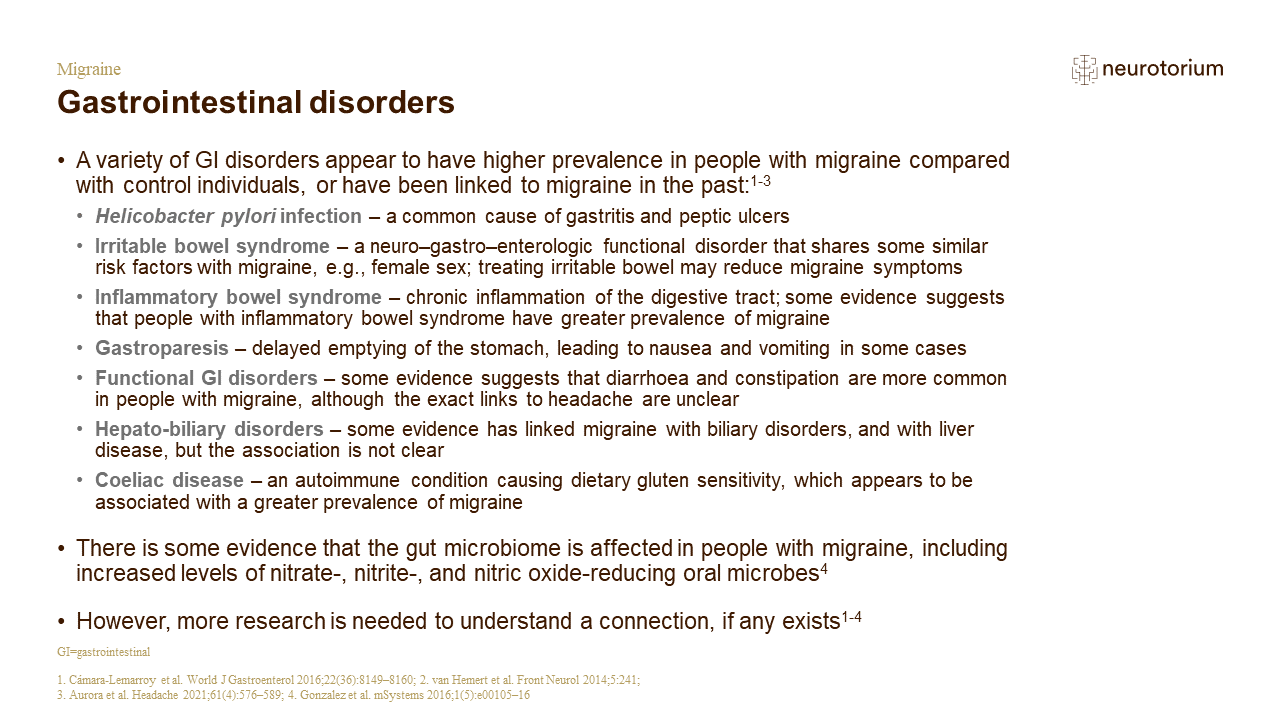
A variety of gastrointestinal (GI) disorders have been investigated in people with migraine, and in some cases people with migraine are at a higher risk of GI conditions than the general population.[Cámara-Lemarroy et al., 2016; van Hemert et al., 2014] The possible involvement of the gut–brain axis in the pathology of migraine has led some to explore the possibility of probiotic treatments for migraine symptoms.[van Hemert et al., 2014] In a variety of studies, probiotics have been shown to improve the functioning of the gut.[van Hemert et al., 2014] An exploratory, uncontrolled study in 40 people with migraine found that a combination of probiotics and nutritional supplements, taken over a period of three months, appeared to increase quality of life scores, and migraine remitted in 60% of participants.[Sensenig et al., 2001]
Other references used on slide:
Aurora SK, Shrewsbury SB, Ray S, et al. A link between gastrointestinal disorders and migraine: insights into the gut-brain connection. Headache 2021; 61 (4): 576–589.