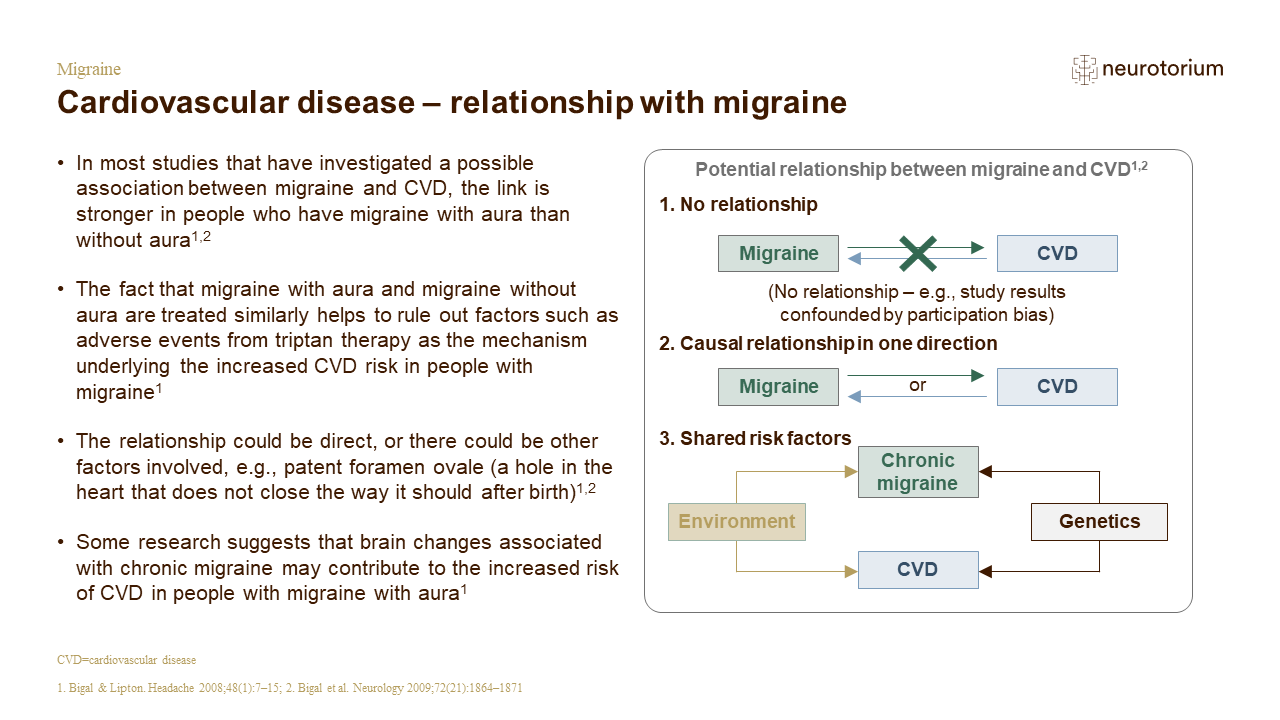
An emerging body of data suggests that, compared with healthy controls, people with migraine are at an increased risk of structural brain changes over time.[Bashir et al., 2013] These structural changes have been linked to an increased risk of cardiovascular conditions, and stroke.[Bigal & Lipton, 2008; Bigal et al., 2009] Repeated episodes of cortical spreading depression (CSD) may predispose a person to ischaemia, perfusion changes, and chronic inflammation – potentially accounting for the greater risk of cardiovascular events seen in people with migraine with aura, compared to migraine without aura.[Bigal et al., 2009] However, there are common comorbidities, and environmental and biological risk factors, that are shared between migraine and CVD – potentially accounting for the association of migraine and CVD risk in the absence of a direct causal relationship.[Bigal et al., 2009] More research is needed to understand the complexity of CVD risk in people with migraine.[Bigal et al., 2009]
Cardiovascular disease – relationship with migraine