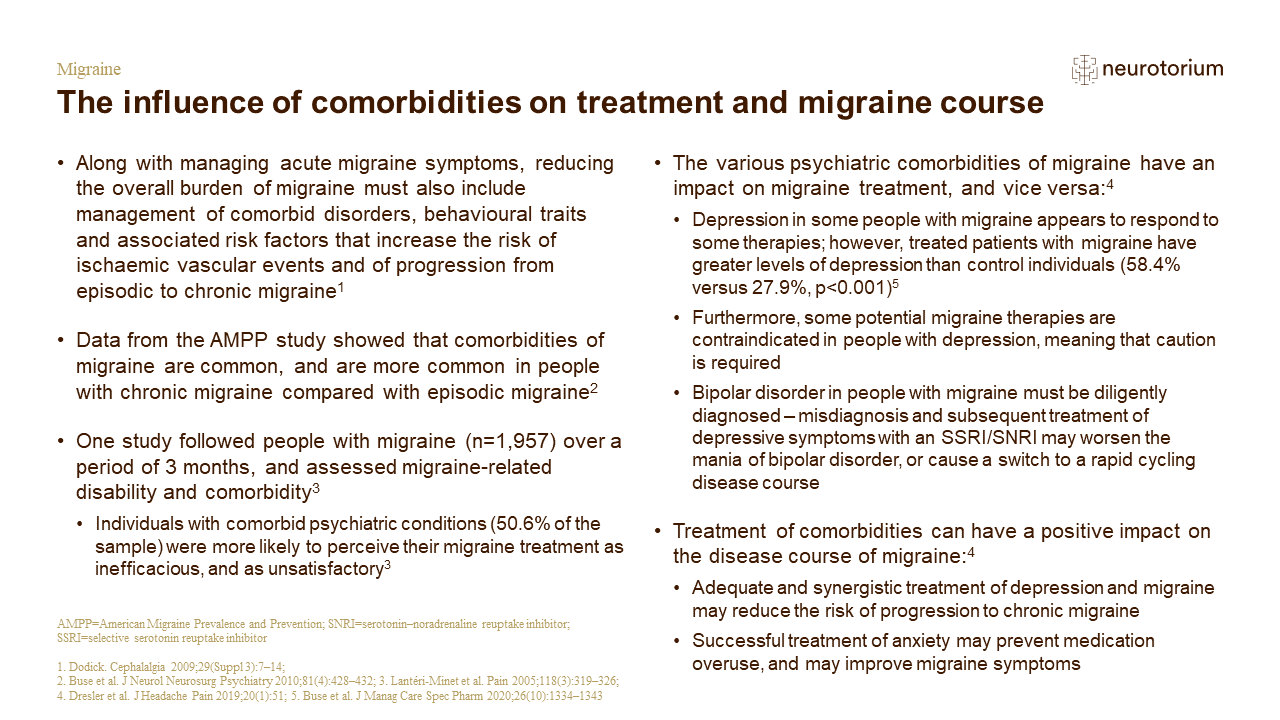
The complex bidirectional interaction of migraine with its comorbidities, and the interactions of different comorbidities, complicates the treatment process.[Dresler et al., 2019] However, there is some evidence that successful treatment of migraine comorbidities may alleviate some of the disease burden, and may positively influence the disease course of migraine.[Dresler et al., 2019] Ultimately, successful management of the comorbidities of migraine, and the resulting relief of some of the disease burden on the patient, requires a multidisciplinary, personalised treatment approach.[Dresler et al., 2019]
Reference:
Dresler T, Caratozzolo S, Guldolf K, et al. Understanding the nature of psychiatric comorbidity in migraine: a systematic review focused on interactions and treatment implications. J Headache Pain 2019; 20 (1): 51.
Other references used on slide:
Buse DC, Manack A, Serrano D, et al. Sociodemographic and comorbidity profiles of chronic migraine and episodic migraine sufferers. J Neurol Neurosurg Psychiatry 2010; 81 (4): 428–432.
Buse DC, Yugrakh MS, Lee LK, et al. Burden of illness among people with migraine and ≥ 4 monthly headache days while using acute and/or preventive prescription medications for migraine. J Manag Care Spec Pharm 2020; 26 (10): 1334–1343.
Dodick DW. Review of comorbidities and risk factors for the development of migraine complications (infarct and chronic migraine). Cephalalgia 2009; 29 (Suppl 3): 7–14.
Lantéri-Minet M, Radat F, Chautard MH, Lucas C. Anxiety and depression associated with migraine: influence on migraine subjects’ disability and quality of life, and acute migraine management. Pain 2005; 118 (3): 319–326.