

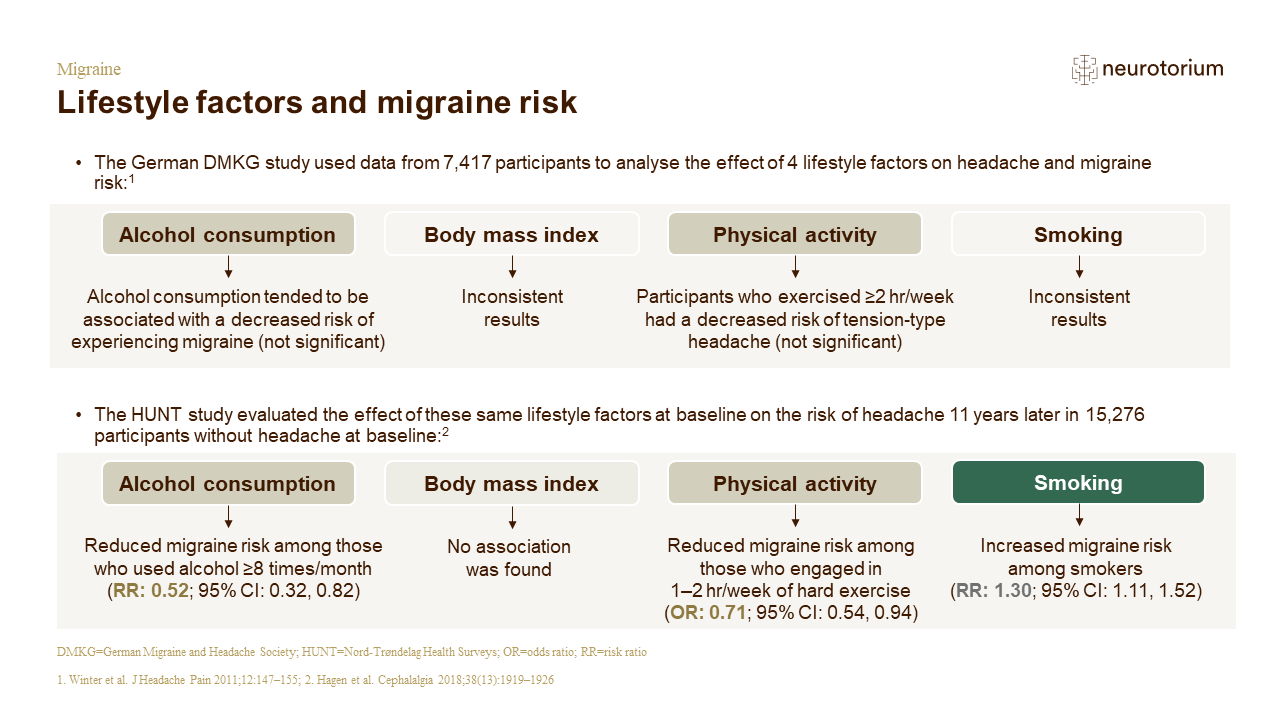
The negative health effects of physical inactivity, alcohol overuse and misuse, smoking, and obesity are widely known. However, the interaction of these lifestyle factors with migraine risk is relatively poorly studied.[Hagen et al., 2018] In the two large-scale longitudinal studies outlined on the slide, migraine risk was found to be reduced among moderate alcohol users compared with abstainers, and among those who engaged in weekly physical exercise compared with those who did not.[Winter et al., 2011; Hagen et al., 2018] Whilst the studies outlined on the slide found inconsistent results regarding body mass index and migraine risk,[Winter et al., 2011; Hagen et al., 2018] other studies have specifically focused on this; results from the Women’s Health and Migraine (WHAM) study results suggest that participation in a behavioral weight-loss intervention reduced the frequency of migraine headaches.[Bond et al., 2018]
Smoking has been linked to an increased risk of developing migraine.[Hagen et al., 2018] However, different studies have found conflicting data about smoking as a risk factor for migraine.[Hagen et al., 2018]