

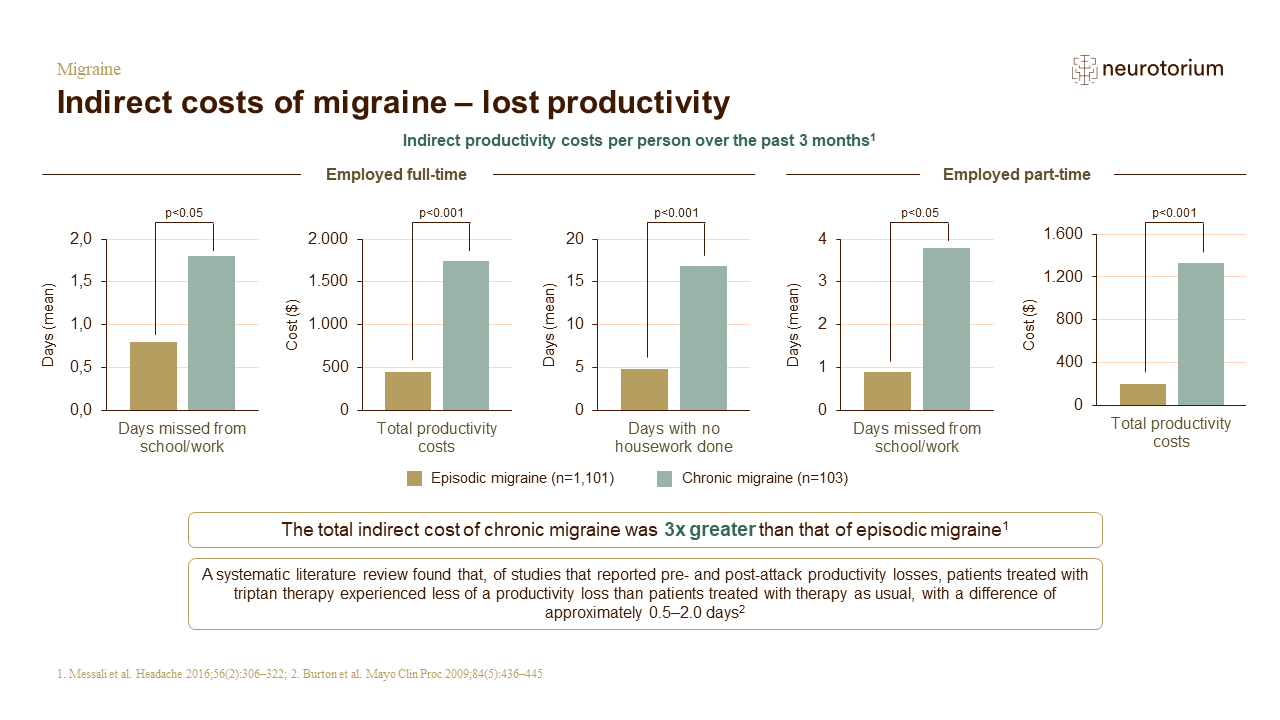
The graphs on the slide summarise some of the data from a web-based study in the USA that compared direct and indirect costs of episodic and chronic migraine.[Messali et al., 2016] From 2,143 responders to the survey (68.1% response rate), 1,205 patients with migraine were included in the analysis: 1,101 patients with episodic migraine, and 104 patients with chronic migraine (one of whom was not included in the analyses presented on the slide).[Messali et al., 2016] The mean annual total (direct and indirect) cost of headache among patients with chronic migraine was $8,243, compared with $2,649 among patients with episodic migraine.[Messali et al., 2016]
A systematic literature review of the impact of migraine on workplace productivity found many studies highlighting the deleterious effect of migraine on productivity.[Burton et al., 2009] As stated on the slide, the review found good evidence that certain treatments reduced productivity losses.[Burton et al., 2009] However, the effect of preventive migraine treatment on lost productivity at work was less consistent, with some studies reporting a small but significant improvement, whilst others found no significant difference.[Burton et al., 2009]