

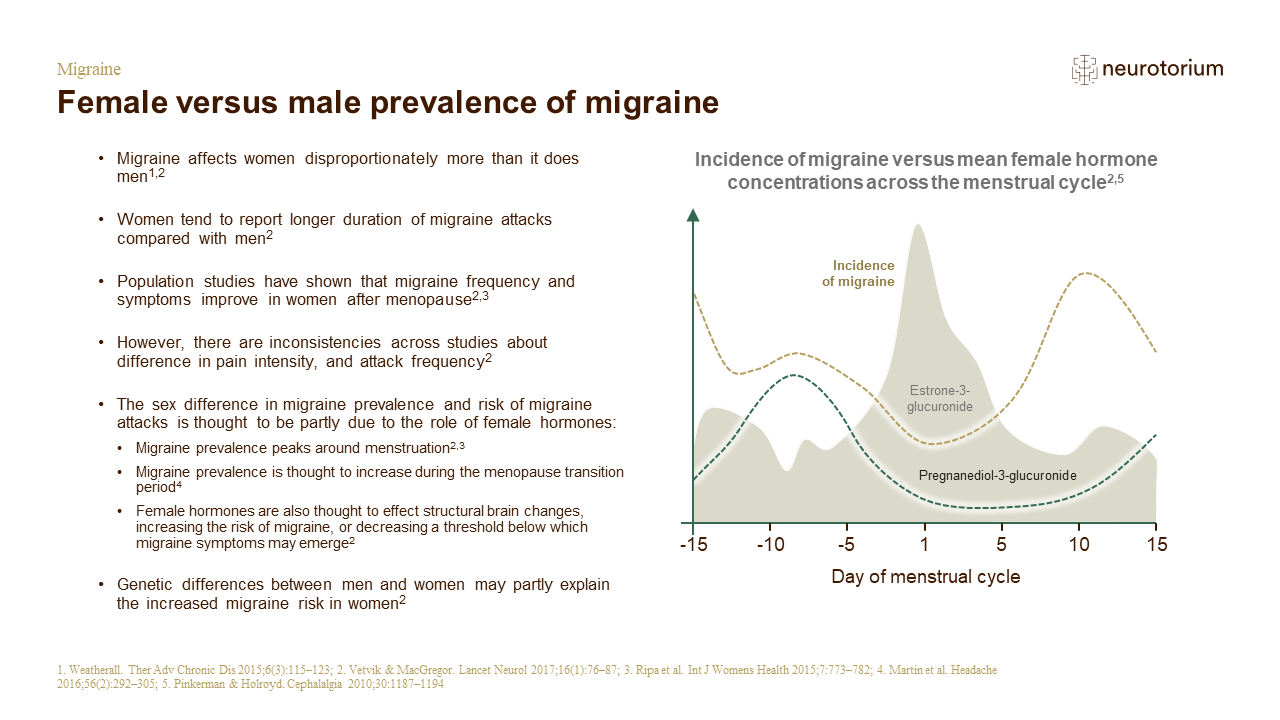
Migraine has a higher prevalence among women than it does among men.[Weatherall, 2015; Vetvik & MacGregor, 2017] A number of studies have found that women with migraine report a higher headache-related disability than men.[Vetvik & MacGregor, 2017] It has been argued that, because women tend to spend more time with multiple responsibilities such as childcare, maintaining a home, and employment, migraine will interfere with more areas of functioning as measured by rating scales compared with men.[Vetvik & MacGregor, 2017]
Other references used on slide:
Martin VT, Pavlovic J, Fanning KM, et al. Perimenopause and menopause are associated with high frequency headache in women with migraine: results of the American Migraine Prevalence and Prevention study. Headache 2016; 56 (2): 292–305.