

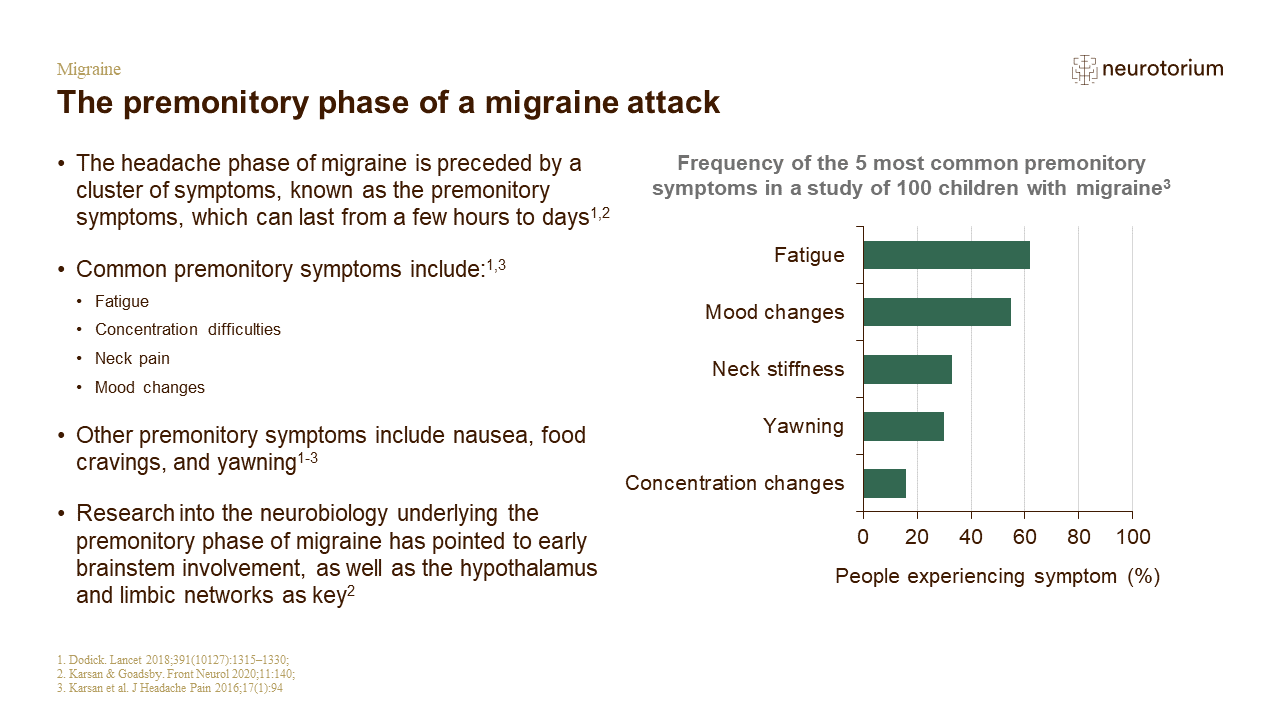
A study used an electronic diary system to allow people with migraine to log symptoms throughout the day, and retrospectively analysed the association of premonitory symptoms with the emergence of headache symptoms.[Giffin et al., 2003] The study concluded that people with migraine can accurately predict the occurrence of migraine headache by the appearance of certain premonitory symptoms.[Giffin et al., 2003] The most common premonitory symptoms were fatigue (72% of attacks), concentration difficulties (51% of attacks), and stiff neck (50% of attacks).[Giffin et al., 2003]
Other references used on slide:
Dodick DW. Migraine. Lancet 2018; 391 (10127): 1315–1330.
Karsan N, Goadsby PJ. Imaging the premonitory phase of migraine. Front Neurol 2020; 11: 140.
Karsan N, Prabhakar P, Goadsby PF. Characterising the premonitory stage of migraine in children: a clinic-based study of 100 patients in a specialist headache service. J Headache Pain 2016; 17 (1): 94.