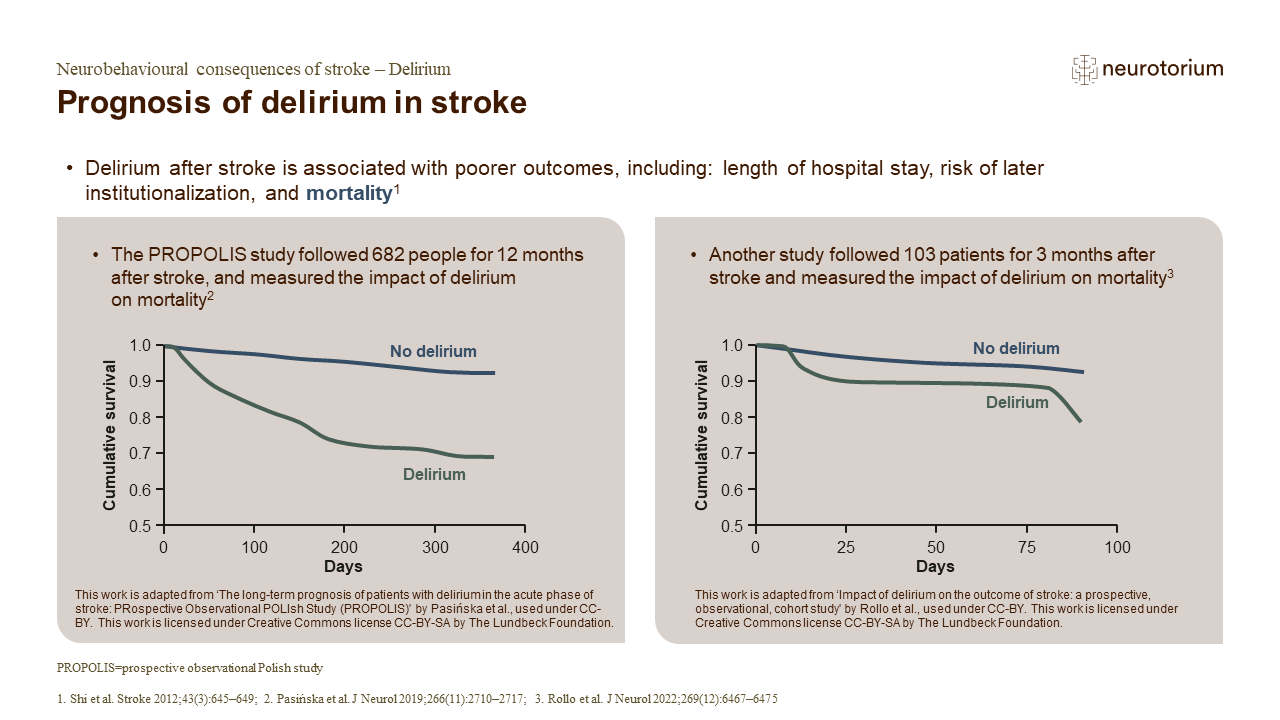
Although common in people after stroke, the effect of delirium on clinical outcomes in the long term has been poorly studied.2 To address this deficit, the PROPOLIS study (prospective observational Polish study) followed a large group of people (n=682) after stroke, and studied the effect of delirium on discharge destination, recurrence of stroke, cardiovascular events, functional status, nursing home admission, and death.2 After correcting for several potential confounding factors (because delirium could be a proxy for severe illness), the rates of mortality – both at 3- and 12-months – were greater among people who had experienced delirium compared with those who had not, increasing the mortality rate by 2–3 times.2
Prognosis of delirium in stroke