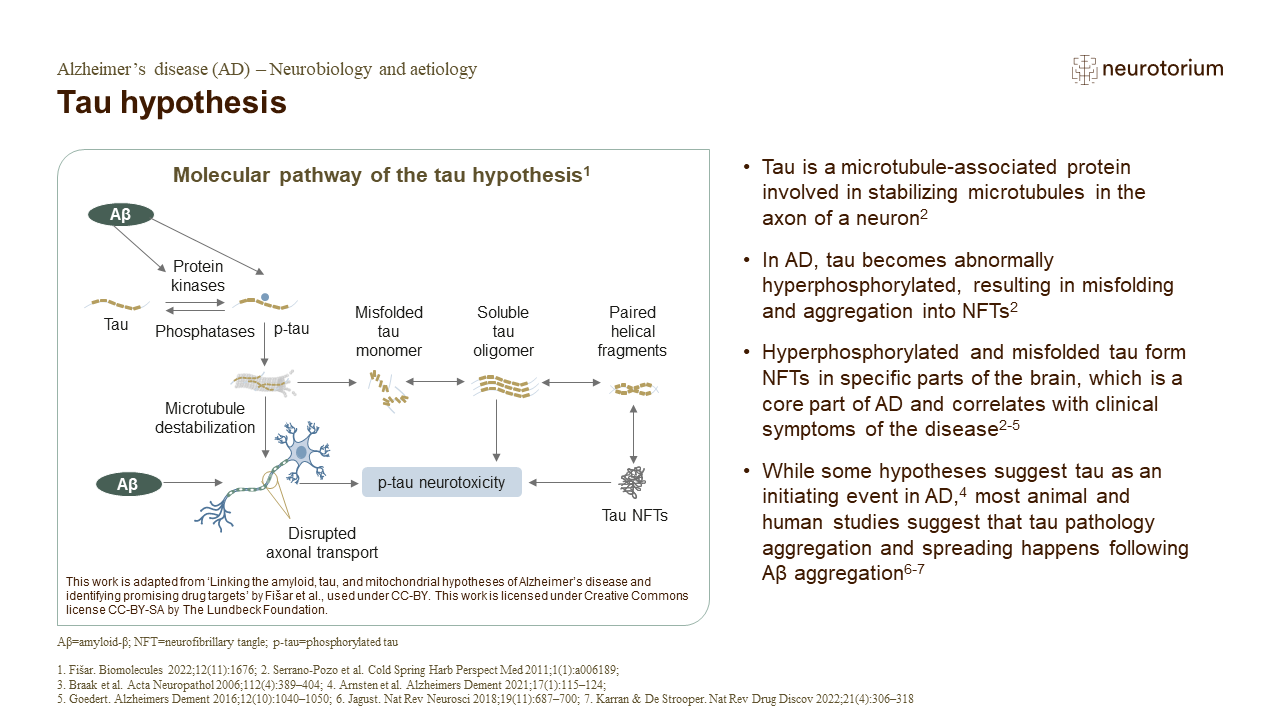
The tau hypothesis is based on evidence that tau NFTs consist of p-tau.1 According to the tau hypothesis, tau NFTs precede the development of Aß, and the initiation of neurodegeneration is caused by the destabilization of microtubules and neurotoxic effects of p-tau and its aggregates.1,4 Therapeutic strategies related to the tau hypothesis include microtubule stabilization, inhibition of intracellular transfer and uptake of tau, inhibition of protein kinase and activation of phosphatase, modulation of tau glycosylation, inhibition of p-tau aggregation, and targeting p-tau degradation.1
References:
1.Fišar Z. Linking the amyloid, tau, and mitochondrial hypotheses of Alzheimer’s Disease and identifying promising drug targets. Biomolecules 2022; 12 (11): 1676.
2.Serrano-Pozo A, Frosch MP, Masliah E, Hyman BT. Neuropathological alterations in Alzheimer disease. Cold Spring Harb Perspect Med 2011; 1 (1): a006189.
3.Braak H, Alafuzoff I, Arzberger T, et al. Staging of Alzheimer disease-associated neurofibrillary pathology using paraffin sections and immunocytochemistry. Acta Neuropathol 2006; 112 (4): 389–404.
4.Arnsten AFT, Datta D, Del Tredici K, Braak H. Hypothesis: tau pathology is an initiating factor in sporadic Alzheimer’s disease. Alzheimers Dement 2021; 17 (1): 115–124.
5.Goedert M. The ordered assembly of tau is the gain-of-toxic function that causes human tauopathies. Alzheimers Dement 2016; 12 (10): 1040–1050.
6.Jagust W. Imaging the evolution and pathophysiology of Alzheimer disease. Nat Rev Neurosci 2018; 19 (11): 687–700.
7.Karran E, De Strooper B. The amyloid hypothesis in Alzheimer disease: new insights from new therapeutics. Nat Rev Drug Discov 2022; 21 (4): 306–318.