

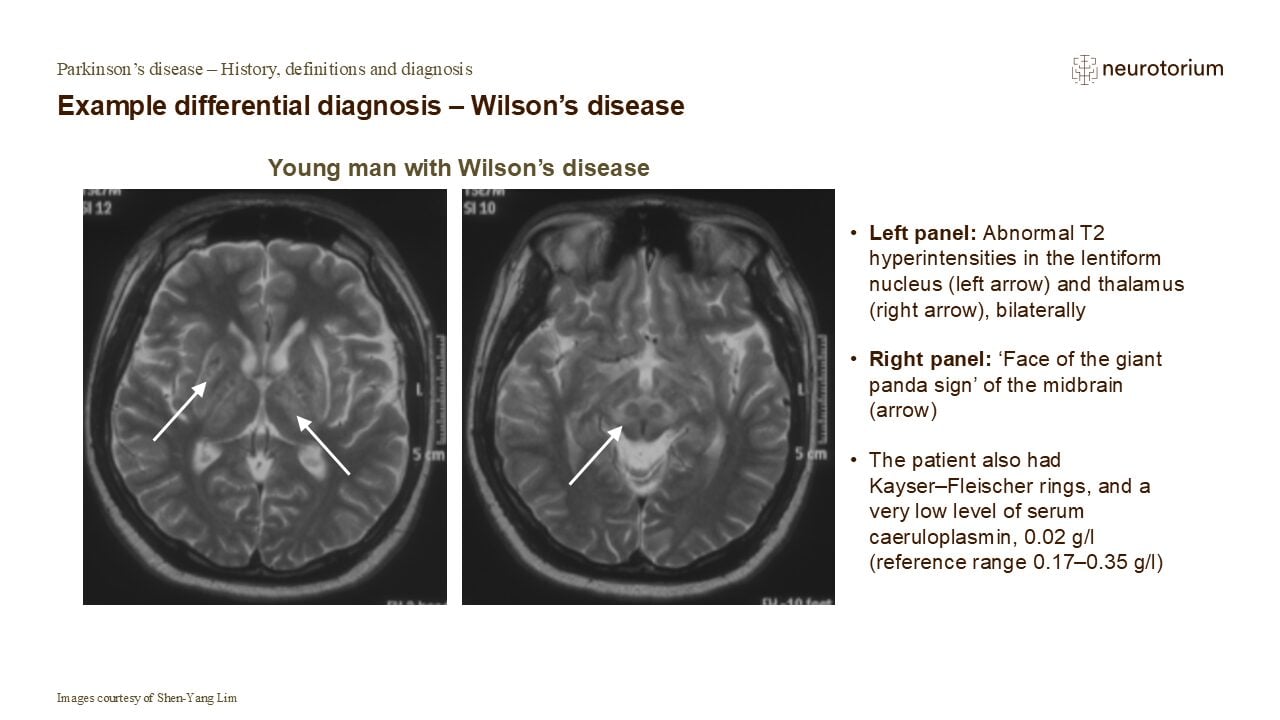
Wilson’s disease (WD) is a disorder of copper metabolism, and was first identified in 1912.1 Clinically, WD can cause neurologic, psychiatric, and hepatic problems.1 The symptoms can include tremor, dystonia and/or parkinsonism, which makes confirmation of the diagnosis of WD, and therefore ruling out PD, important.1 The main tests for diagnosis of neurologic/neuropsychiatric WD are: slit lamp examination by an ophthalmologist, plasma levels of ceruloplasmin, 24-hour urine copper assay, and brain MRI scan.2 Diagnosis of WD is increasingly done by genetic testing for mutations in the ATP7B gene.1
References:
1.Bandmann O, Weiss KH, Kaler SG. Wilson’s disease and other neurological copper disorders. Lancet Neurol 2015; 14 (1): 103–113.
2.Hedera. Update on the clinical management of Wilson’s disease. Appl Clin Genet 2017; 10: 9–19.