

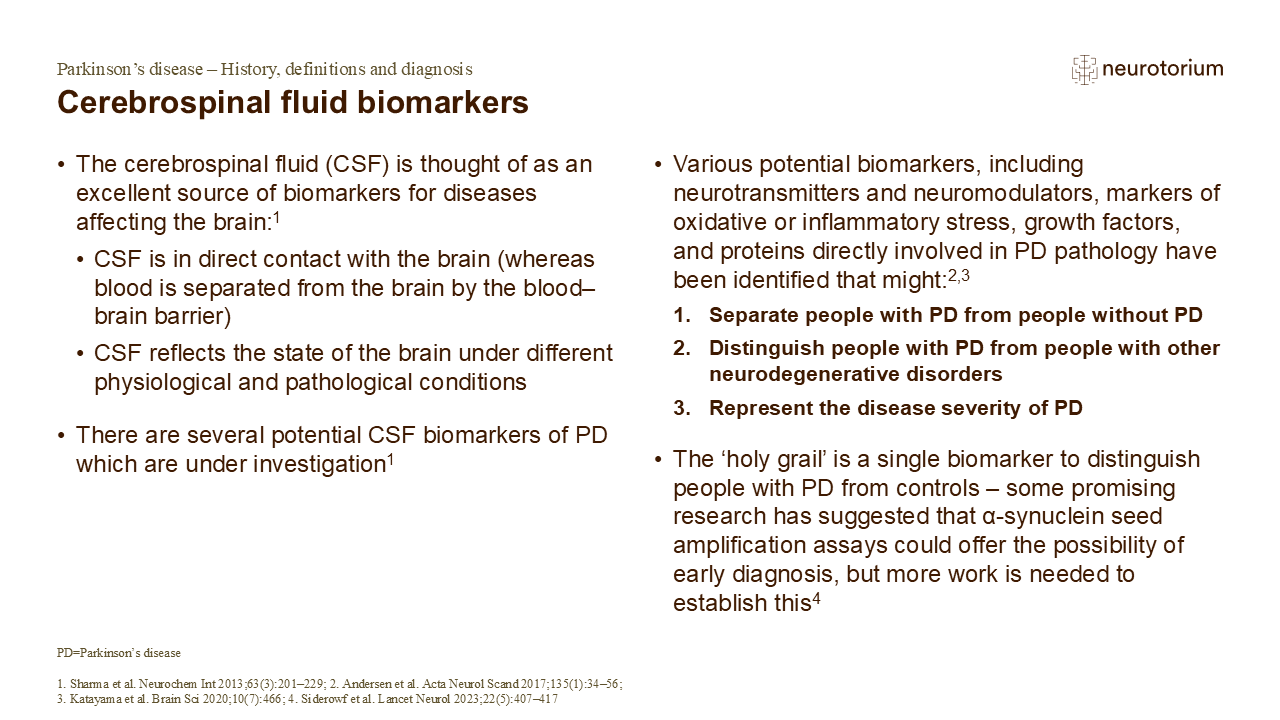
The cerebrospinal fluid (CSF) is closely associated with the extracellular space in the brain, so many of the biochemical processes that occur in the brain should be detectable in the CSF.5
A great deal of research has attempted to find a robust CSF biomarker that is able to distinguish PD from healthy controls.2 Many substances have been associated with a greater risk of PD, or found in lesser or greater amounts in patients with PD than in healthy controls.2 However, at present, no biomarker has been found that can diagnose PD with sufficient precision.2
Most useful PD biomarkers identified to date have been limited in their diagnostic ability; for example, because α-synuclein is present in the CSF of patients with PD, it may be a useful biomarker to distinguish PD from healthy controls.5 Yet, the biomarker would still be unable to differentiate between idiopathic PD (the most common form) and other forms of α-synucleinopathy.5,6
The role of CSF biomarkers therefore remains limited and highly specific.6 As yet, there is no one biomarker – or even collection of biomarkers – that can provide a simple ‘yes/no’ PD diagnosis with sufficiently high precision to be used in a clinical context.2,5,6
References:
1.Sharma S, Moon CS, Khogali A, et al. Biomarkers in Parkinson’s disease (recent update). Neurochem Int 2013; 63 (3): 201–229.