

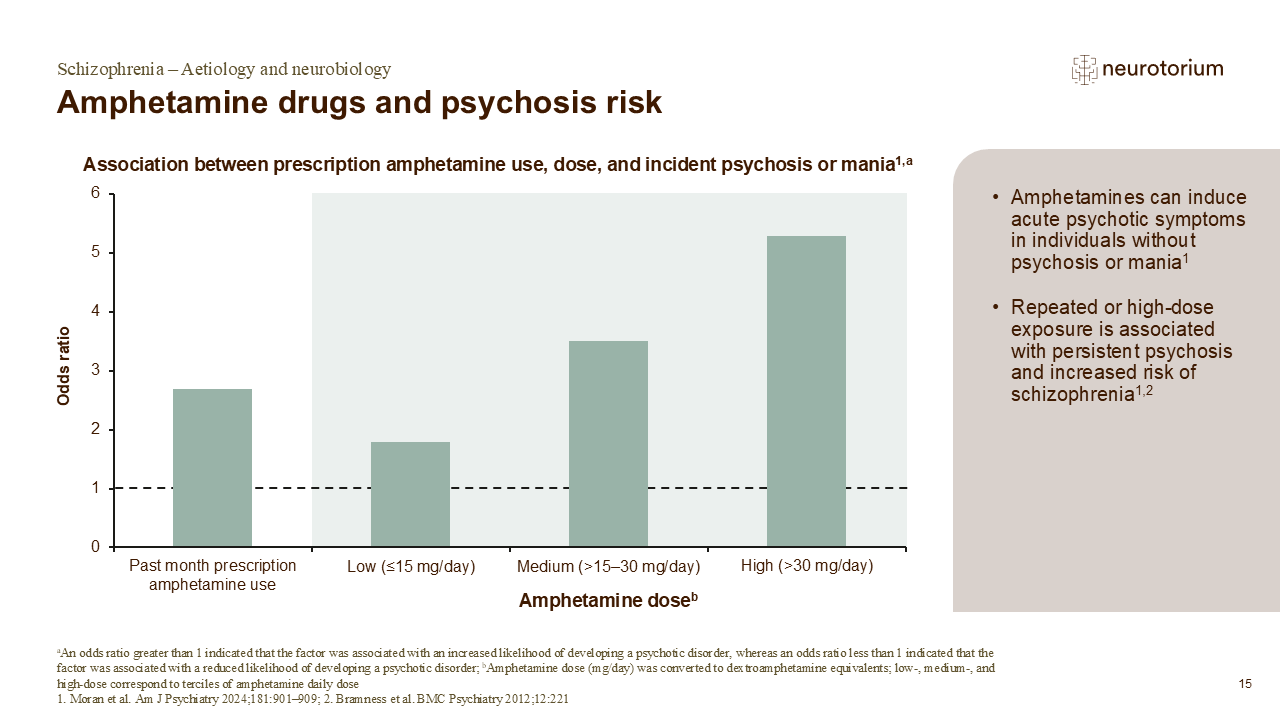
The study used electronic health record data from a large US healthcare system (Mass General Brigham), including individuals aged 16–35 years admitted for a first psychiatric hospitalization between 2005 and 2019.1
A case–control design was employed: cases were patients with new-onset psychosis or mania, and controls were patients hospitalized for depression or anxiety without a history of psychosis or mania, matched on admission year.1
Exposure was past-month prescription amphetamine use, identified from clinical records and medication reconciliation, with doses standardized to dextroamphetamine equivalents and grouped into low-, medium-, and high-dose categories. Associations between amphetamine use and incident psychosis or mania were assessed using logistic regression models adjusted for demographic, clinical, and substance use confounders, including cannabis and other drug use.1
References:
1. Moran LV, Skinner JP, Shinn AK, et al. Risk of incident psychosis and mania with prescription amphetamines. Am J Psychiatry 2024; 181: 901–909.
2. Bramness JG, Gundersen ØH, Guterstam J, et al. Amphetamine-induced psychosis–a separate diagnostic entity or primary psychosis triggered in the vulnerable? BMC Psychiatry 2012; 12: 221.