

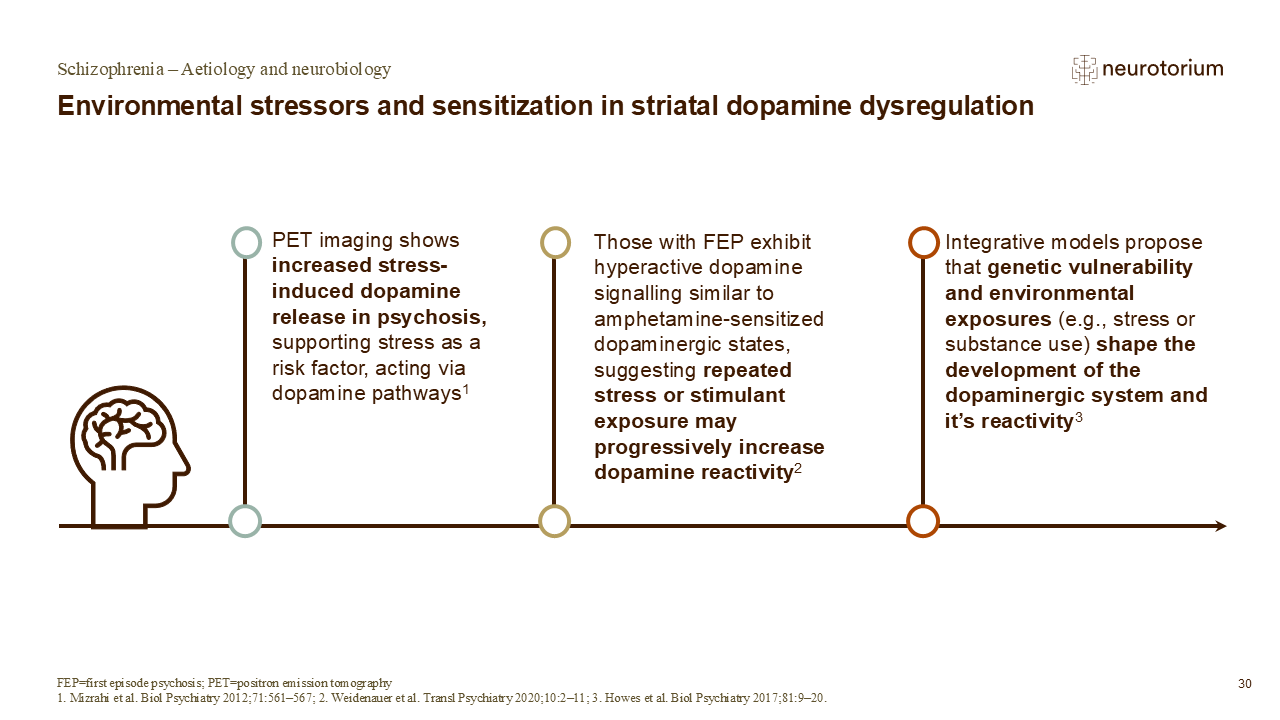
A PET imaging study demonstrated elevated dopamine release in response to a validated psychosocial stress task in clinically high-risk individuals (n=12) and antipsychotic naïve individuals with schizophrenia (n=10) compared with matched healthy volunteers (n=12).1
An additional PET study demonstrated that, prior to amphetamine exposure, healthy volunteers (n=28) had smaller dopamine release compared with patients with FEP (n=21). After amphetamine sensitization of healthy volunteers their dopamine release was significantly amplified and no longer differed from individuals with FEP.2 These findings help explain why amphetamine exposure is a risk factor for schizophrenia, as stimulants increase dopamine signalling in the same mesostriatal pathways implicated in the disorder.2
Abbreviations: FEP=first episode psychosis; PET=positron emission tomography
References:
1. Mizrahi R, Addington J, Rusjan PM, et al. Increased stress-induced dopamine release in psychosis. Biol Psychiatry 2012; 71: 561–567.
2. Weidenauer A, Bauer M, Sauerzopf U, et al. On the relationship of first-episode psychosis to the amphetamine-sensitized state: a dopamine D(2/3) receptor agonist radioligand study. Transl Psychiatry 2020; 10: 2–11.
3. Howes OD, McCutcheon R, Owen MJ, et al. The role of genes, stress, and dopamine in the development of schizophrenia. Biol Psychiatry 2017; 81: 9–20.