

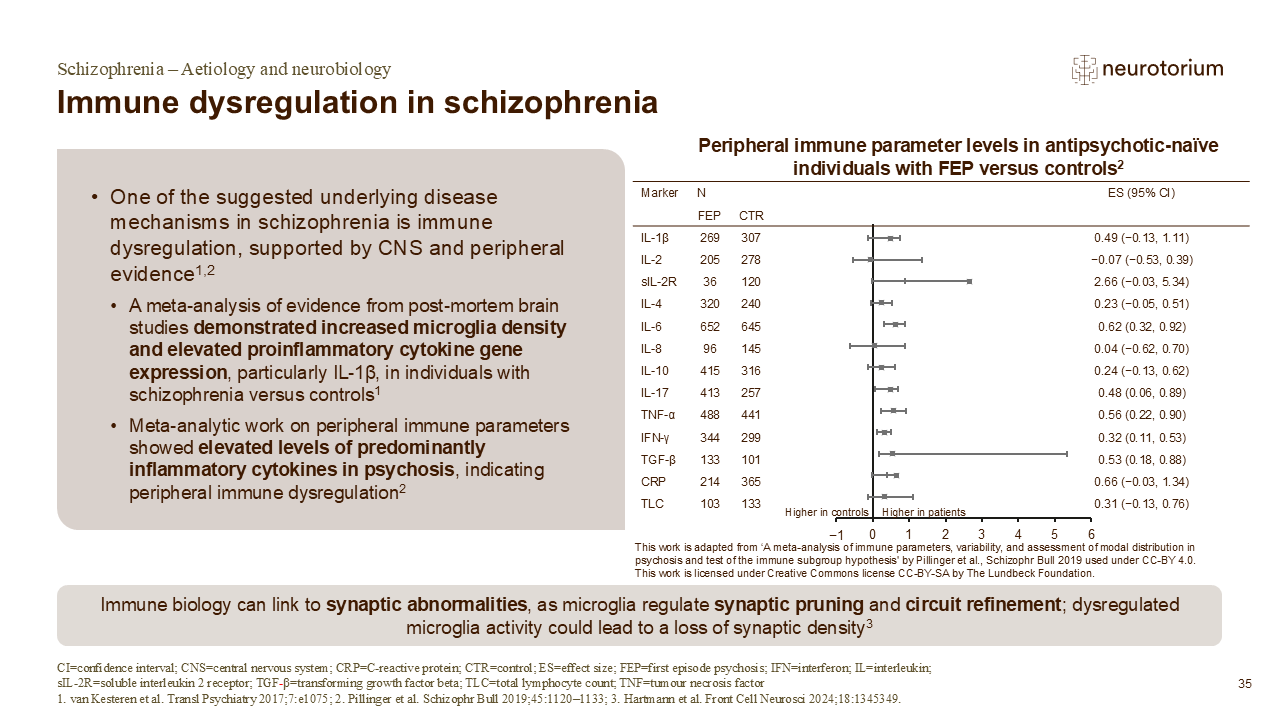
Microglia in an activated state are known to produce proinflammatory cytokines, IL1β, IL-6, and TNF-α.1 Elevated IL-6 and TNF-α provide further evidence of aberrant microglia activity.1
Meta-analytic work on peripheral immune parameters supports increased inflammatory signals in psychosis, demonstrating elevated levels of predominantly inflammatory cytokines, including IFN-γ, IL-17, IL-6, TNF-α, and TGF‑β, indicating peripheral immune dysregulation.2
There is some evidence that immune dysfunction may not be present in all individuals, supporting the hypothesis of immune involvement in a specific subset of people.2
Abbreviations: IFN=interferon; IL=interleukin; TNF=tumour necrosis factor
References:
1. van Kesteren CF, Gremmels H, de Witte LD, et al. Immune involvement in the pathogenesis of schizophrenia: a meta-analysis on postmortem brain studies. Transl Psychiatry 2017; 7: e1075.
2. Pillinger T, Osimo EF, Brugger S, et al. A meta-analysis of immune parameters, variability, and assessment of modal distribution in psychosis and test of the immune subgroup hypothesis. Schizophr Bull 2019; 45: 1120–1133.
3. Hartmann SM, Heider J, Wüst R, et al. Microglia-neuron interactions in schizophrenia. Front Cell Neurosci 2024; 18: 1345349.