

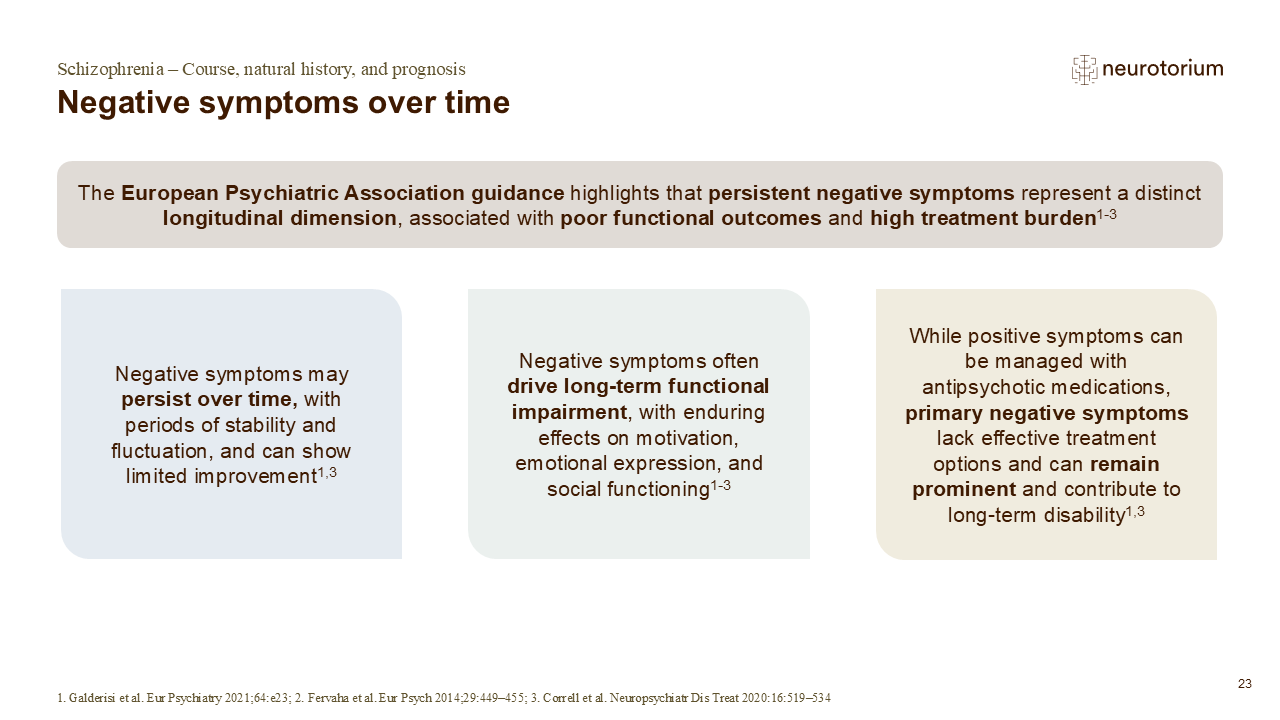
Negative symptoms can be primary symptoms, which are intrinsic to the underlying pathophysiology of schizophrenia, or secondary symptoms that are related to psychiatric or medical comorbidities, adverse effects of treatment, or environmental factors.3
While secondary negative symptoms can improve with treatment to improve symptoms in other domains (i.e., positive symptoms, depressive symptoms) primary negative symptoms generally do not respond well to currently available antipsychotic treatment. Since some patients may lack insight about the presence of negative symptoms, these are generally not the reason that patients seek clinical care. Further symptoms may be underrecognized.3 These two factors combined with the limited number of effective treatment options contribute to overall disease burden, and poor functional outcomes.3
References:
1. Galderisi S, Mucca A, Dollfus S, et al. EPA guidance on assessment of negative symptoms in schizophrenia. Eur Psychiatry 2021; 64: e23.
2. Fervaha G, Foussias G, Agid O, Remington A. Impact of primary negative symptoms on functional outcomes in schizophrenia. Eur Psych 2014; 29: 449–455.
3. Correll CU, Schooler NR & Kane JM, et al. Clinical implications of negative symptoms in schizophrenia. Neuropsychiatr Dis Treat 2020; 16: 519–534.