

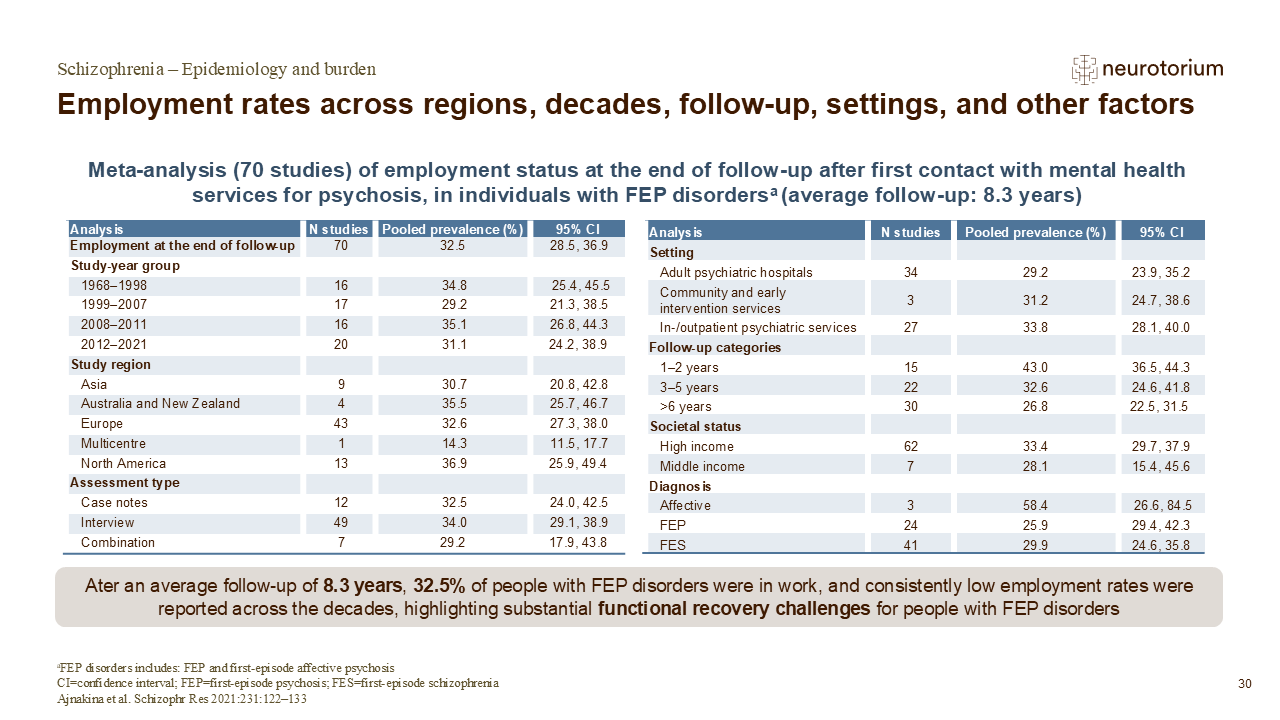
As employment is an important indicator of long-term functional recovery in individuals with FEP disorders, there is a need to elucidate more accurately how frequently the employment status of people with FEP disorders are affected by their disorder.1 As employment status is complex, it is important to identify moderating factors, which may help to identify those individuals who may be at higher risk for unemployment and poor long-term outcomes.1
This meta-analysis of 70 longitudinal studies (N=14,828) evaluated the proportion of people with an FEP disorder who were employed (defined as having either a full-/part-time job, being a student at school or university, or being involved in a study/training programme) at the end of follow-up after first contact with mental health services for psychosis.1 To increase the generalizability of findings, a wide range of studies were captured, including in the in- and outpatient settings, which used different assessment methods, such as case notes and face-to-face interviews. The analysis stratified employment based on FEP disorder type and variables related to demographic factors, such as country and country income status. Study design factors, such as length of follow-up and study year publication, were also included.1
The pooled proportion of people with FEP disorders in employment was 32.5% after an average follow-up of 8.3 years, highlighting substantial functional recovery challenges for people with FEP disorders. There was significant heterogeneity across stratification factors:
- People with schizophrenia had a higher risk of unemployment than those with affective psychoses
- Middle-income countries reported lower employment rates than high-income countries
- Studies with longer follow-up reported lower employment, indicating progressive functional impairment over time
Abbreviations: FEP=first episode psychosis
Reference: