

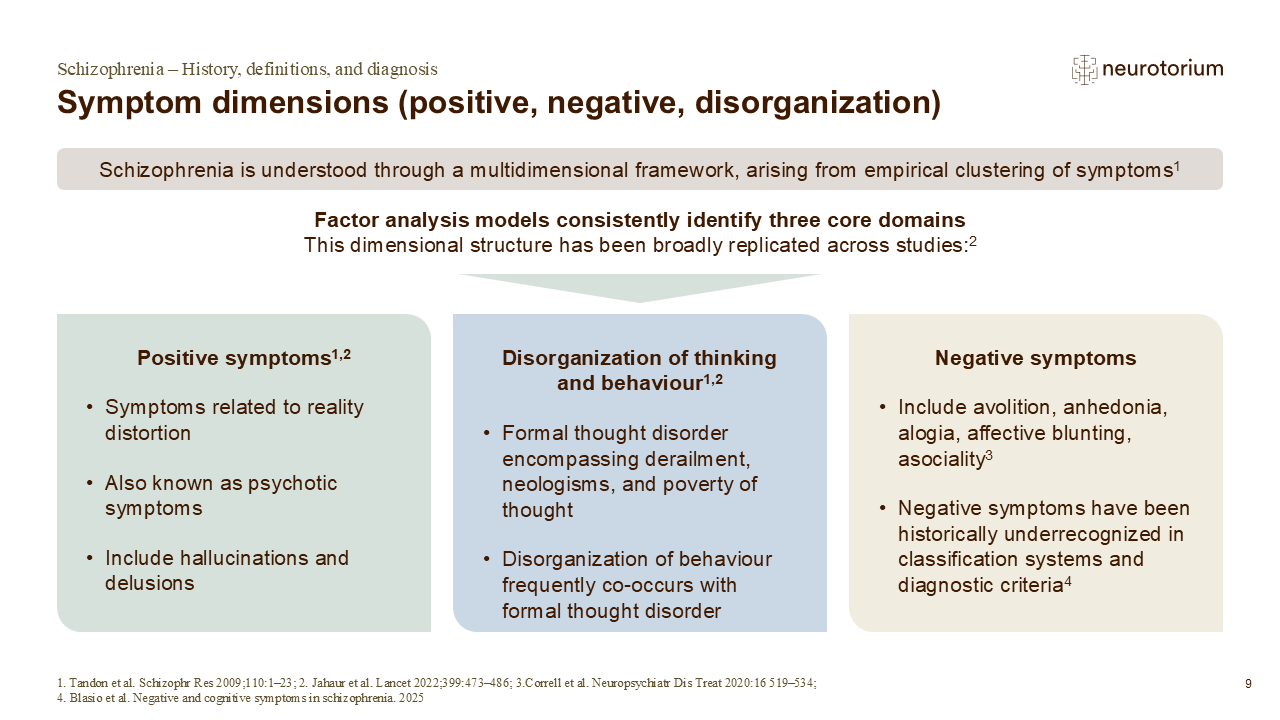
While the three-dimensional model of positive, negative, and disorganization symptoms is the most popular, it has been criticized as too simplistic and more complex models have been proposed; however, there is no consensus as to the number and nature of dimensions necessary to encompass the entirety of heterogenous symptoms of schizophrenia.5
Factor analytical studies have identified additional domains including mood symptoms, motor symptoms, impaired insight (anosognosia), and cognitive impairment.1,6 Cognitive impairments are highly prevalent in schizophrenia, including deficits in episodic memory, processing speed, verbal fluency, and attention and are strongly linked to poor social and vocational outcome.1 Cognitive impairment is not a diagnostic feature of schizophrenia.7
Symptom domains vary across illness course. Positive symptoms typically characterize the first episode of psychosis, and often follow an episodic course, with periods of relapse and remission, although some individuals have residual persisting long-term psychotic symptoms.1,2 Subtle disorganization and cognitive abnormalities may be detectable during the premorbid phase.1,2 Negative symptoms frequently emerge in the prodromal phase before first episode of psychosis and tend to be persistent, contributing substantially to long term disability and poor functional outcomes.2,3,8
References:
2.Jauhar S, Johnstone M, McKenna PJ. Schizophrenia. Lancet 2022; 399: 473–486.