The GBD survey ranks disability-adjusted life-years (DALYs) from chronic-obstructive pulmonary disorder and lung cancer highly among people aged >50 years, highlighting the need for smoking-control measures to drive down these harms.[3] However, some encouraging data are the declining rates of lung cancer DALYs among people aged 50–74 (although there is no such decline among people aged >74 years).[3] This could reflect a greater response to smoking-control measures among younger people, which would translate into reduced tobacco-related harms in the years to come.[3]
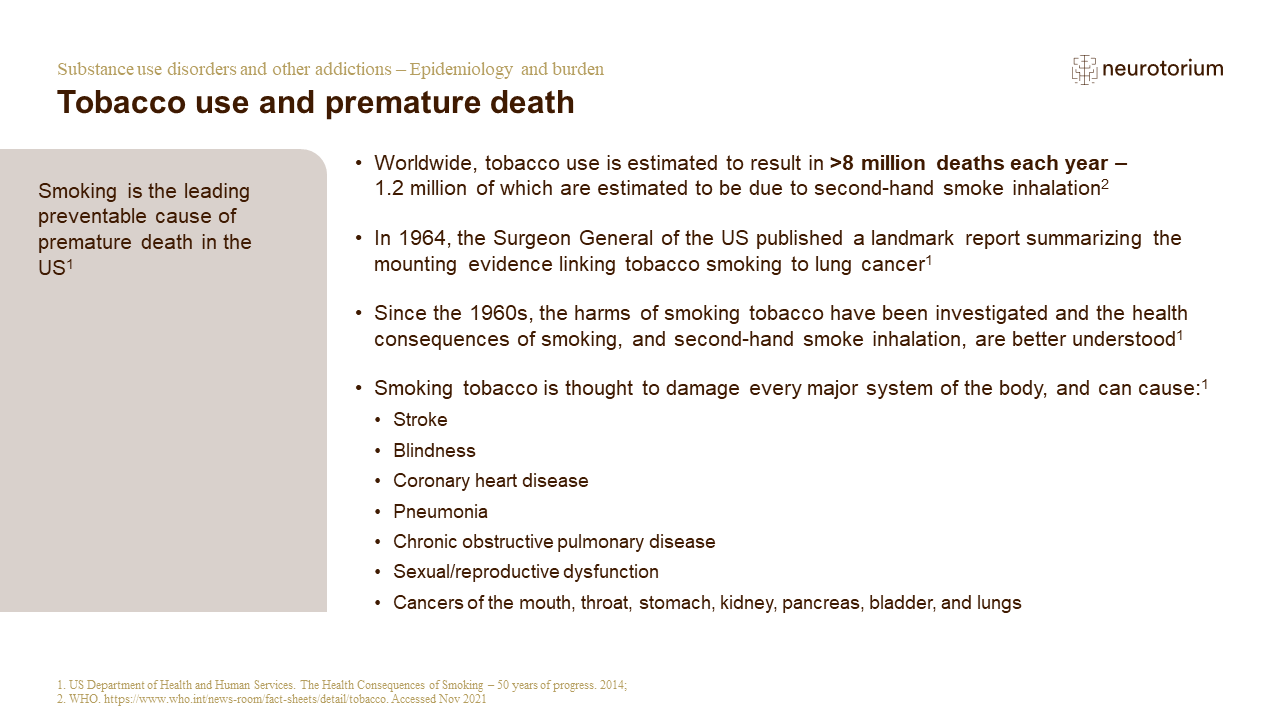
Tobacco use and premature death