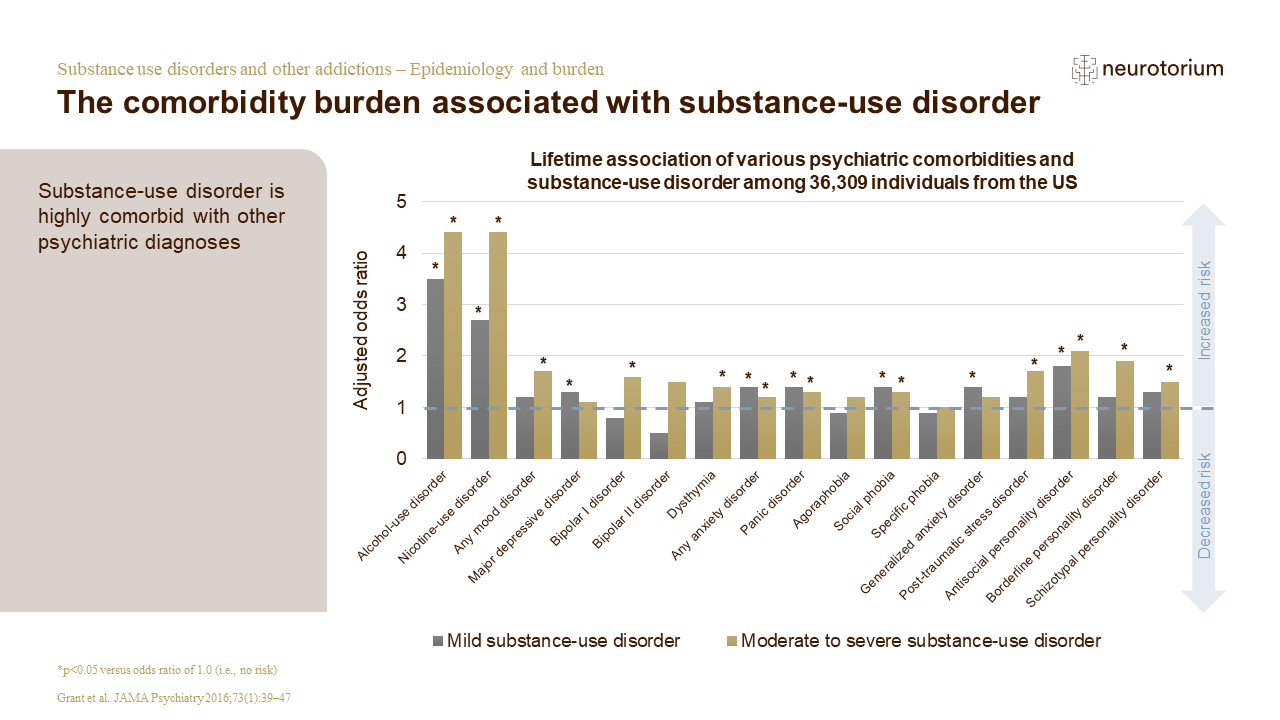
This study used interview data from 36,309 individuals to estimate 12-month and lifetime prevalence of substance-use disorder.[1] The 12-month and lifetime prevalence of substance-use disorder was 3.9% and 9.9%, respectively.[1] A significantly greater proportion of individuals with substance-use disorder had other psychiatric comorbidities compared with individuals without substance-use disorder, including major depressive disorder, dysthymia, bipolar disorder, post-traumatic stress disorder, and various personality disorders.[1] The findings show the broader costs of substance-use disorder, and highlight the need to destigmatize the condition to enable people to come forward for treatment.[1]
The comorbidity burden associated with substance-use disorder