

In this video, Professor Christoph Correll share insights on understanding the nature of the data, interpreting with missing data and comparisons between groups/within groups.
Related content
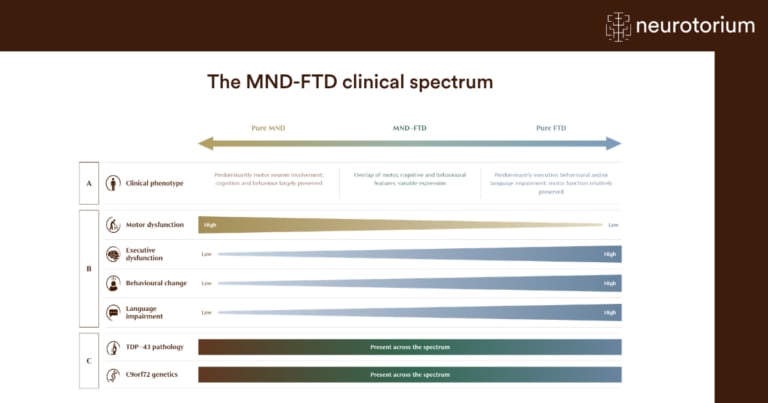
Motor neuron disease (MND) and frontotemporal dementia (FTD) were once seen as separate conditions, one affecting movement and the other cognition and behaviour. Growing evidence now places them on the same disease spectrum, linked by shared clinical features, genetic causes, and underlying pathology.
ALS and FTD were historically regarded as distinct diseases but are now recognised as overlapping disorders within a broader neurodegenerative spectrum. This slide deck introduces their defining clinical features, the development of the ALS–FTD concept, and the approaches used to diagnose ALS, FTD and mixed presentations.
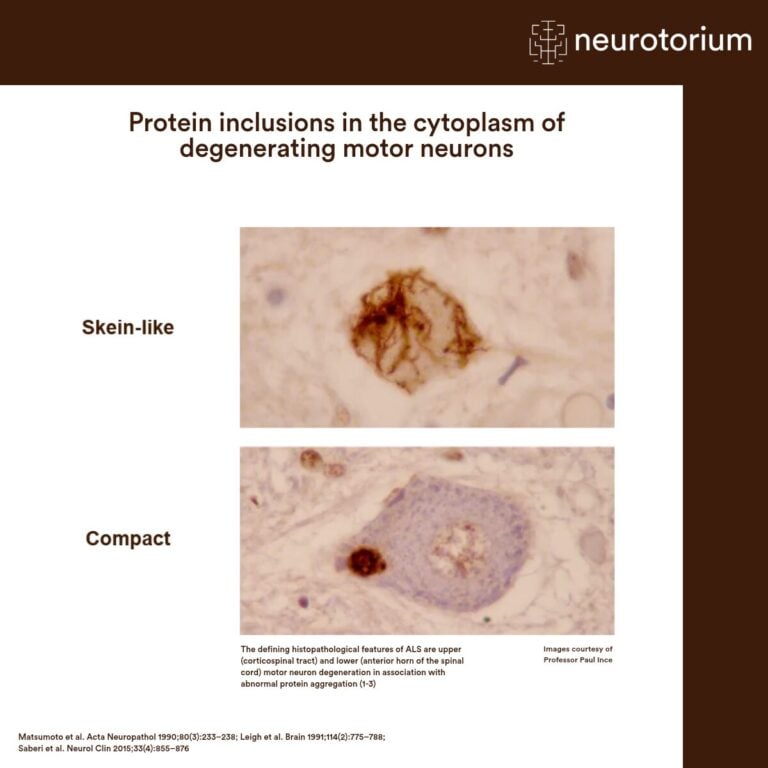
Motor neuron degeneration in ALS is associated with abnormal protein aggregation, including characteristic skein-like and compact cytoplasmic inclusions.