

Artificial Intelligence (AI) based applications are being rapidly adopted in medicine and will likely have a profound impact on clinical practice. In psychiatry, substantial efforts are being made to explore their potential for advancing personalized medicine. This includes novel approaches towards diagnosis, therapy selection, early identification of illness risk, or digital applications, such as chatbots.
In this video, Emanuel Schwarz, PhD, highlights the role of state-of-the-art AI applications in psychiatry, and concludes with discussing the challenges faced and the ethical and legal considerations of such applications.
Related content

Summary of the physiological changes associated with reproductive aging and the potential links between the menopausal transition and mental health conditions.
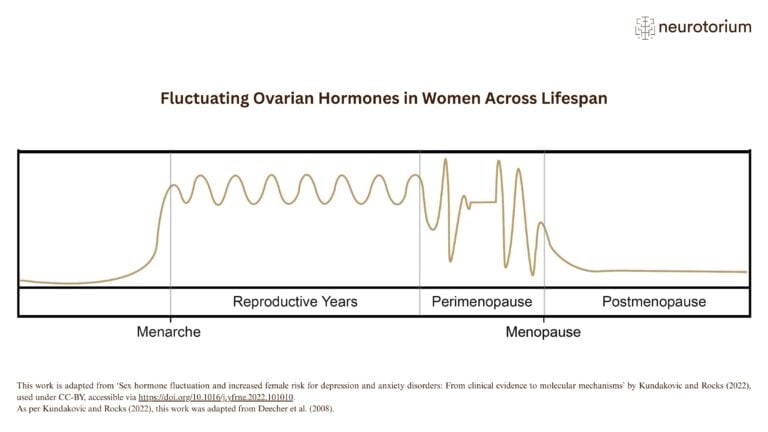
This illustration shows key phases of ovarian hormone fluctuation across the female lifespan, from menarche to menopause.
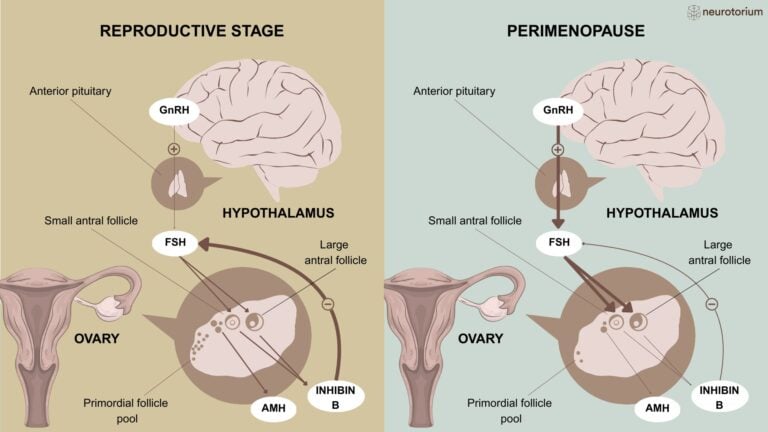
Physiological changes in endocrine function from the reproductive stage to perimenopause