

Over the past 30 years, the genetic sequencing revolution has transformed how ALS (amyotrophic lateral sclerosis) and FTD (frontotemporal dementia) are diagnosed, and it is set to change how they are treated.
Professor Matthew Harms explains that almost 20 genes have now been reported to cause an FTD-like phenotype and close to 50 in ALS. Genetic testing yields an answer in about 20% of people with FTD and 15% with ALS, including around 1 in 10 people with no family history of either disease. Beyond confirming the diagnosis and informing families about future risk, testing is becoming a treatment concept. One therapy is already approved for SOD1-related ALS, and gene-targeted therapies that silence or boost gene expression are in clinical trials for both disorders.

Related content
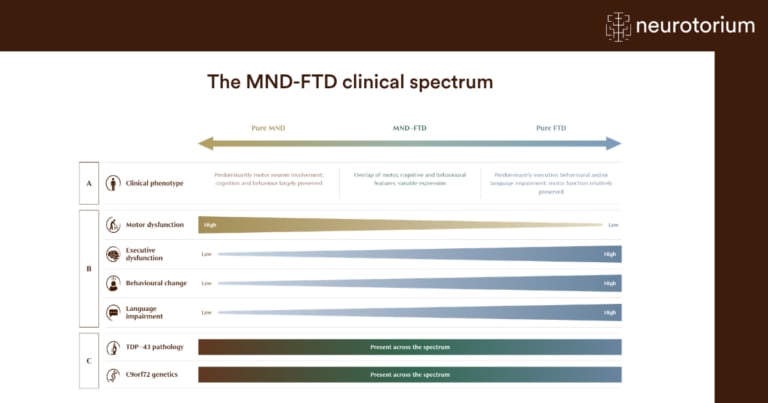
Motor neuron disease (MND) and frontotemporal dementia (FTD) were once seen as separate conditions, one affecting movement and the other cognition and behaviour. Growing evidence now places them on the same disease spectrum, linked by shared clinical features, genetic causes, and underlying pathology.
ALS and FTD were historically regarded as distinct diseases but are now recognised as overlapping disorders within a broader neurodegenerative spectrum. This slide deck introduces their defining clinical features, the development of the ALS–FTD concept, and the approaches used to diagnose ALS, FTD and mixed presentations.
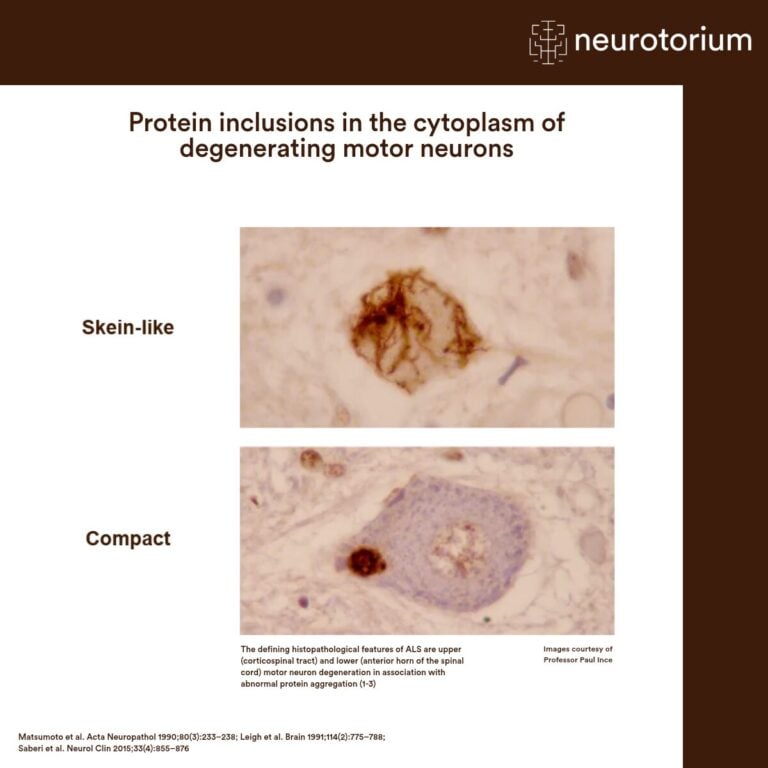
Motor neuron degeneration in ALS is associated with abnormal protein aggregation, including characteristic skein-like and compact cytoplasmic inclusions.