

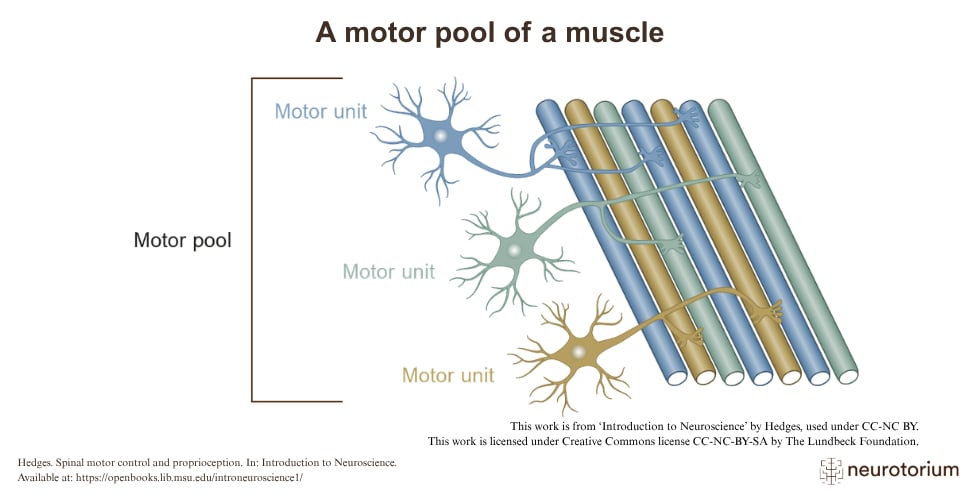
A motor pool of a muscle is formed by a group of motor units innervating all the muscle fibres in that muscle. Motor units vary in size. Small motor units innervate fewer muscle fibres and control fine movements, e.g., in the eyes and fingers. Large motor units innervate many muscle fibres and are generally found in weight-bearing muscles, e.g., those of the thighs.
When a peripheral nerve is damaged or destroyed, the muscles innervated by that nerve immediately become paralyzed, and gradually start wasting away (atrophy).1 Since peripheral nerves carry sensory as well as motor fibres, sensation in the area innervated by the nerve is also lost, along with tendon reflexes.1
Related content
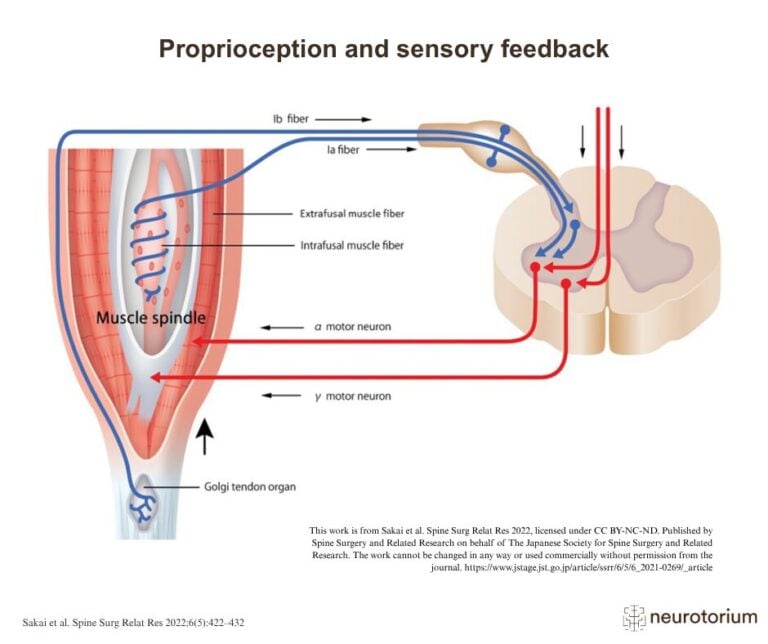
Controlled movement relies on sensory feedback, particularly proprioception (the sense of body position in space and movement).
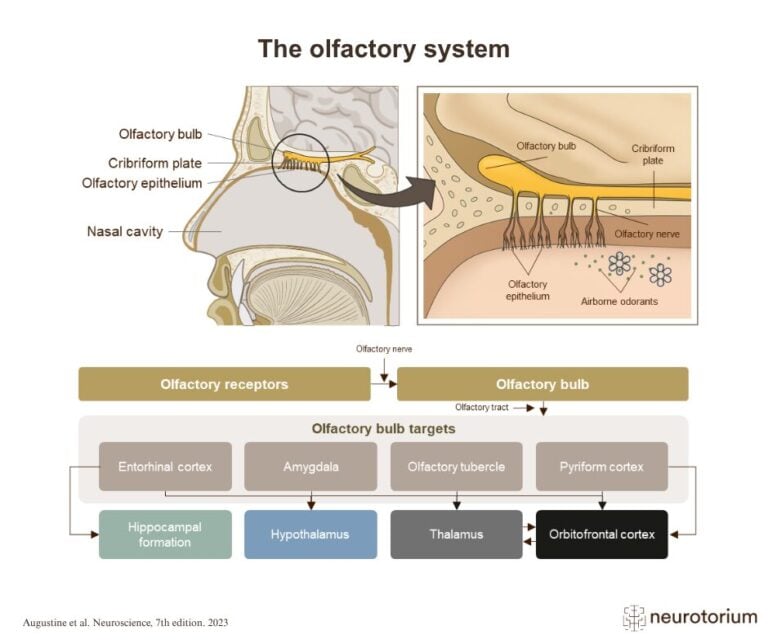
The olfactory system detects airborne odor molecules in the nasal cavity and transmits this information to the olfactory bulb. From there, signals are relayed to several brain regions involved in smell perception, memory, emotion, and behaviour.
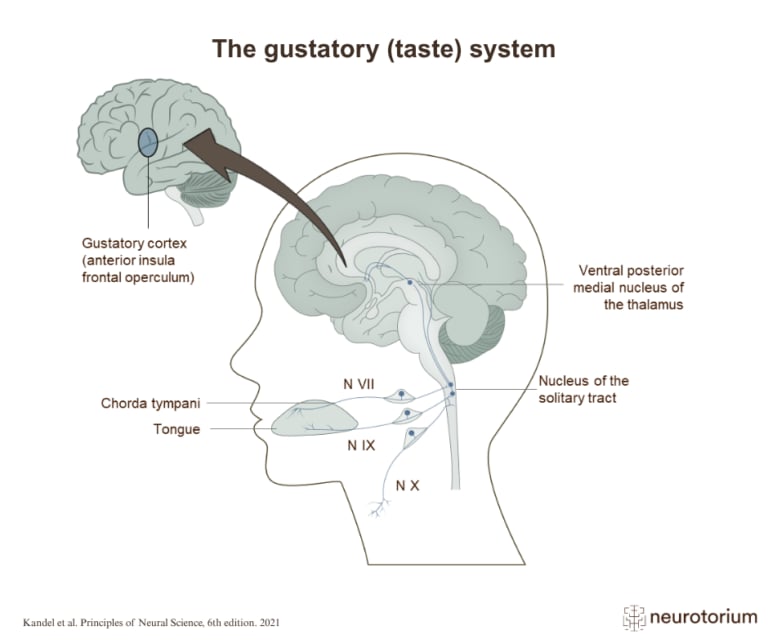
The gustatory system detects taste stimuli on the tongue and relays this information through brainstem and thalamic pathways to the gustatory cortex.