

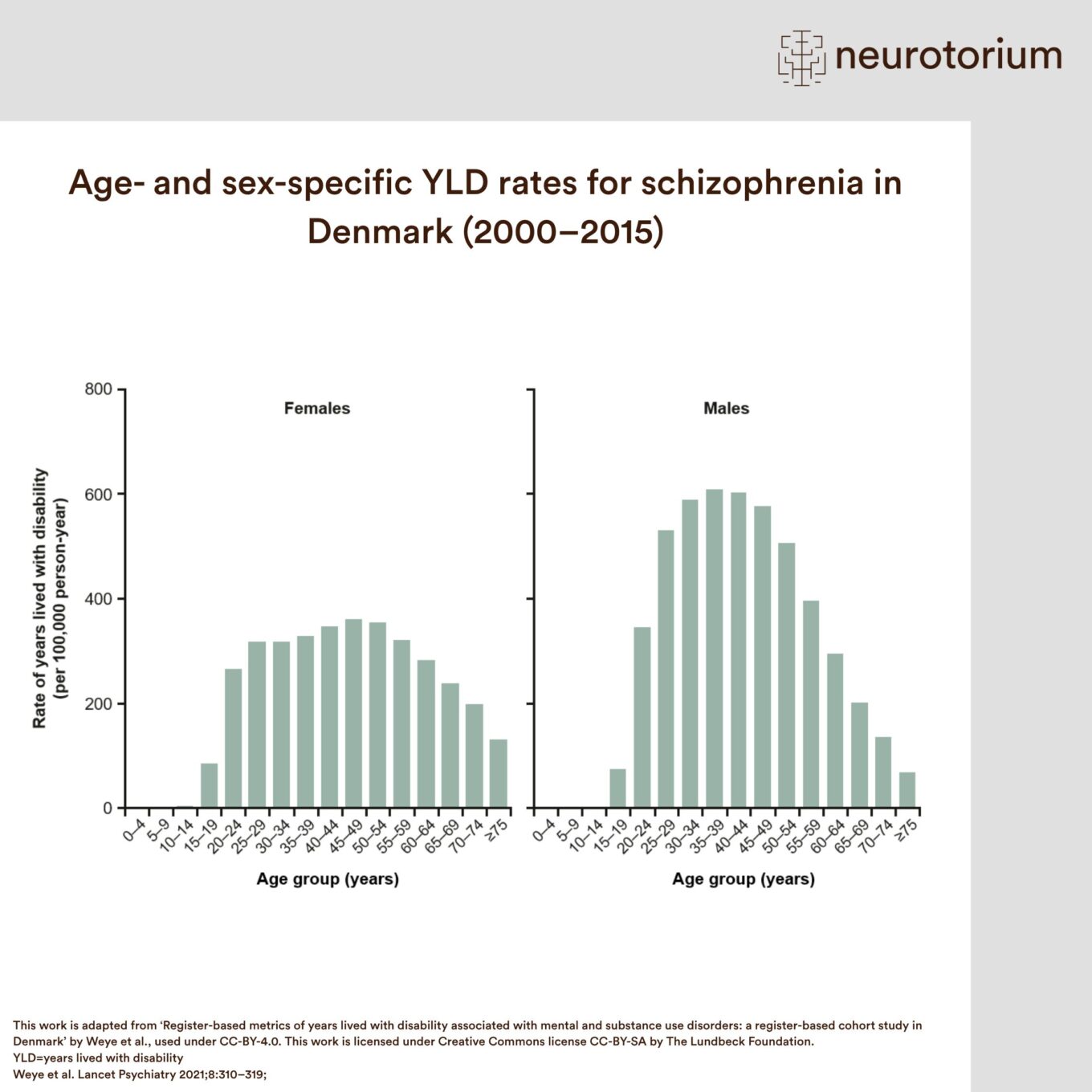
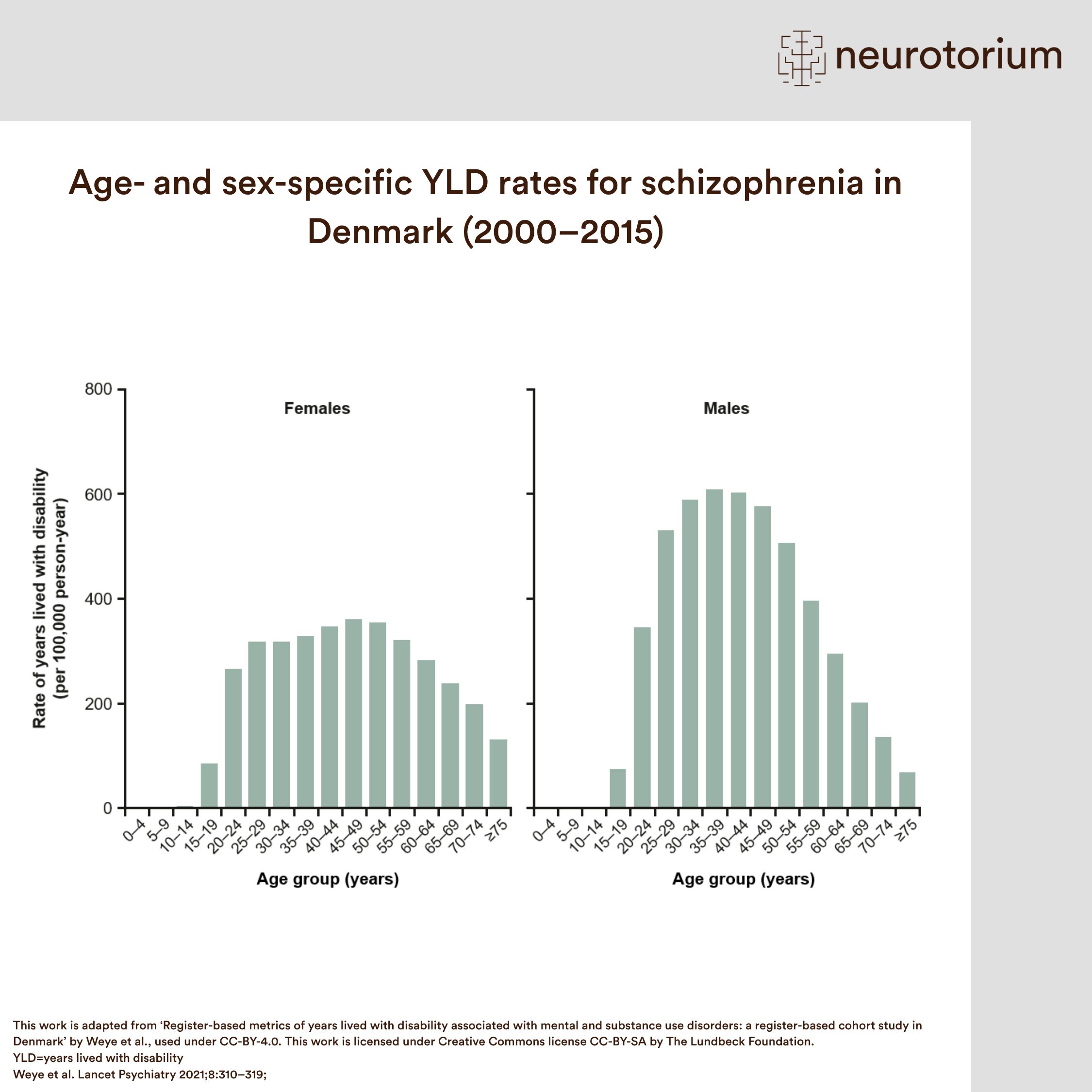
A Danish study of over 6.9 million residents aimed to calculate YLD for 18 mental and substance use disorders.2
Schizophrenia was associated with 225.0 (95% CI: 190.0, 258.0) YLD per 100,000 person-years in females and 322.6 (274.1, 370.7) YLD per 100,000 person-years in males.2
When analyzed by subgroup (i.e., individuals with a specific mental or substance use disorder), schizophrenia was associated with the highest estimated YLD, at 65,872 (55,791–75,533) per 100,000 person-years across both sexes.2
CI=confidence interval; YLD=years lived with disability
Related content
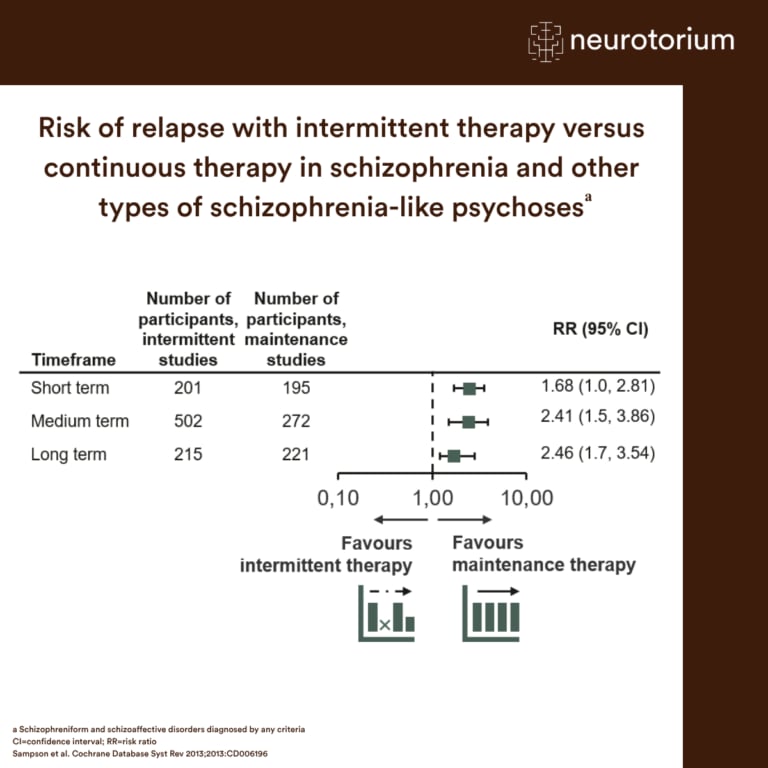
Continuous maintenance therapy is associated with a lower risk of relapse than intermittent treatment, supporting ongoing treatment strategies in schizophrenia and related psychotic disorders.
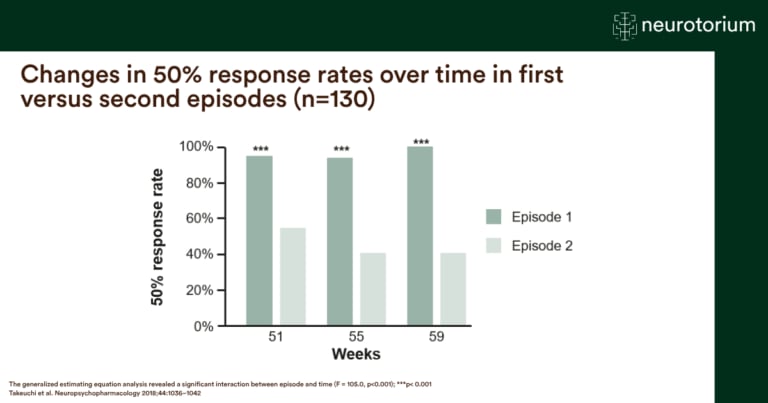
Treatment response tends to be higher during a first episode than during subsequent episodes, emphasizing the importance of early intervention and effective management.
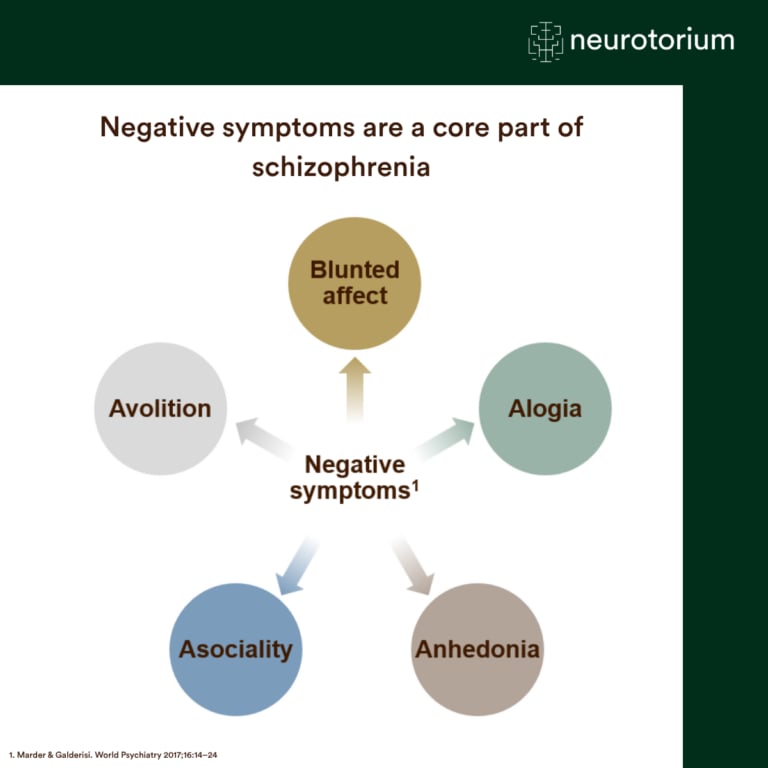
Negative symptoms are a core feature of schizophrenia and can have a profound impact on functioning, social relationships, and quality of life.