

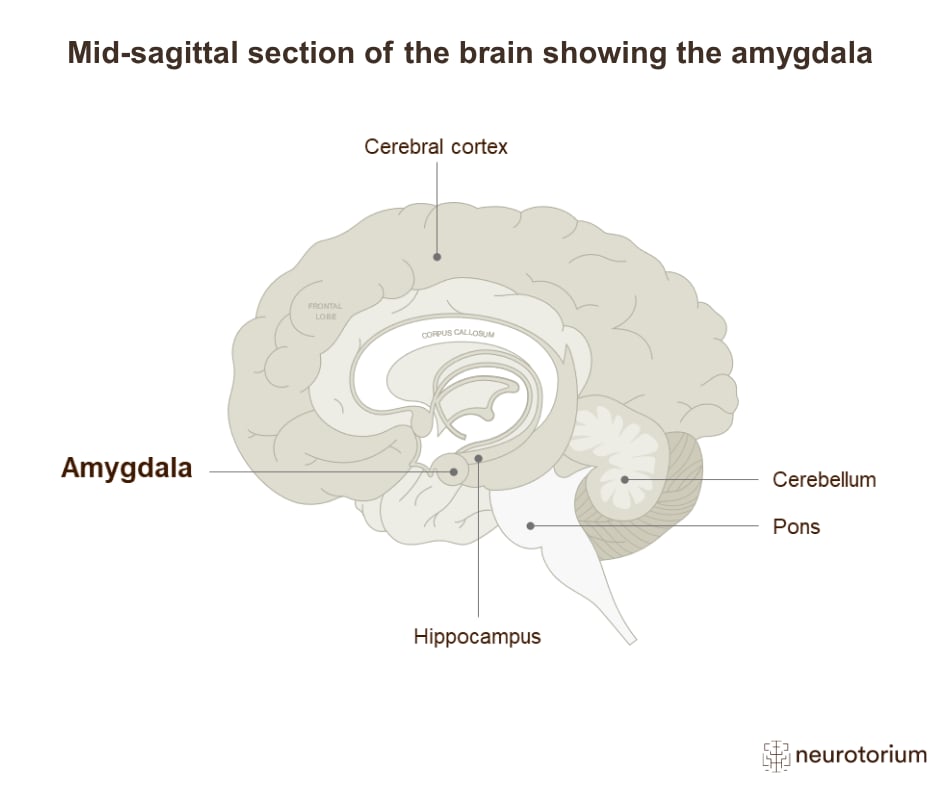
The amygdala is a collection of anatomically and functionally heterogeneous nuclei1. The amygdala is involved in regulating emotional responses, mediating emotional influences on attention and perception and contributing to emotional memory (e.g., learned preferences and aversions, and mediating the influence of emotion on memory consolidation)2,3. Damage or dysfunction of the amygdala – often resulting from trauma, stroke, tumour, or neurodegenerative disease – can lead to profound alterations in emotional processing and behaviour1
Related content
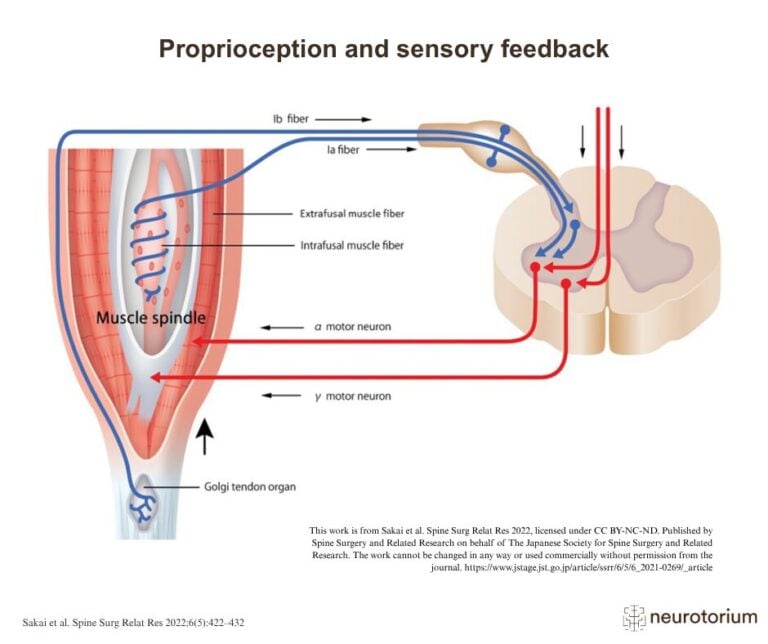
Controlled movement relies on sensory feedback, particularly proprioception (the sense of body position in space and movement).
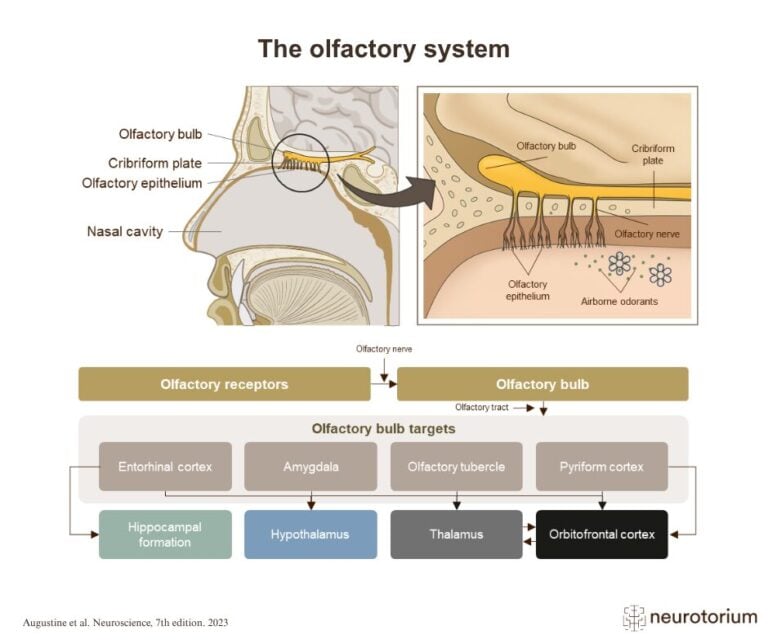
The olfactory system detects airborne odor molecules in the nasal cavity and transmits this information to the olfactory bulb. From there, signals are relayed to several brain regions involved in smell perception, memory, emotion, and behaviour.
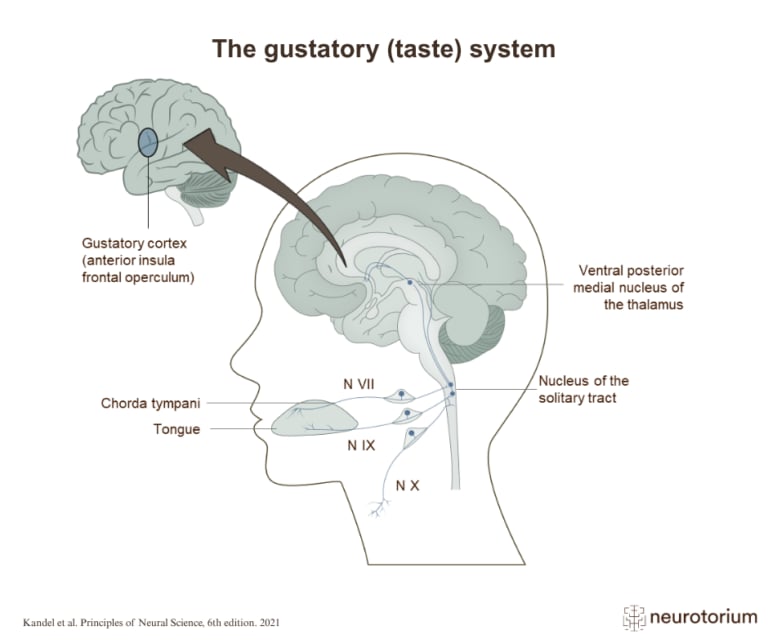
The gustatory system detects taste stimuli on the tongue and relays this information through brainstem and thalamic pathways to the gustatory cortex.