

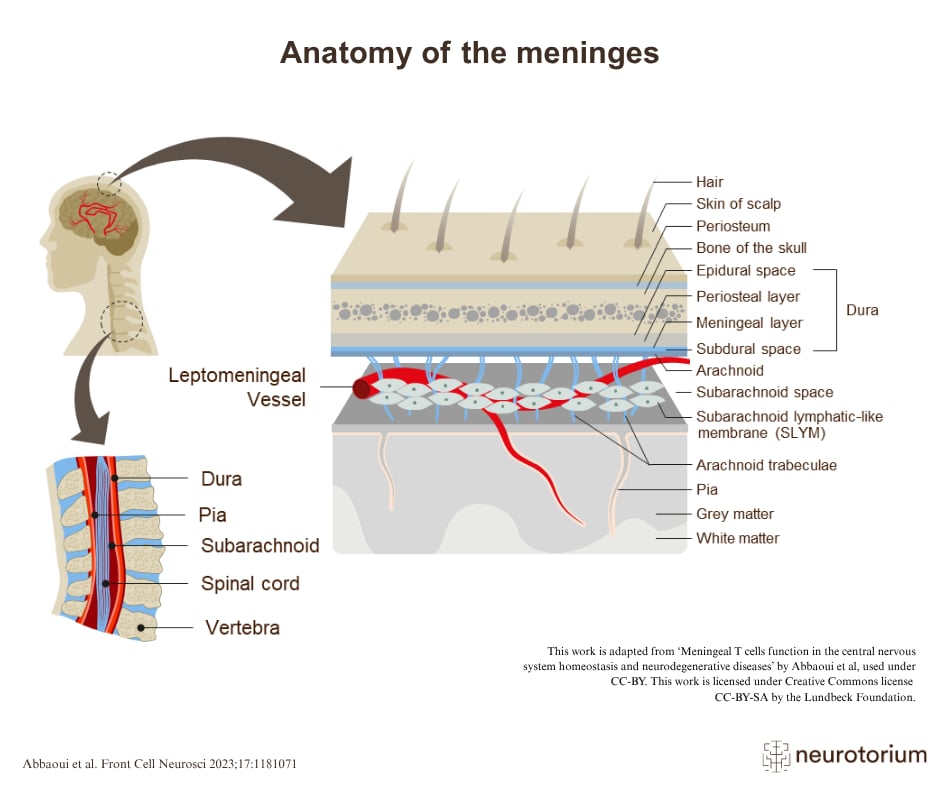
The meninges are protective membranous coverings that surround the CNS, positioned internally to the skull and vertebral column1. They consist of three distinct layers: the dura mater, the arachnoid mater, and the pia mater1.
The meninges serve several essential functions in maintaining central nervous system health and stability. They protect the brain and spinal cord by forming a barrier against physical injury and infection, provide structural support for major blood vessels such as arteries, veins, and venous sinuses, and enable circulation of cerebrospinal fluid within the subarachnoid space. This circulation helps maintain brain homeostasis, supports nutrient transport, and facilitates removal of waste products1.
Clinical relevance:
• Meningitis: infection or inflammation of the meninges can lead to meningitis, a potentially life-threatening condition that increases intracranial pressure and may cause headaches, fever, and neck stiffness1,3
• Subdural and epidural haematomas: trauma to the head can result in bleeding between meningeal layers, leading to pressure on brain tissue and requiring urgent medical intervention1
• CSF leak: tears or damage to the meninges can cause cerebrospinal fluid leaks, potentially leading to complications such as headaches and increased risk of meningitis4
Related content
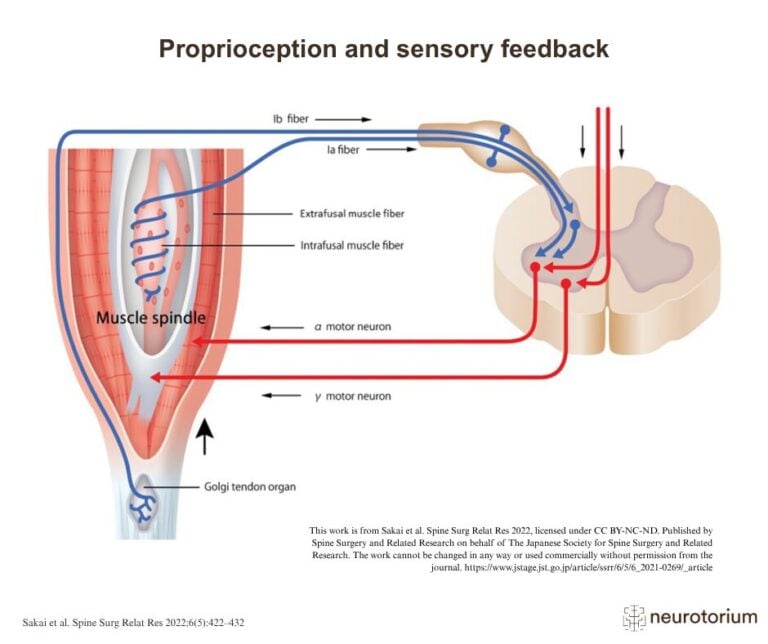
Controlled movement relies on sensory feedback, particularly proprioception (the sense of body position in space and movement).
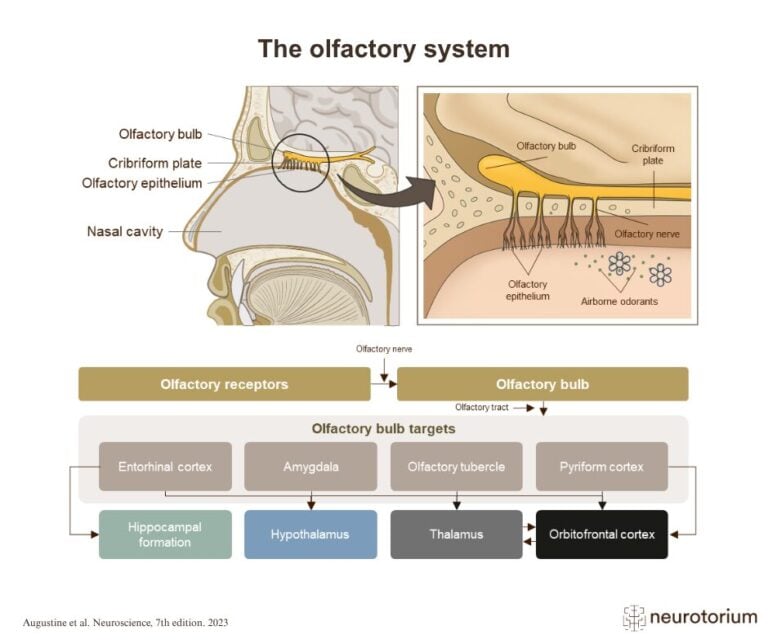
The olfactory system detects airborne odor molecules in the nasal cavity and transmits this information to the olfactory bulb. From there, signals are relayed to several brain regions involved in smell perception, memory, emotion, and behaviour.
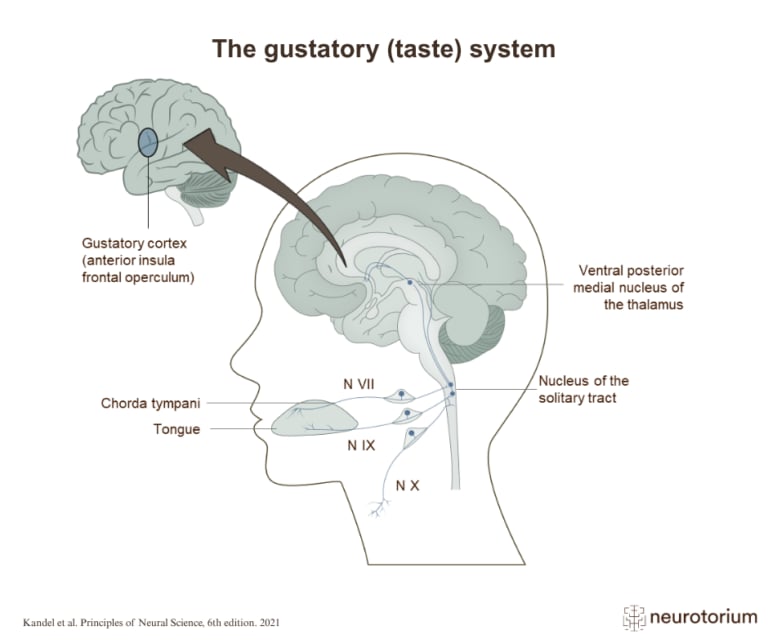
The gustatory system detects taste stimuli on the tongue and relays this information through brainstem and thalamic pathways to the gustatory cortex.