

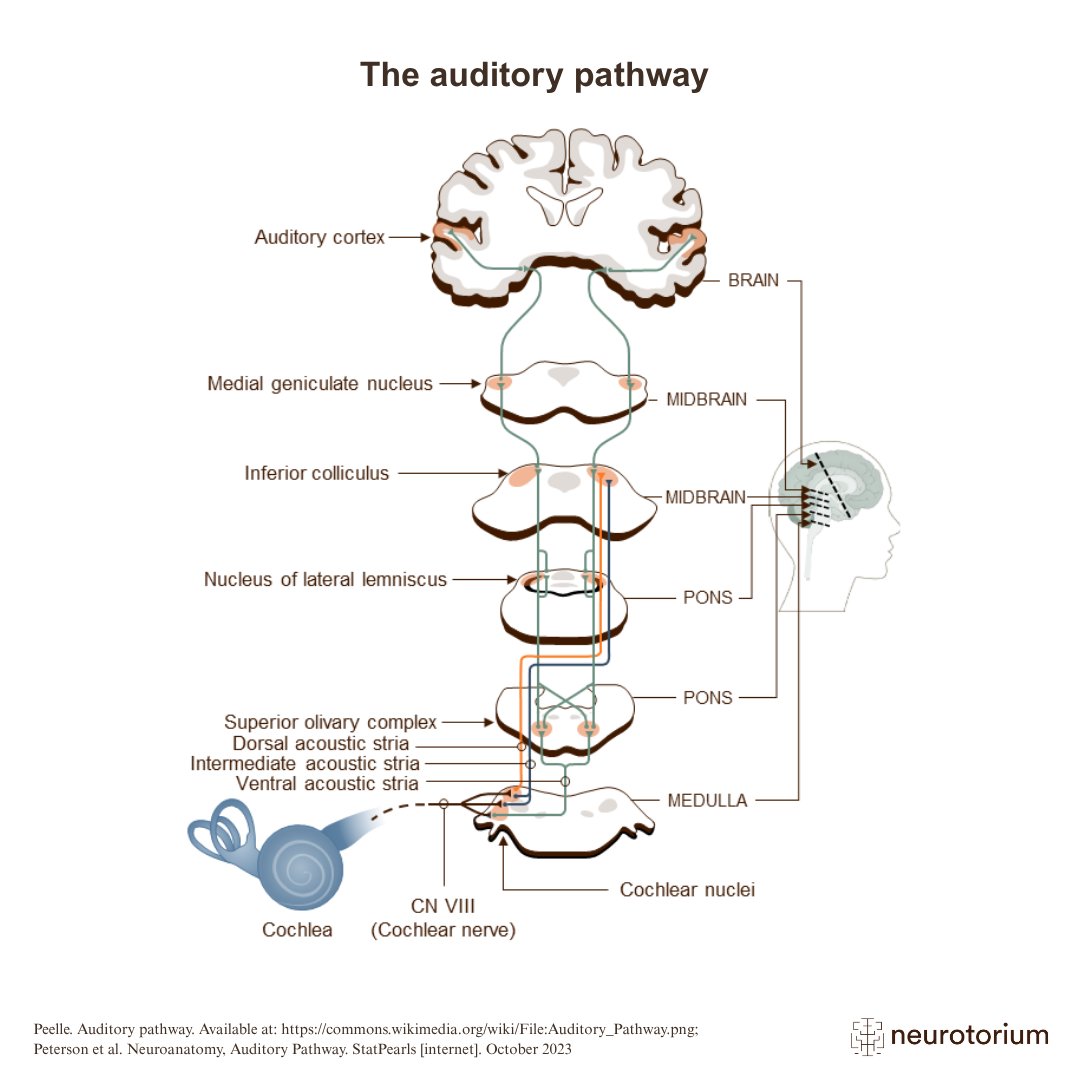
Bipolar neurons of the spiral ganglion located in the cochlea relay signals from the hair cells to the brain1. The axons of the bipolar neurons form the auditory (cochlear) nerve which transmits the electrical signals from the ear to the brainstem1. Signals are relayed to the superior olivary complex and subsequently the lateral lemniscus in the pons, and then travel to the inferior colliculus of the midbrain, a relay and integration centre for ascending auditory information2. From the inferior colliculus, fibres project mainly to the medial geniculate nucleus of the thalamus, which in turn projects to the auditory cortex2
Related content
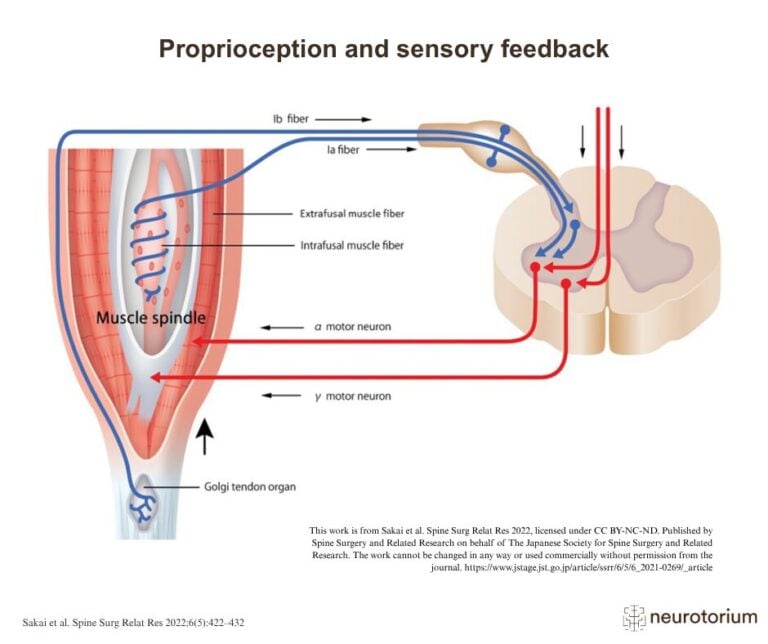
Controlled movement relies on sensory feedback, particularly proprioception (the sense of body position in space and movement).
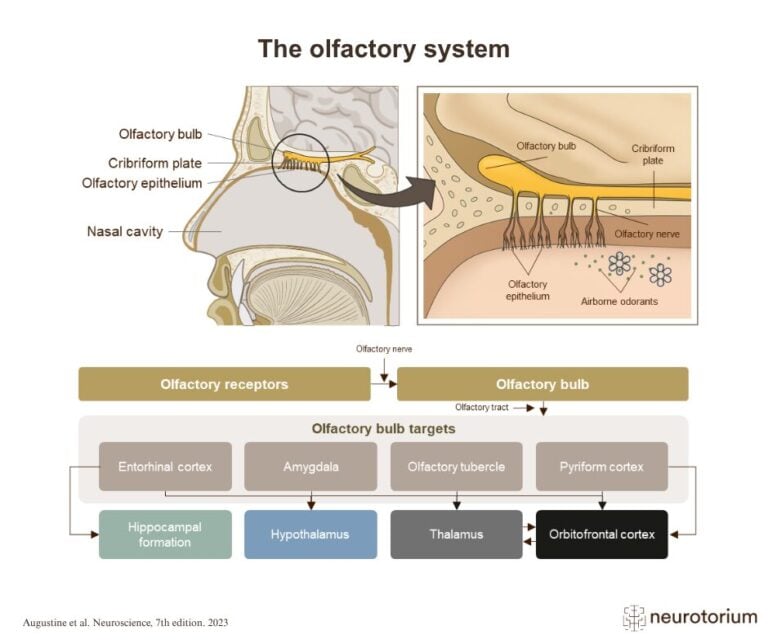
The olfactory system detects airborne odor molecules in the nasal cavity and transmits this information to the olfactory bulb. From there, signals are relayed to several brain regions involved in smell perception, memory, emotion, and behaviour.
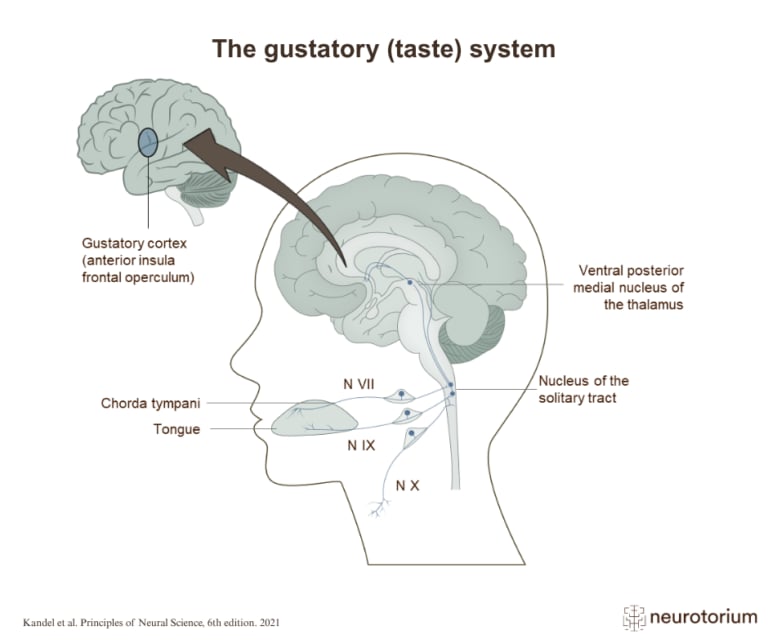
The gustatory system detects taste stimuli on the tongue and relays this information through brainstem and thalamic pathways to the gustatory cortex.