

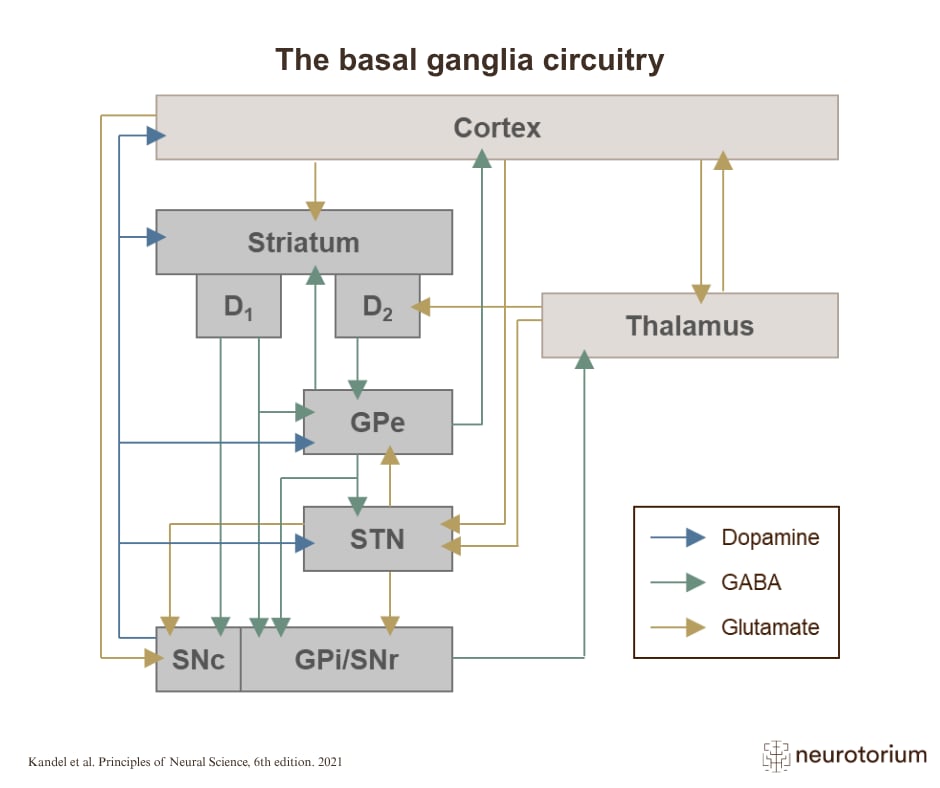
The basal ganglia consist of interconnected subcortical nuclei including the striatum, substantia nigra, globus pallidus, and subthalamic nucleus.1 These structures receive sensory and motor input from the cortex and modulate thalamic activity, which then projects back to the cortex to influence movement control.2 The basal ganglia regulate the initiation and suppression of voluntary movement, contribute to motor learning, and help prevent unwanted movements.1-3 Dysfunction within these circuits is associated with movement disorders such as Parkinson’s disease and Huntington’s disease.4
Related content
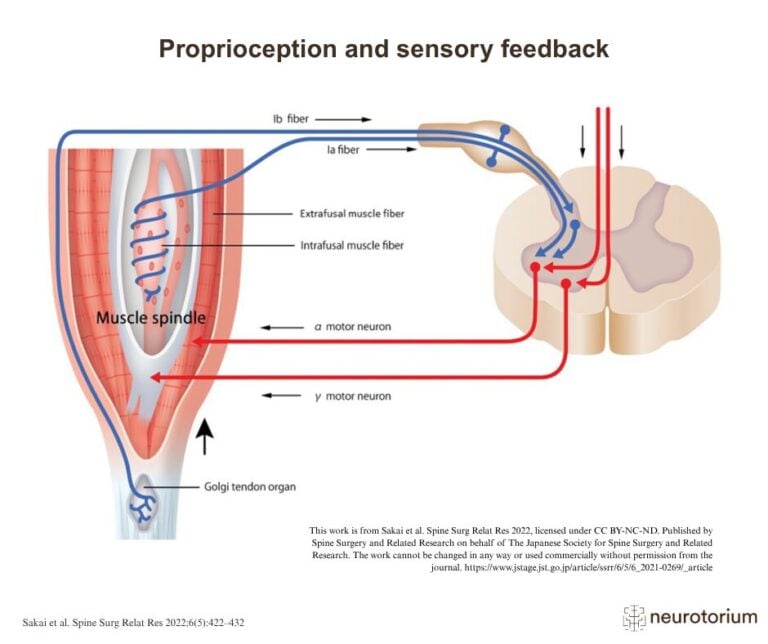
Controlled movement relies on sensory feedback, particularly proprioception (the sense of body position in space and movement).
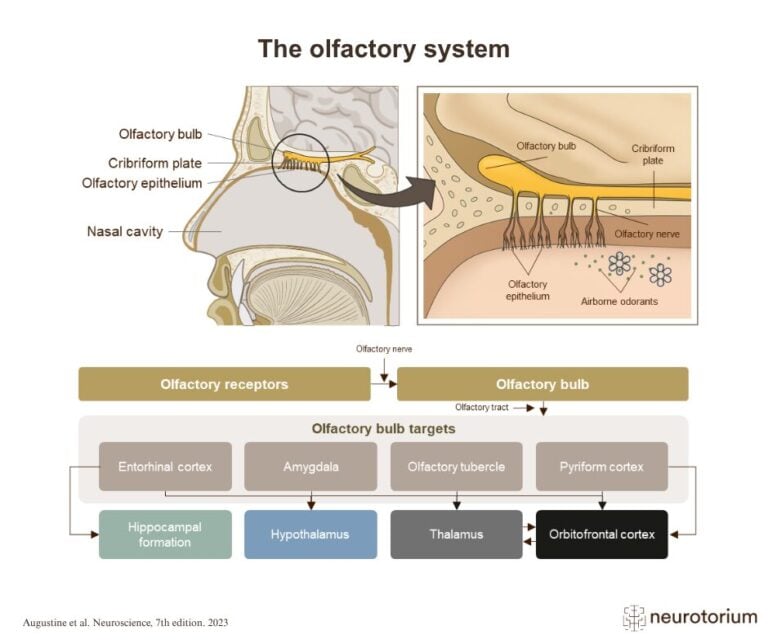
The olfactory system detects airborne odor molecules in the nasal cavity and transmits this information to the olfactory bulb. From there, signals are relayed to several brain regions involved in smell perception, memory, emotion, and behaviour.
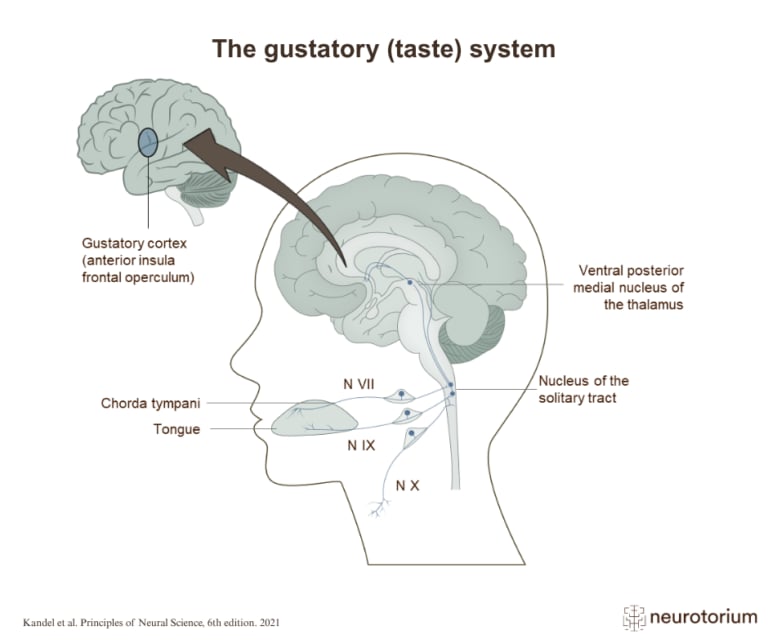
The gustatory system detects taste stimuli on the tongue and relays this information through brainstem and thalamic pathways to the gustatory cortex.