

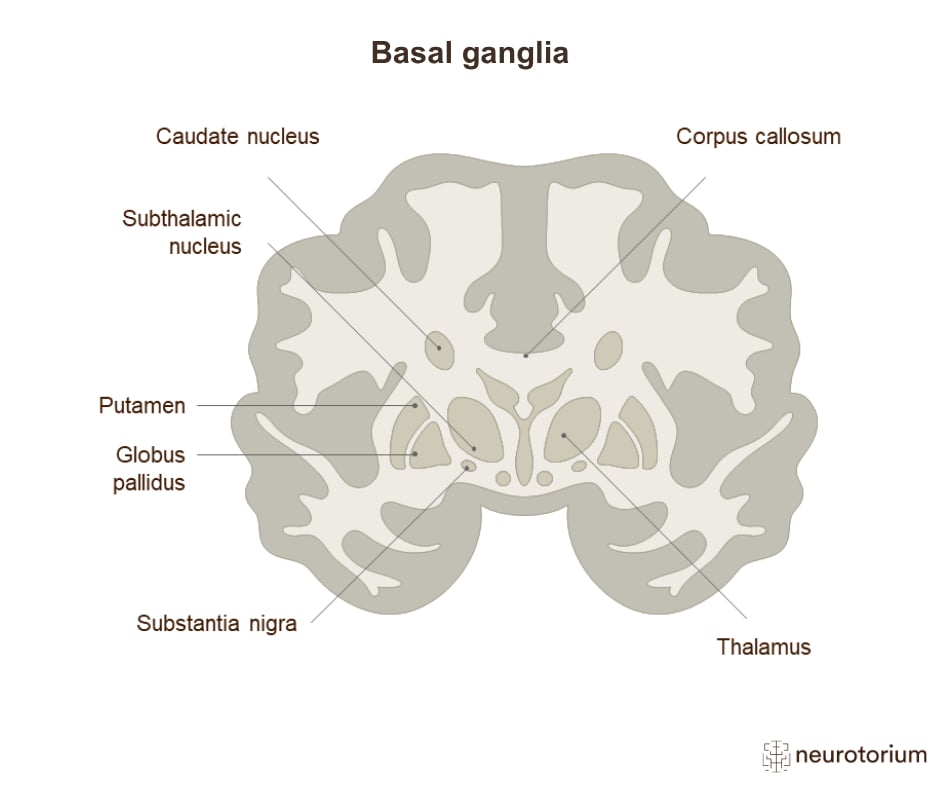
The basal ganglia are a group of subcortical nuclei that are important in motor control.1
Pathways:
- The caudate and putamen (striatum) the main input structures of the basal ganglia. GPi and SNr are the main output structures1,2
- Basal ganglia receives excitatory input from virtually all regions of the cortex. Sensory, motor, association and limbic areas of cortex all project to striatum1
- The major output from the basal ganglia is to the portions of the thalamus that project to prefrontal, premotor and motor cortex1,3
- The basal ganglia do not project directly to the spinal cord, therefore their effects on movement are indirect mediated by their connections between the thalamus and cortex.1,3
- There are two main pathways through the basal ganglia: the direct pathway is a direct connection from the striatum to GPi/SNr. The second, indirect pathway is from striatum to GPe to subthalamic nucleus to GPi/SNr1,2
Related content
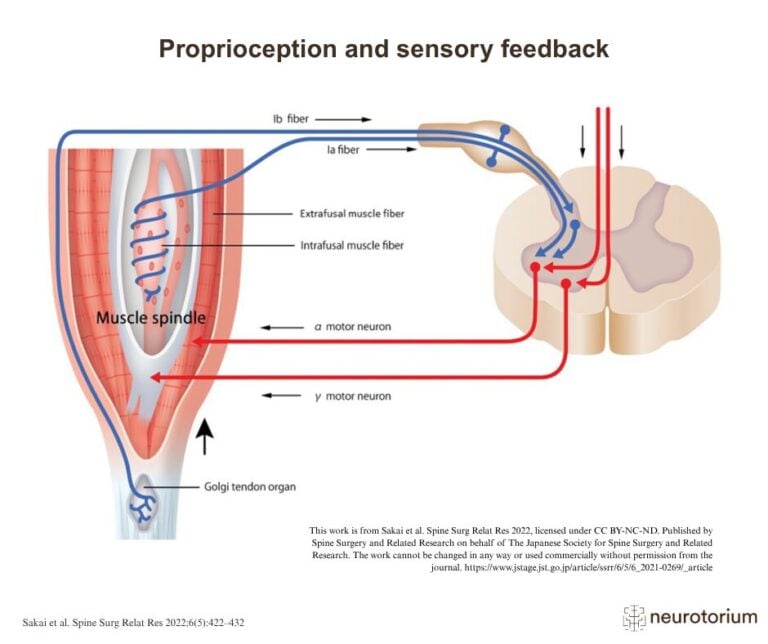
Proprioception and sensory feedback
Controlled movement relies on sensory feedback, particularly proprioception (the sense of body position in space and movement).
22.09.2026
Fundamentals of Neurobiology
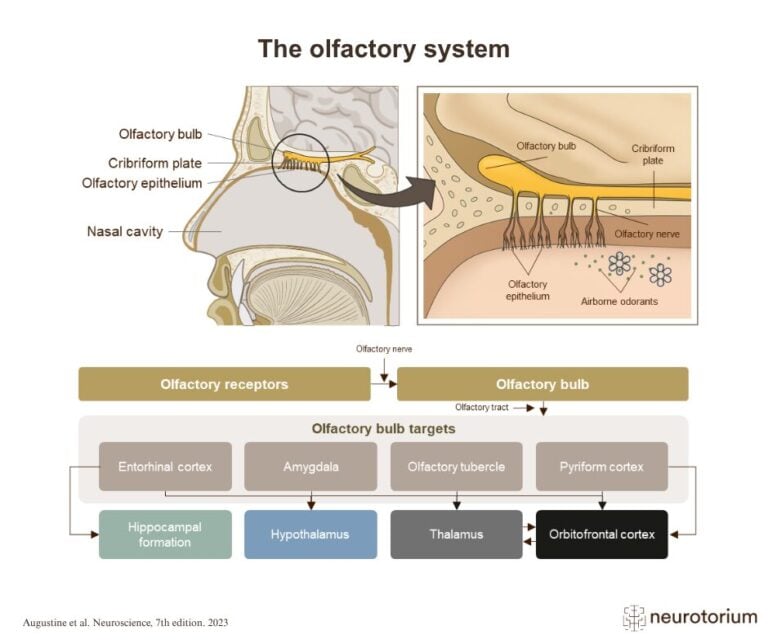
The olfactory system
The olfactory system detects airborne odor molecules in the nasal cavity and transmits this information to the olfactory bulb. From there, signals are relayed to several brain regions involved in smell perception, memory, emotion, and behaviour.
02.06.2026
Fundamentals of Neurobiology
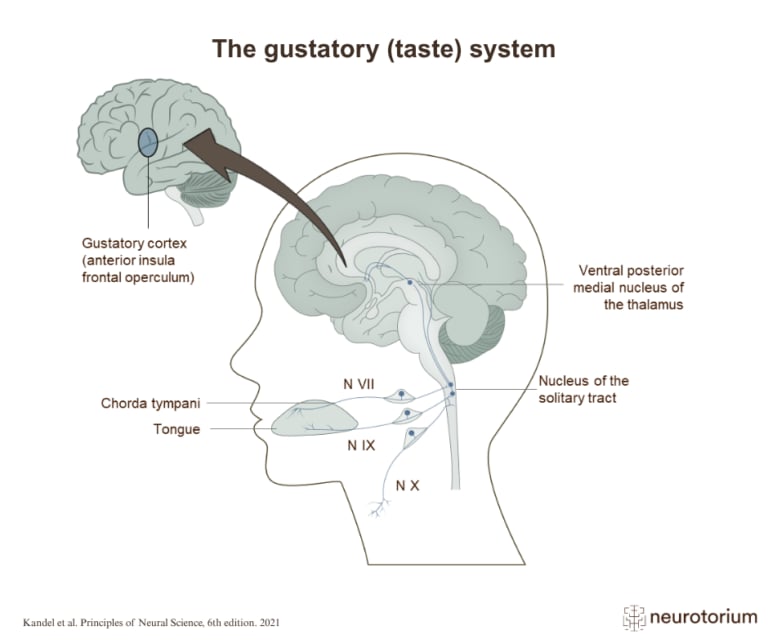
The gustatory (taste) system
The gustatory system detects taste stimuli on the tongue and relays this information through brainstem and thalamic pathways to the gustatory cortex.
02.06.2026
Fundamentals of Neurobiology