

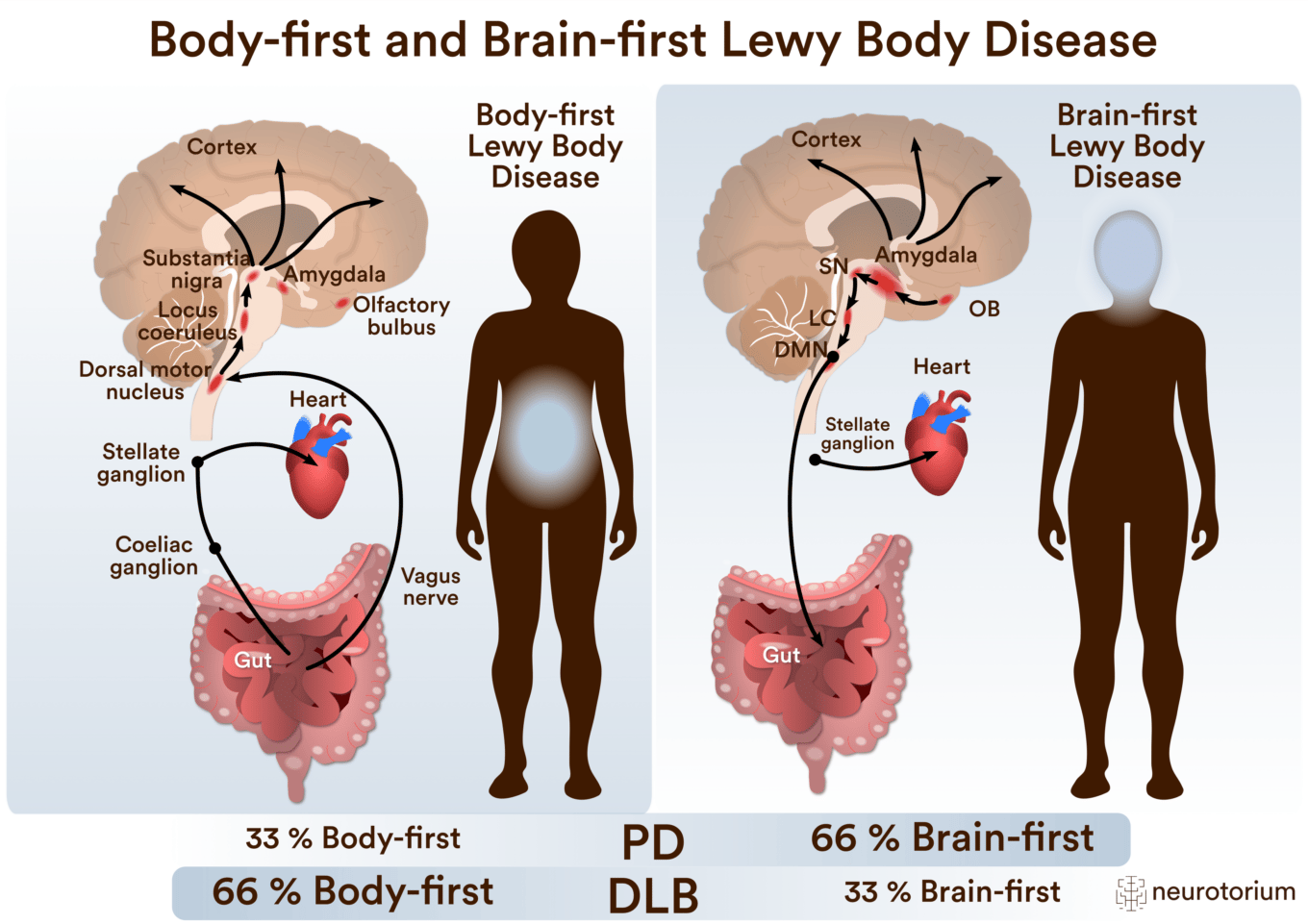
Characteristics of proposed body-first and brain-first subtypes of Parkinson’s Disease (PD). Arrows indicate the direction of spread of α-synuclein pathology. In body-first Parkinson disease (left), the first α-synuclein aggregation occurs in the gut and propagates through the sympathetic nervous system to the sympathetic trunk and heart, and via the vagus nerve to the brainstem. Autonomic dysfunction and REM sleep behaviour disorder (RBD) are prodromal features. In brain-first PD (right), the initial α-synuclein pathology enters via the olfactory bulb (OB) and spreads to the amygdala and nigrostriatal dopamine system. The pathology then descends through the brainstem and RBD and dysautonomia generally develop after the onset of parkinsonism. During the later disease stages, nearly all patients have widespread pathology in these systems and their symptomatology therefore converges.
Related content
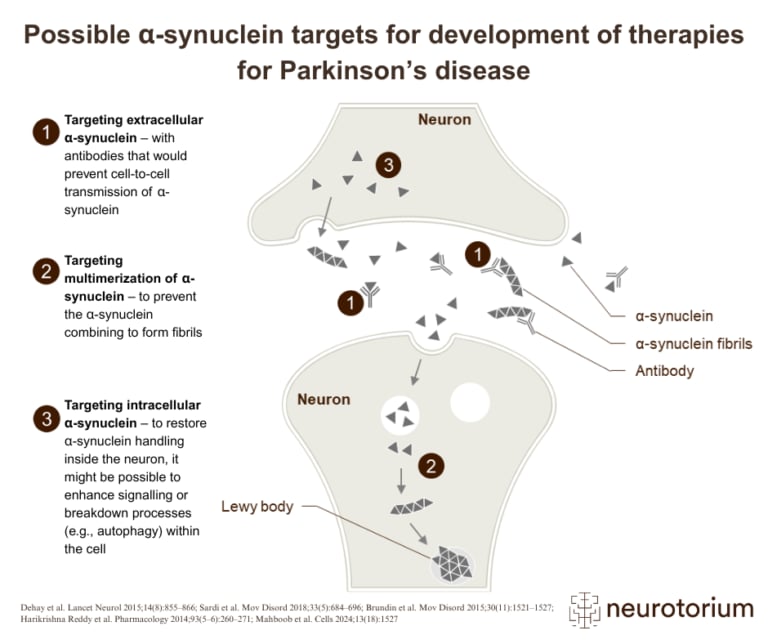
Overview of three therapeutic strategies targeting alpha-synuclein in the development of disease-modifying treatments for Parkinson’s disease
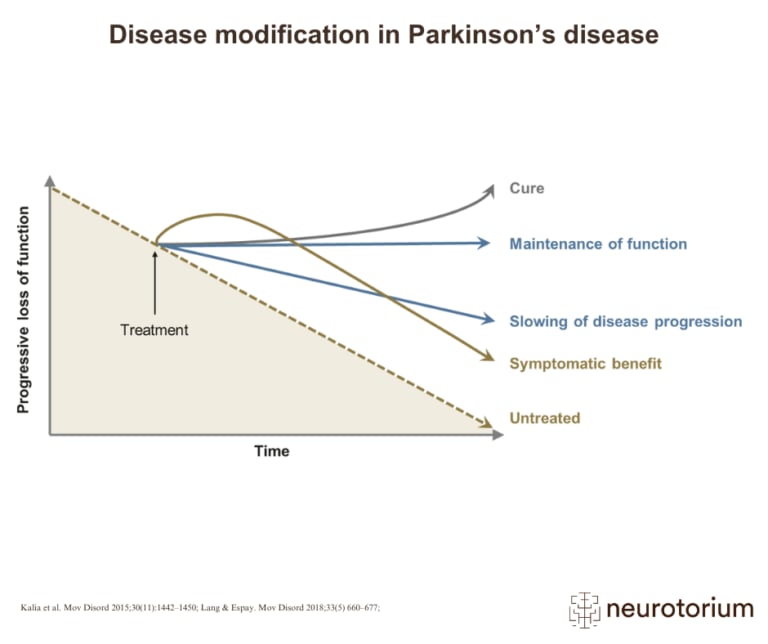
Graphical representation of how various treatment strategies can impact disease progression in Parkinson’s disease, from symptom relief to potential cure
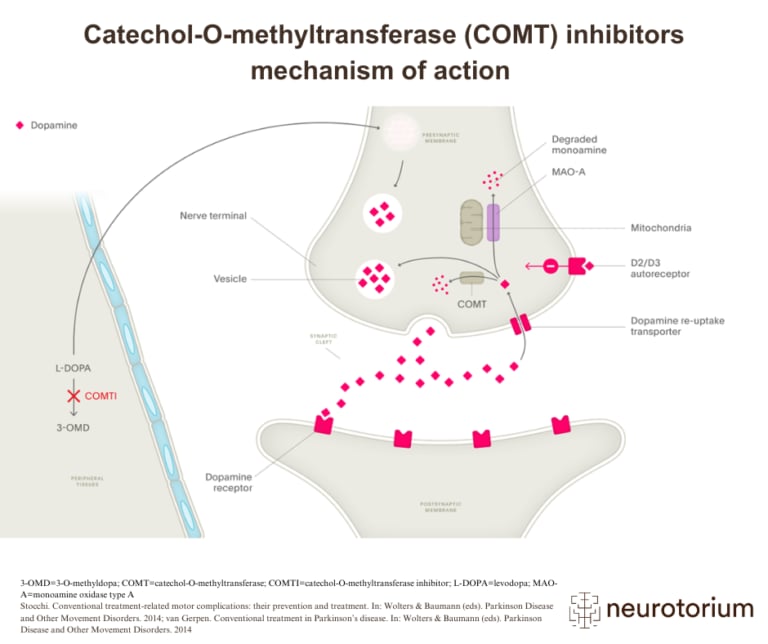
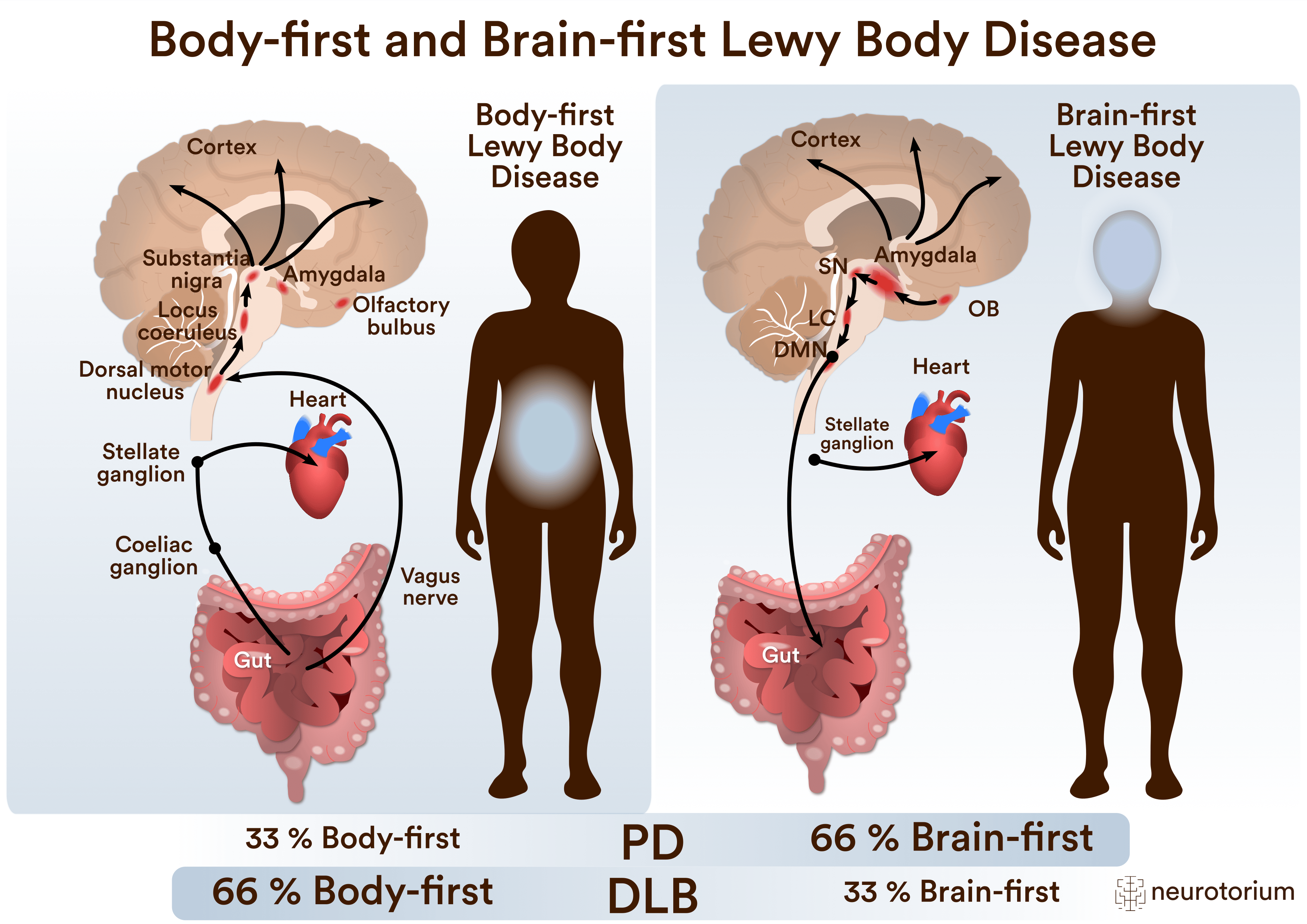
Illustration of how COMT inhibitors increase dopamine availability in Parkinson’s disease by preventing the breakdown of L-DOPA