

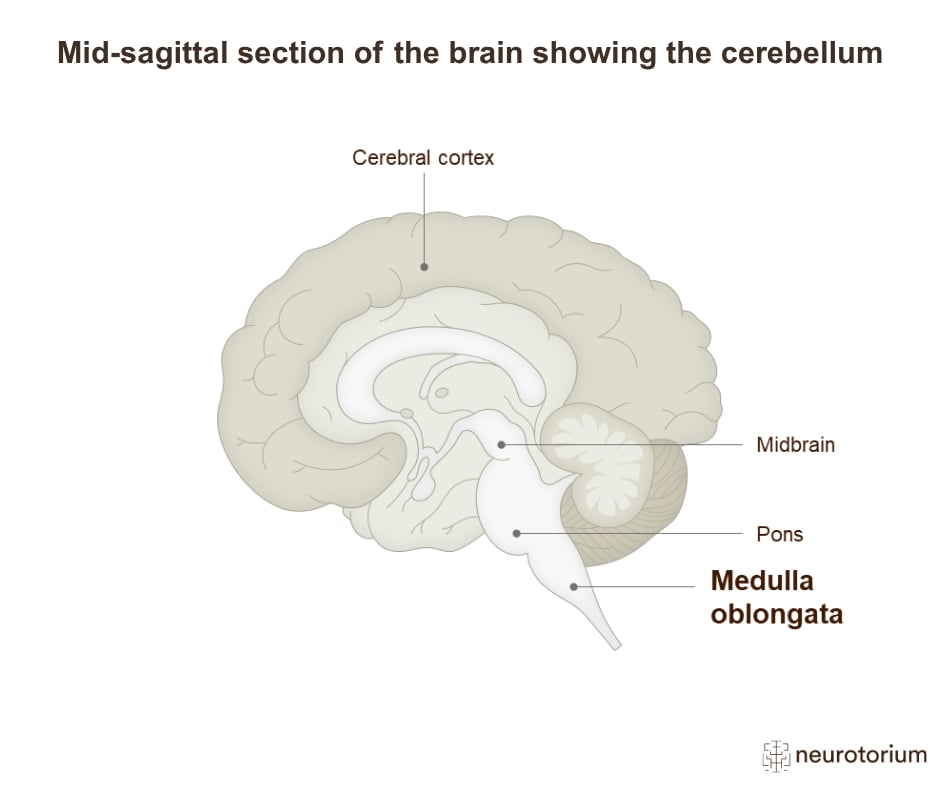
The cerebellum overlies the pons and medulla on the dorsal surface of the brainstem1.
The cerebellum is attached to the brainstem by 3 pairs of fibre bundles: the superior, the middle, and the inferior cerebellar peduncles2. Sagittal fissures near the midline divide the cerebellum into 3 major areas: 2 lateral hemispheres divided by fissures, and a midline ridge called the vermis3
The cerebellum plays a critical role in motor control and motor learning, particularly for fast or complex movements.1,3 It is also involved in balance, as well as having sensory, cognitive, and language functions1,3
Related content
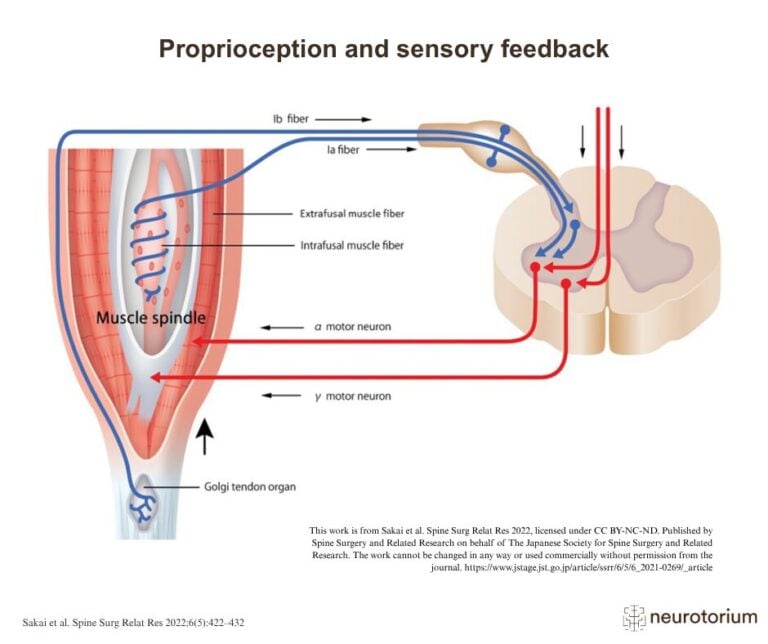
Controlled movement relies on sensory feedback, particularly proprioception (the sense of body position in space and movement).
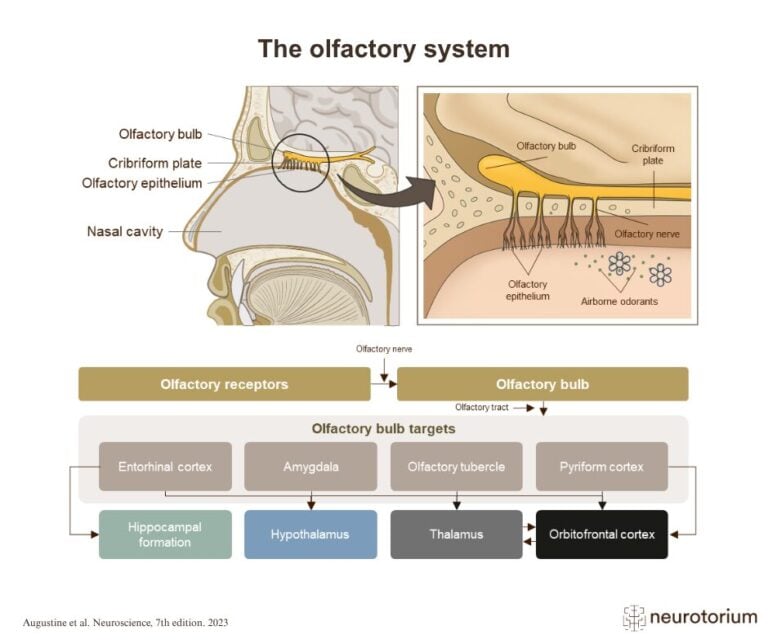
The olfactory system detects airborne odor molecules in the nasal cavity and transmits this information to the olfactory bulb. From there, signals are relayed to several brain regions involved in smell perception, memory, emotion, and behaviour.
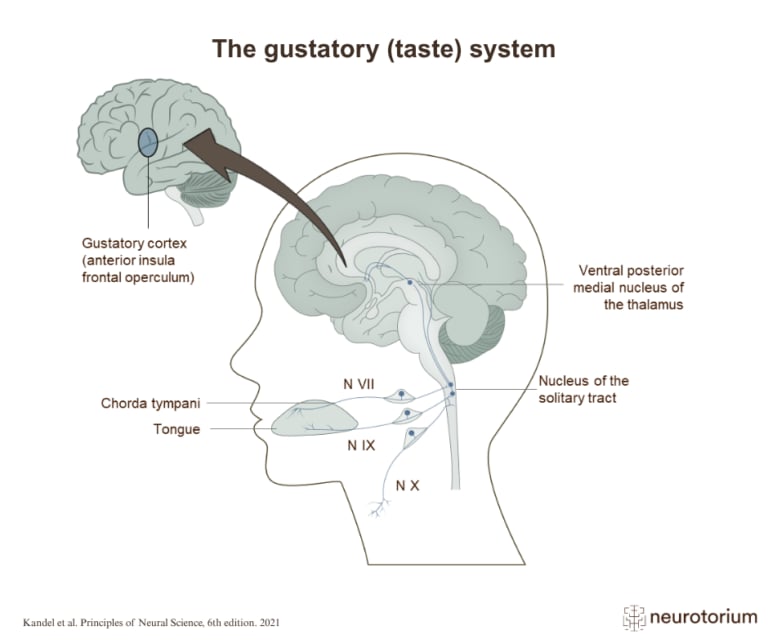
The gustatory system detects taste stimuli on the tongue and relays this information through brainstem and thalamic pathways to the gustatory cortex.