

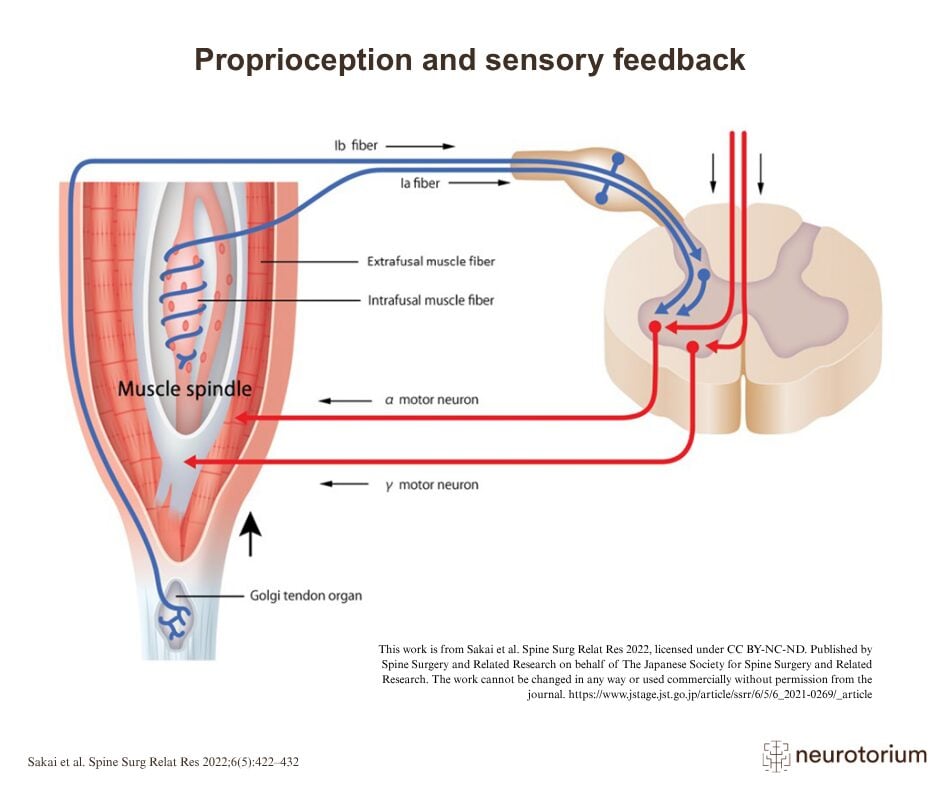
Controlled movement relies on sensory feedback, particularly proprioception (the sense of body position in space and movement)1. Sensory information from muscles, tendons, and joints is constantly fed back to the CNS, allowing the motor system to adjust movements in real time for precision, balance, and coordination.1
Proprioceptors provide information to the brain regarding body positioning and movement:1
• Muscle spindles (fibrous capsules within the muscles) measure muscle stretch (length)
• Golgi tendon organs (located between the outer muscle fibres and their points of attachment at the bones) measure muscle tension
Related content
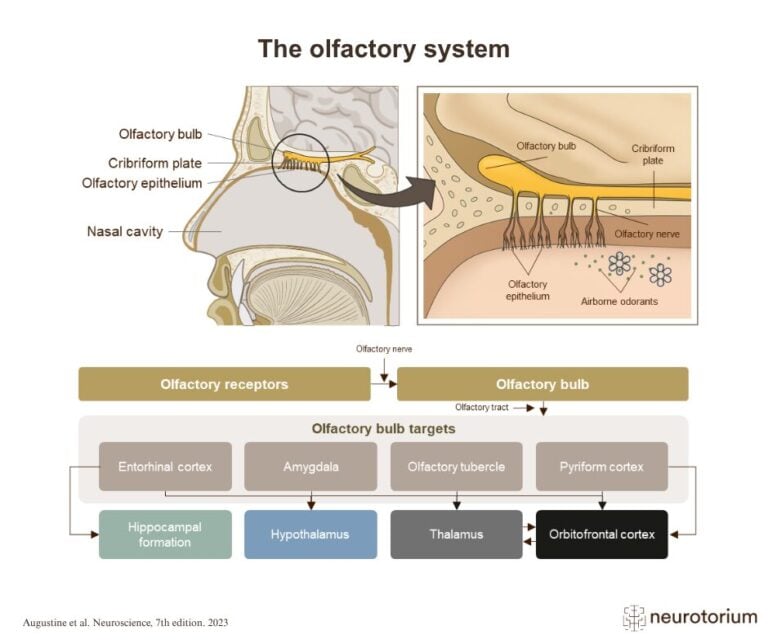
The olfactory system detects airborne odor molecules in the nasal cavity and transmits this information to the olfactory bulb. From there, signals are relayed to several brain regions involved in smell perception, memory, emotion, and behaviour.
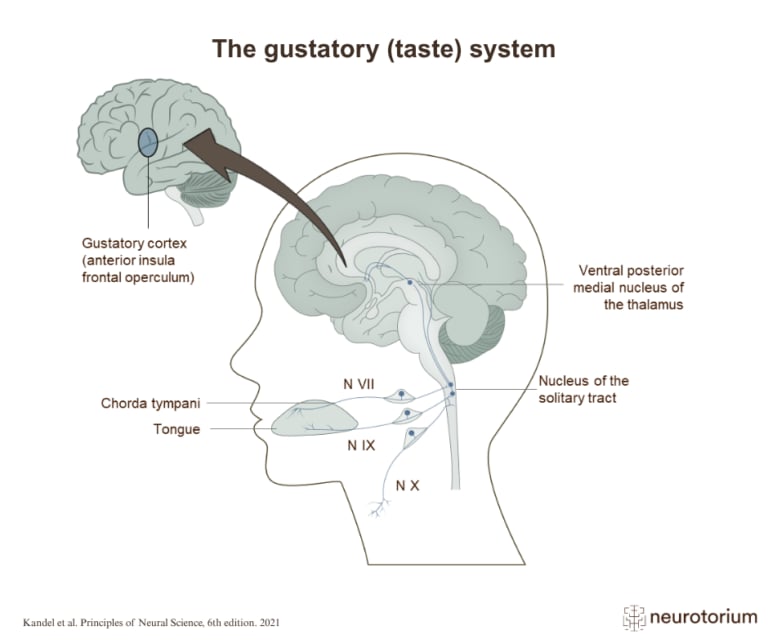
The gustatory system detects taste stimuli on the tongue and relays this information through brainstem and thalamic pathways to the gustatory cortex.
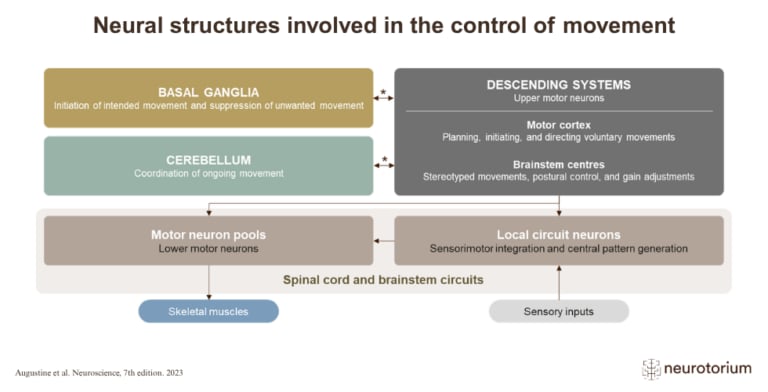
Movement is controlled by a network of brain and spinal cord structures that work together to plan, initiate, coordinate, and execute actions.