

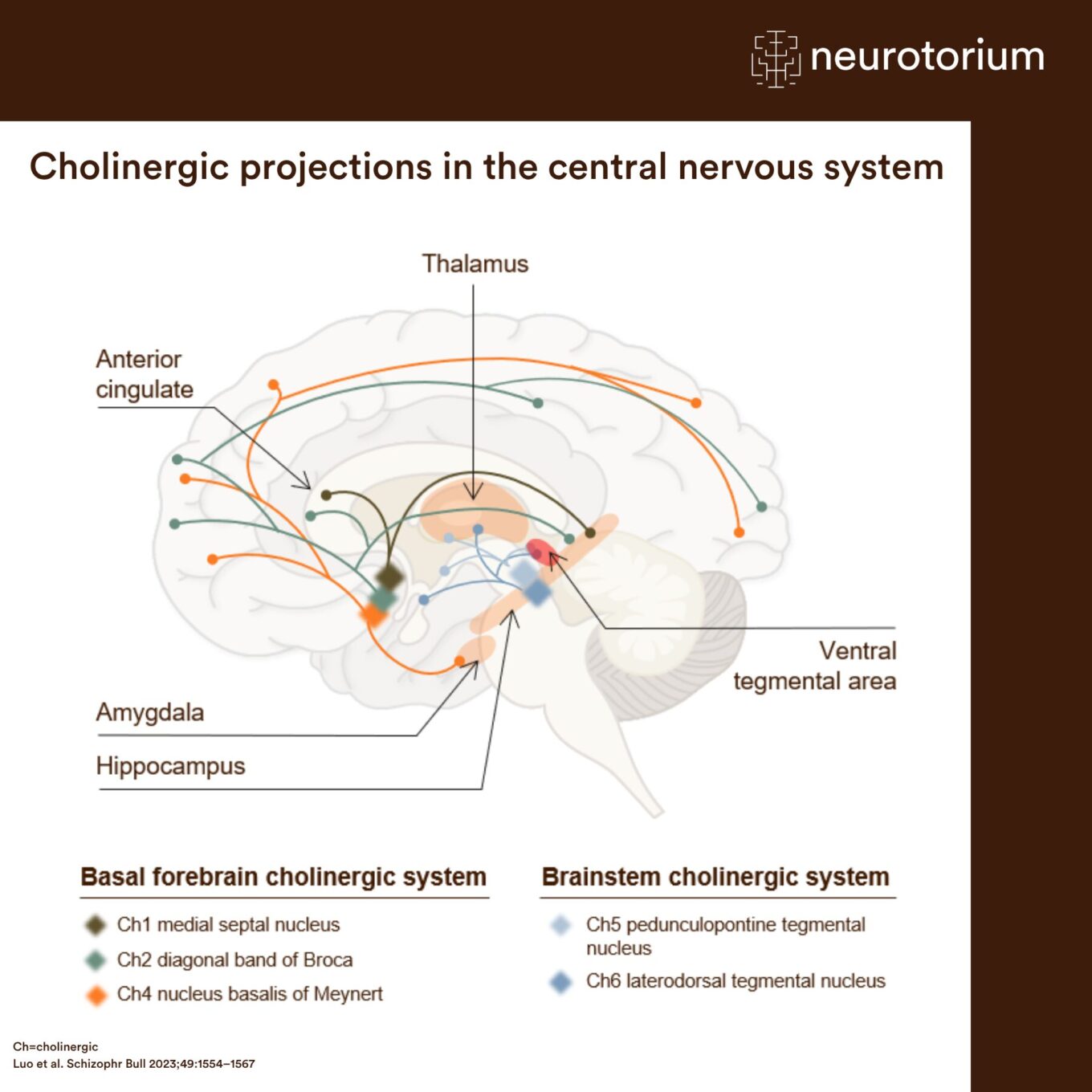
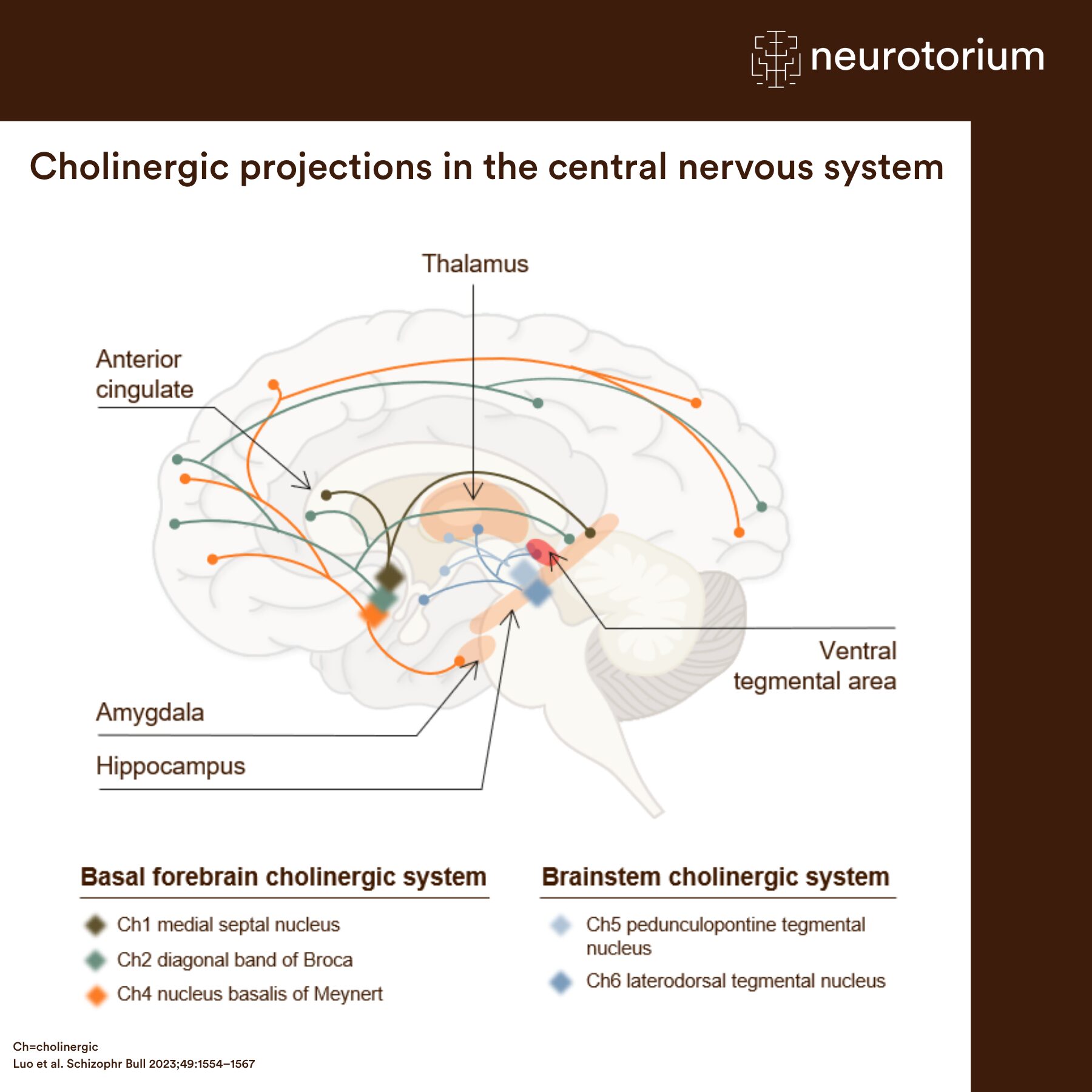
Various studies highlight the potential role of muscarinic systems in schizophrenia. The muscarinic system projects from the basal forebrain and brainstem regions to multiple brain regions implicated in the neurobiology of schizophrenia, including the basal ganglia and frontal and temporal cortices.1-3 Meta-analytic findings show reduced cortical and subcortical muscarinic receptors, particularly M1/M4 subtypes in the striatum, hippocampus, and fronto-cingulate cortex post-mortem.4 Studies in healthy volunteers show that centrally acting antimuscarinic drugs can induce psychotic and negative symptoms as well as cognitive impairments, providing evidence that perturbations in the muscarinic system could lead to symptoms similar to schizophrenia.1
A medicine combining xanomeline and trospium chloride been shown to be effective for acute schizophrenia and has recently been approved in some countries.5 As xanomeline is a centrally acting muscarinic M1 and M4 agonist, this provides evidence that targeting the muscarinic system is a viable therapeutic strategy.5 Trospium is a peripherally restricted antimuscarinic designed to reduce the peripheral pro-cholinergic side effects of xanomeline.5
Related content
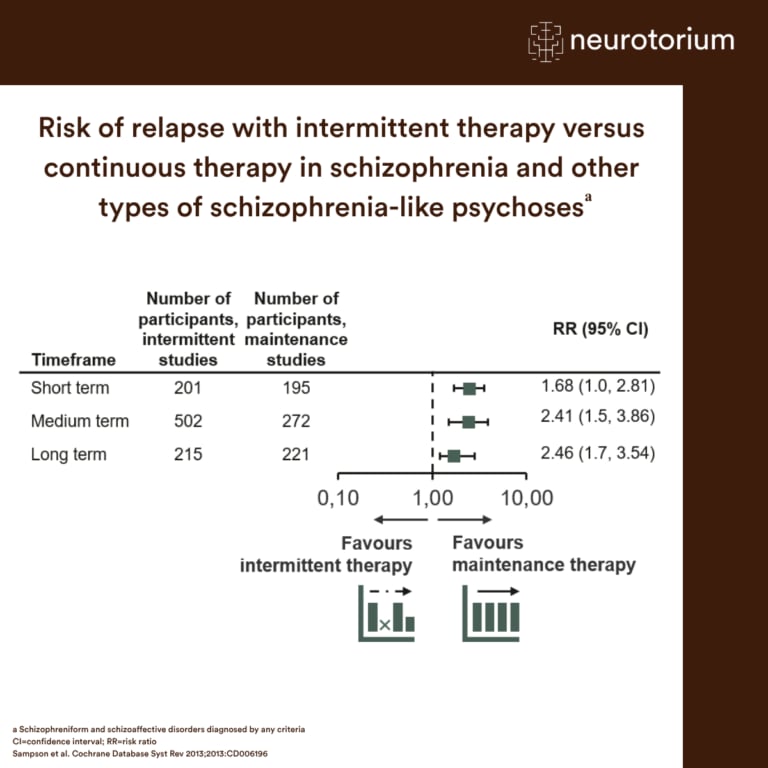
Continuous maintenance therapy is associated with a lower risk of relapse than intermittent treatment, supporting ongoing treatment strategies in schizophrenia and related psychotic disorders.
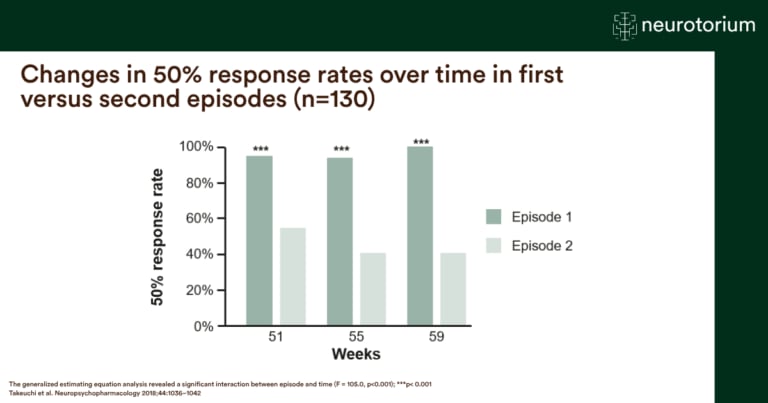
Treatment response tends to be higher during a first episode than during subsequent episodes, emphasizing the importance of early intervention and effective management.
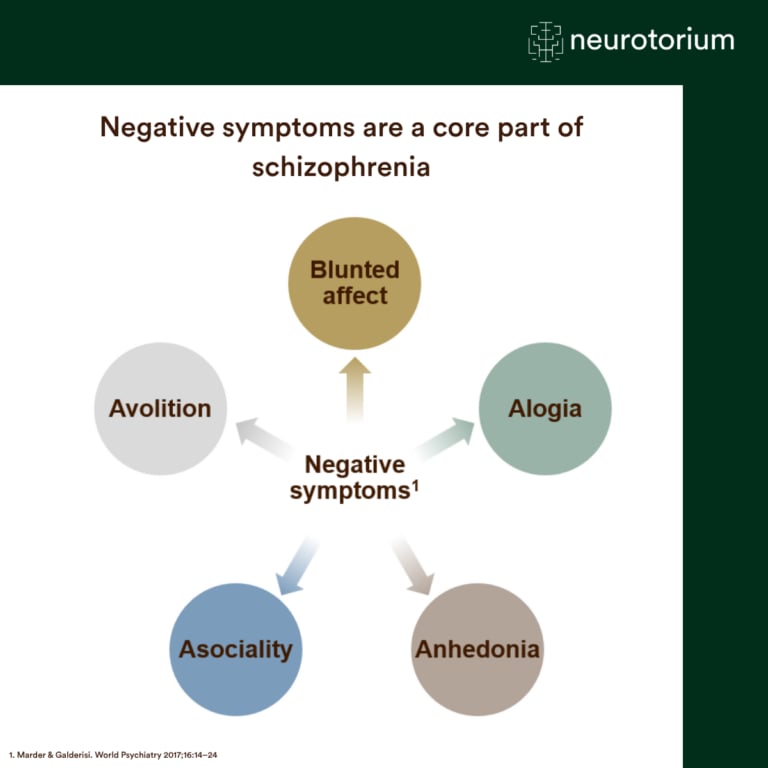
Negative symptoms are a core feature of schizophrenia and can have a profound impact on functioning, social relationships, and quality of life.