

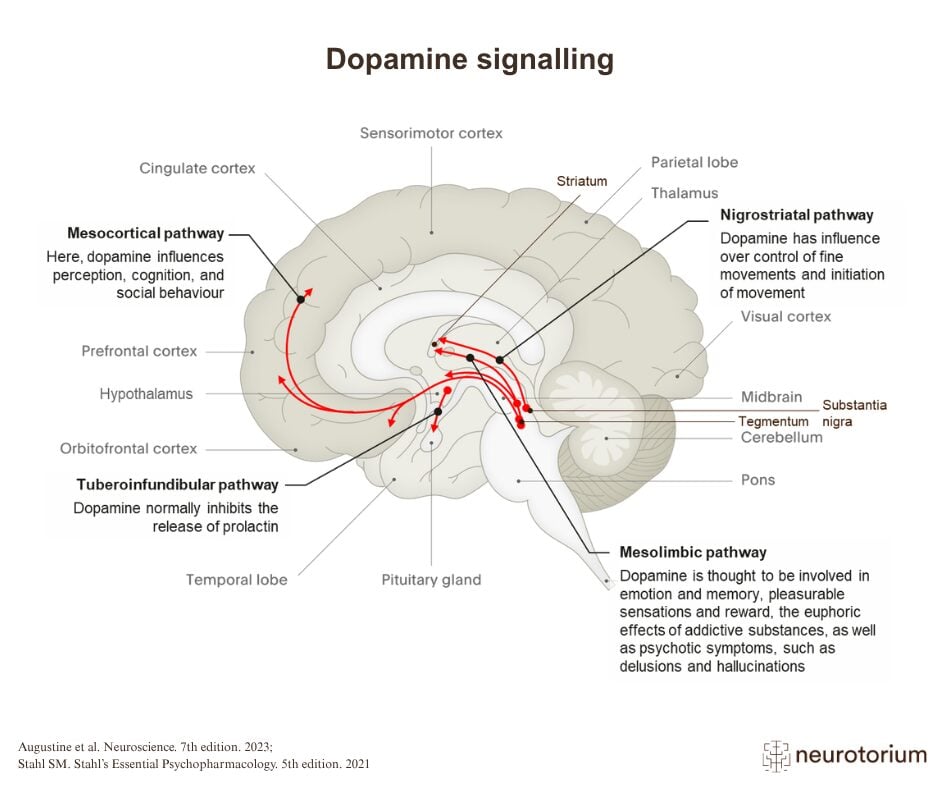
- Dopamine is produced from the precursor molecule L-DOPA (dihydroxyphenylalanine) by
DOPA decarboxylase1,2 - Dopamine is removed from the synapse by specialised dopamine transporters, and is catabolised by monoamine oxidase (MAO) and catechol-O-methyltransferase (COMT)1,2
- Dopamine is involved in movement control, motivation, reward, and reinforcement3; many addictive substances work by affecting dopaminergic neurons1,2
Dopamine receptors influence the activity of the second messenger, cyclic AMP, which is involved in many biochemical processes within a neuron.4 Dopamine receptor subtypes D1 and D5 increase the levels of cyclic AMP, whereas D2, D3, and D4 subtypes decrease the levels of cyclic AMP (both mechanisms work via the promotion or inhibition, respectively, of adenyl cyclase, which catalyses the conversion of ATP to cAMP).4 Depending on which receptor subtype the neurotransmitter binds with on the postsynaptic neuron, dopamine can increase or decrease cellular activity.5
Dopamine also plays a key role in the regulation of prolactin – a hormone, produced and released into the bloodstream by the pituitary gland, involved in the secretion of milk and breast growth; unusually high amounts are responsible for impotence and loss of libido in men, and changes in the menstrual cycle in women.6 Certain D2 receptor antagonists such as some antipsychotics, can cause hyperprolactinaemia.6
Related content
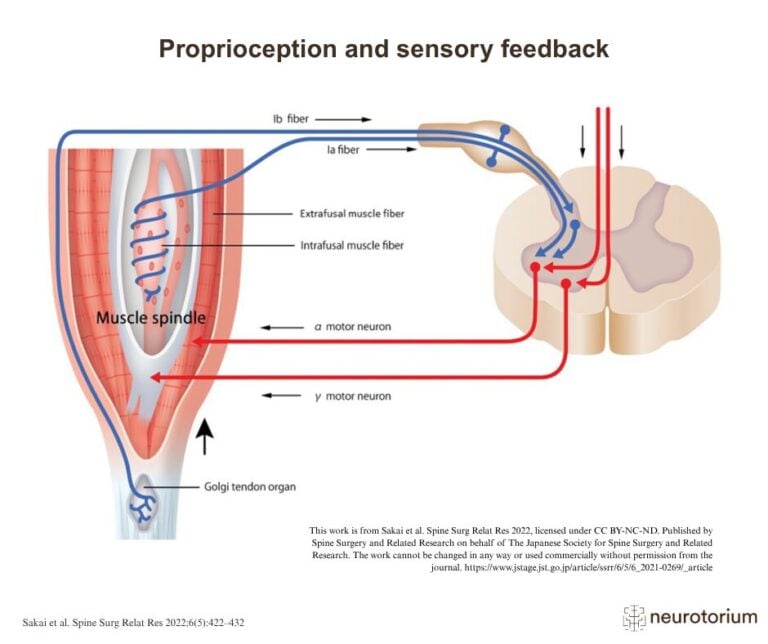
Controlled movement relies on sensory feedback, particularly proprioception (the sense of body position in space and movement).
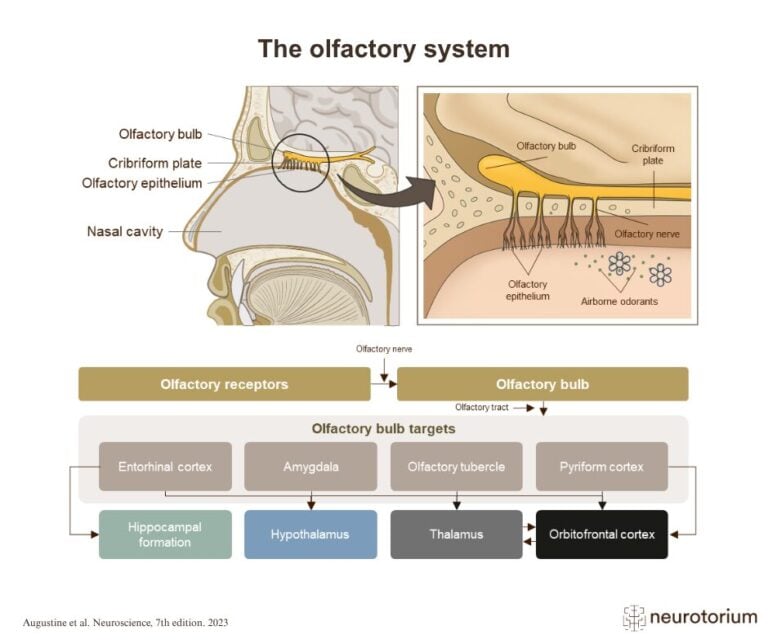
The olfactory system detects airborne odor molecules in the nasal cavity and transmits this information to the olfactory bulb. From there, signals are relayed to several brain regions involved in smell perception, memory, emotion, and behaviour.
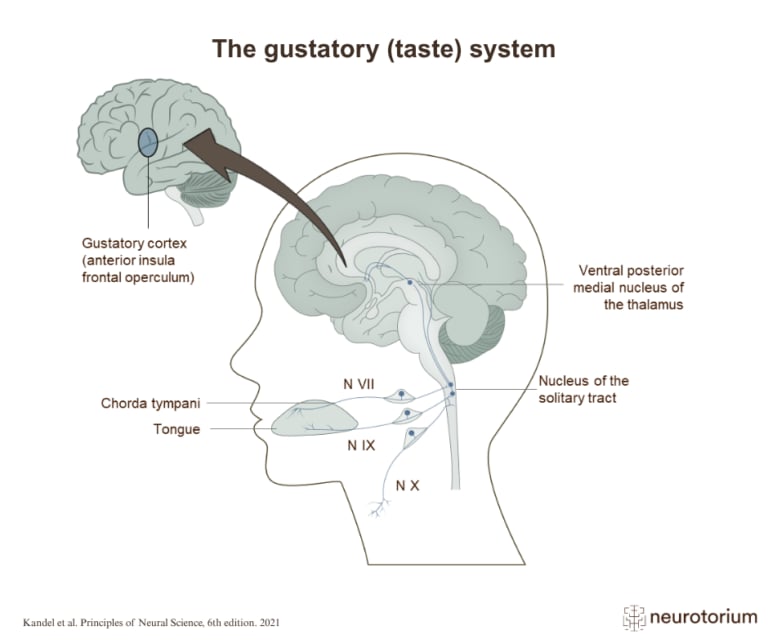
The gustatory system detects taste stimuli on the tongue and relays this information through brainstem and thalamic pathways to the gustatory cortex.