



Index for
slide deck
Cellular and molecular neuroscience
Cellular and molecular neuroscience
Cellular components of the nervous system
Cellular components of the nervous system
Neurons
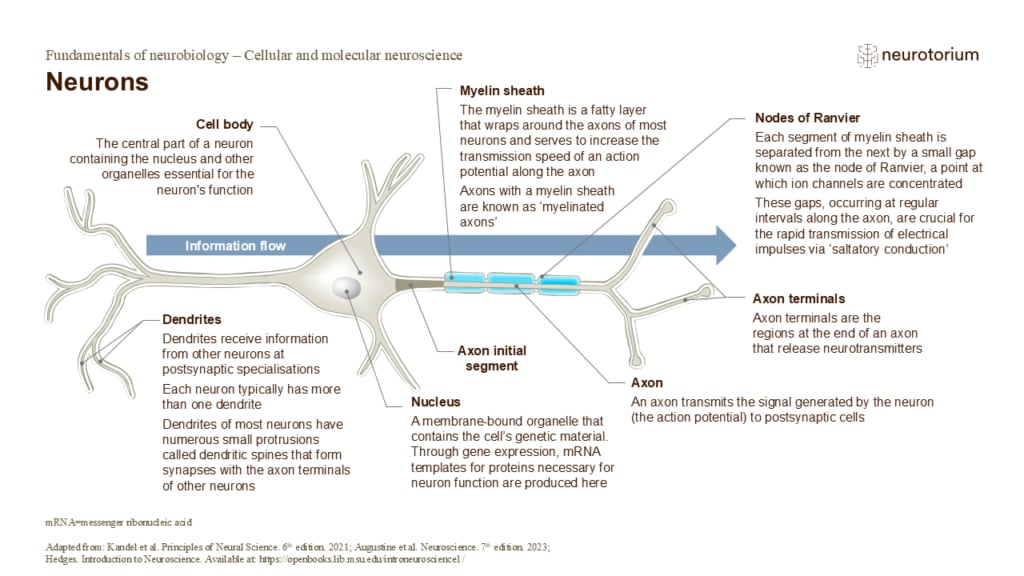
The neuron constitutes the functional unit of the nervous system, and there are many billions of neurons in the brain.1,4,5 Each neuron has the ability to connect with up to a thousand other neurons via specialized sites of communication called synapses, creating complex …
Major morphological neuronal cell classes
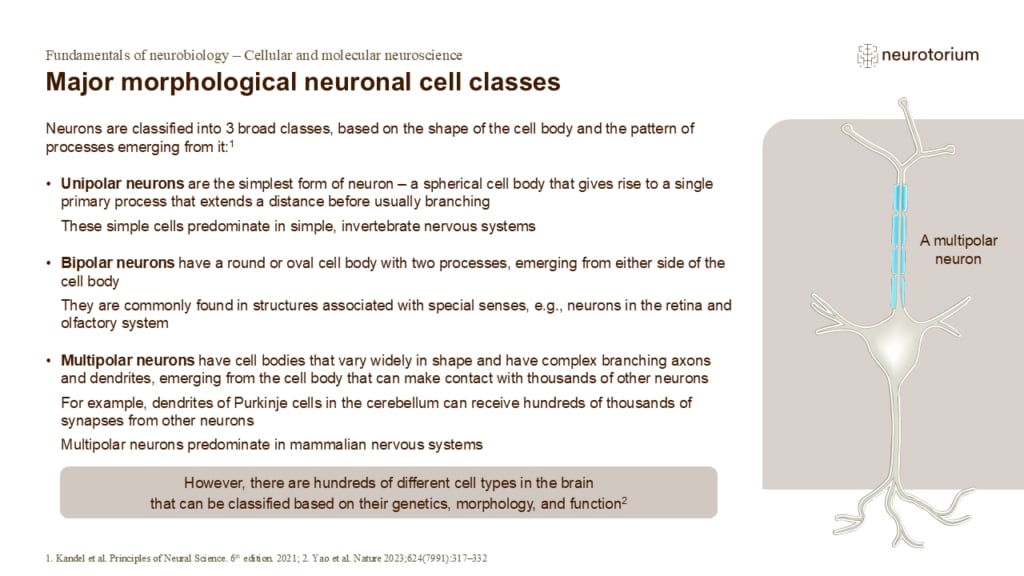
The human brain is often quoted to contain 100 billion neurons, with many times more supporting glial cells, although the origin of this estimate is unclear.3 While various attempts have been made to estimate the numbers (and have suggested values ranging from 85 to 120 b…
Glia
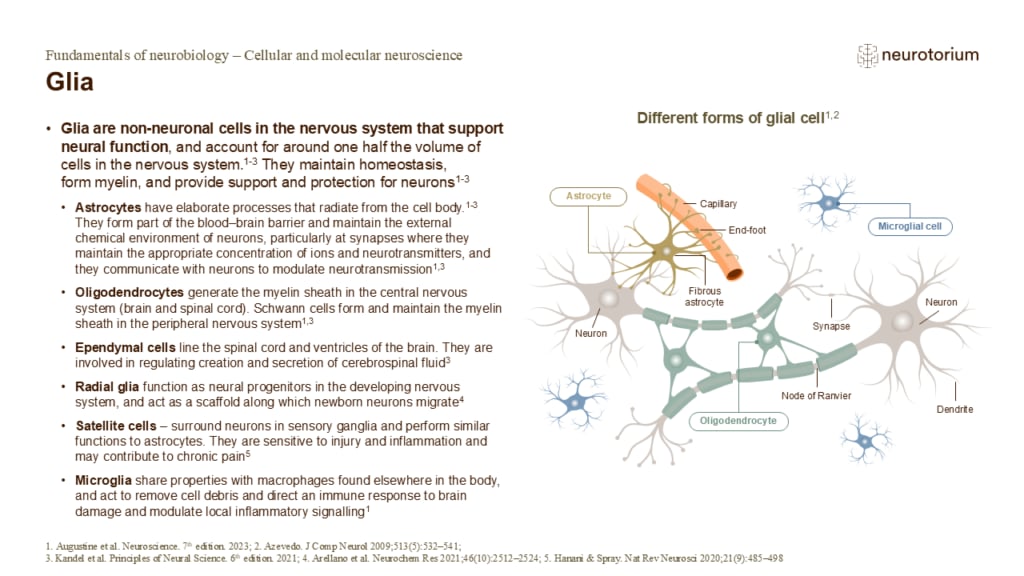
Alongside the neurons of the brain, a complex network of supporting cells known as glial cells is necessary to maintain the proper functioning of the central nervous system.1,3,6 Glial cells are divided into the macroglia – which include astrocytes, oligodendrocytes and …
Neurotransmission
Neurotransmission
The resting membrane potential
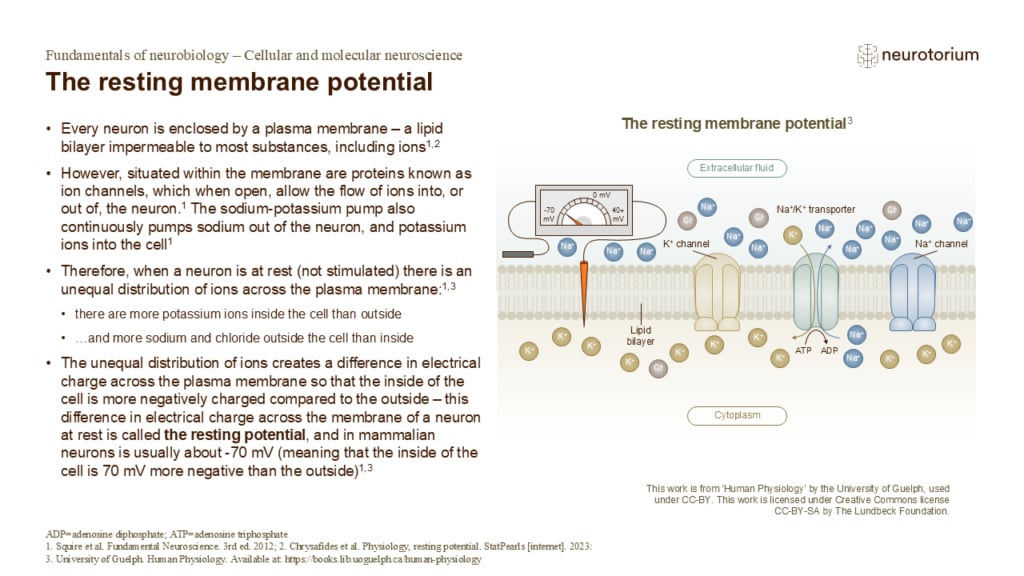
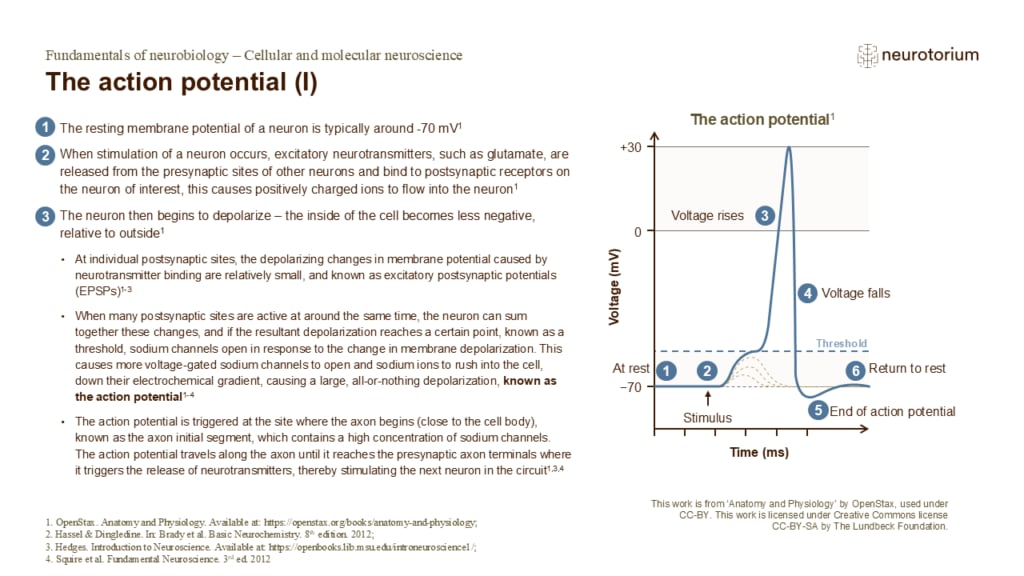
An understanding of the resting membrane potential and how action potentials are generated is key to understanding how information is transmitted in the nervous system.1-3
References:
1. Membrane potential and action potential. In: Squire LR, Berg D, Bloom FE, et al. (eds…
The action potential (I)
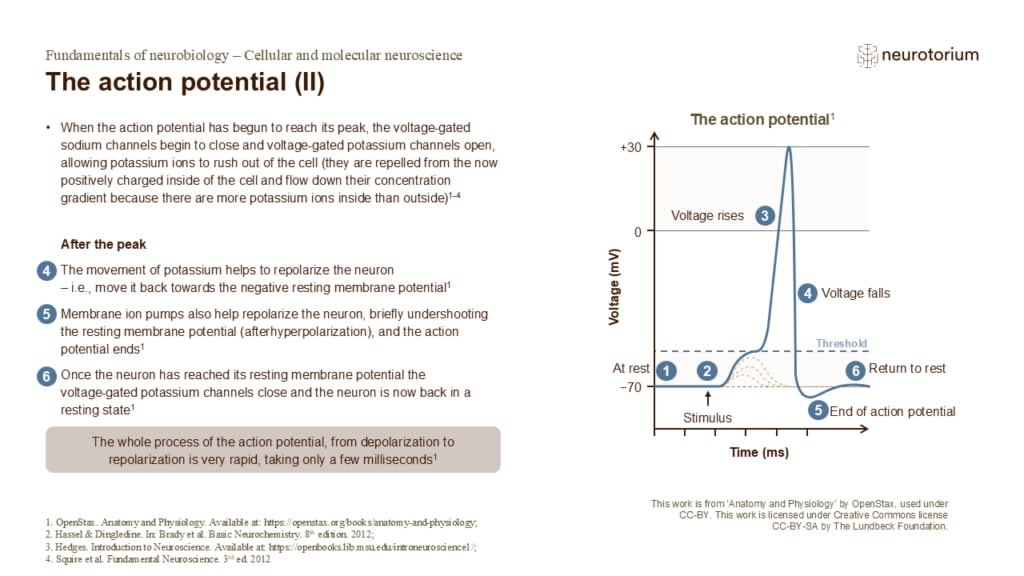
The action potential (II)
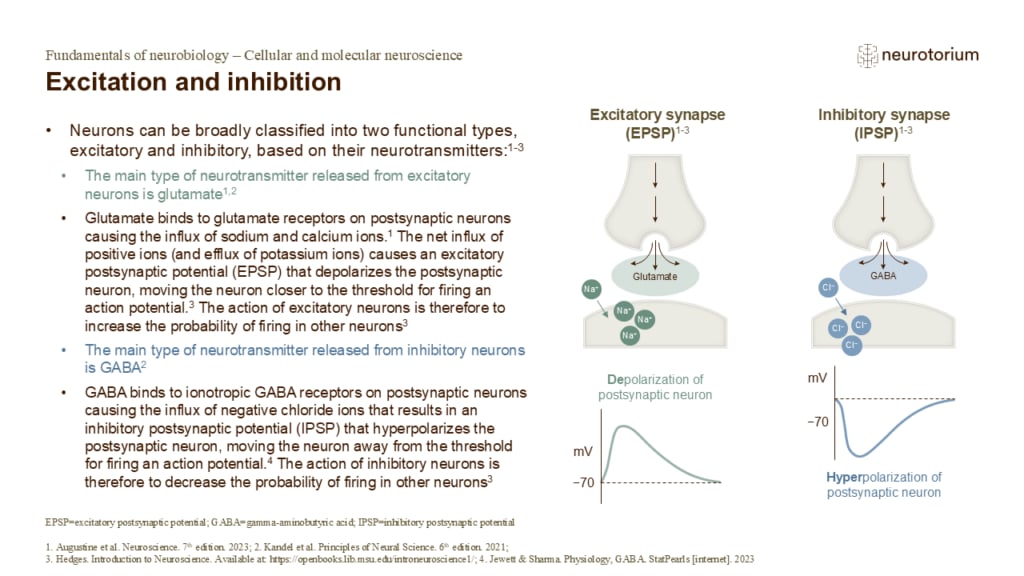
Excitation and inhibition
The balance between excitation and inhibition in the brain is a fundamental principle of neural circuit function.5 It refers to the dynamic equilibrium between excitatory signals, which increase the likelihood of neuronal firing (mainly mediated by glutamate), and inhibit…
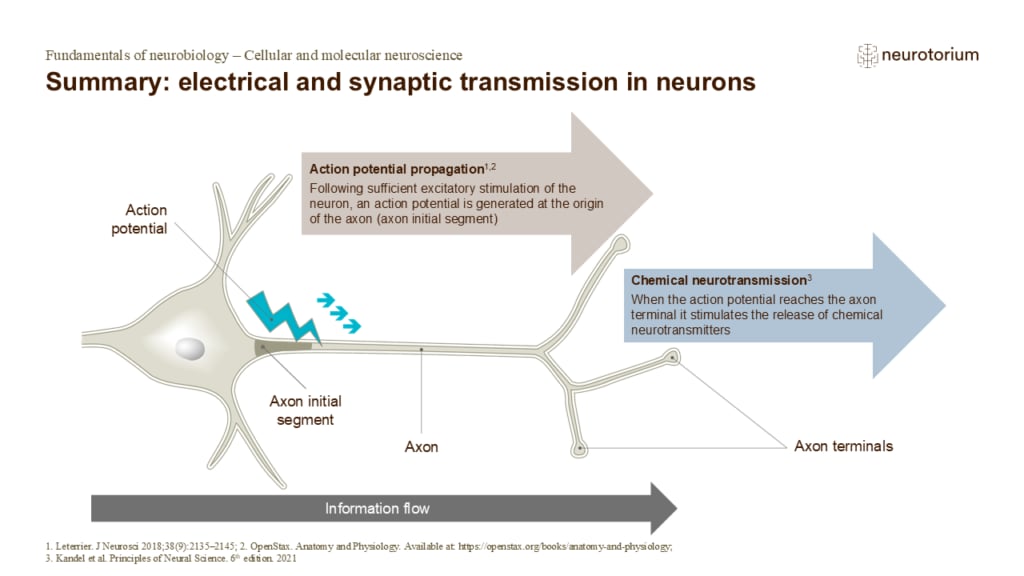
Summary: electrical and synaptic transmission in neurons
Chemical neurotransmission
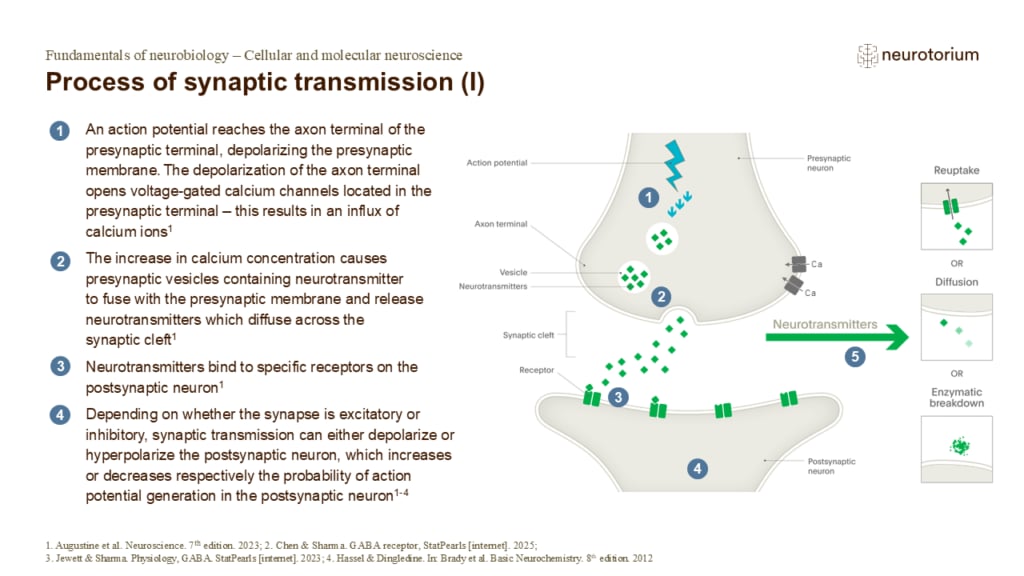
An action potential is generated at the origin of the axon following sufficient excitatory stimulation of the neuron.2 The action potential is created by movement of ions across the cell membrane and it travels along the length of the axon from …
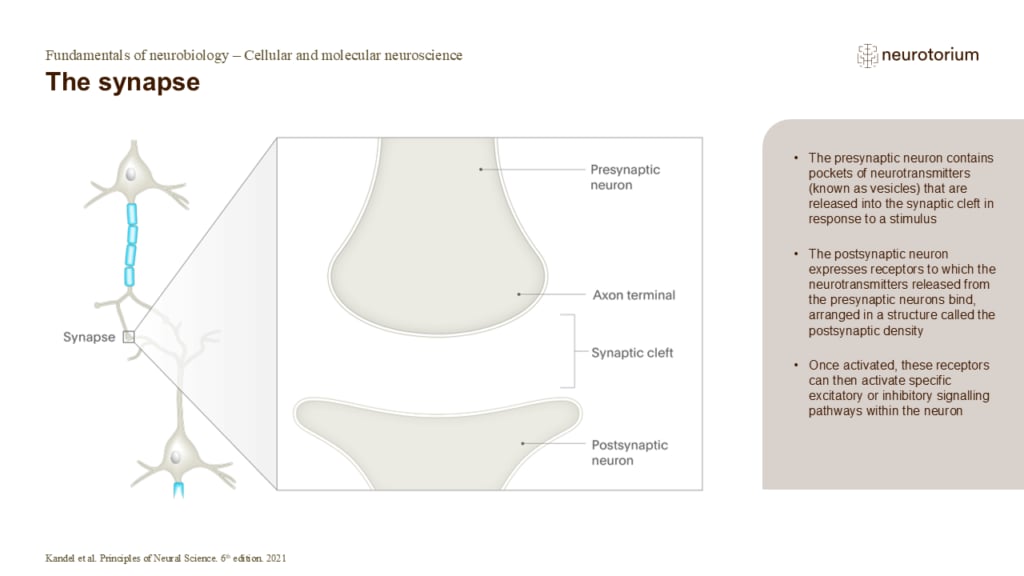
The synapse
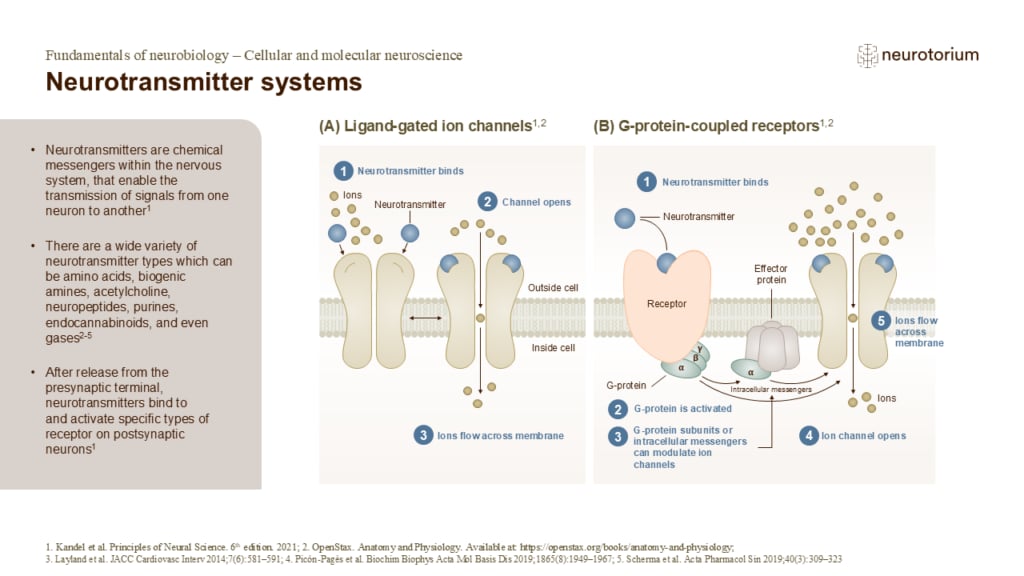
Neurons are not physically connected; two neurons are separated by a gap, known as a synaptic cleft.1 Because neurons do not touch, and an action potential does not ‘jump’ across a synaptic cleft at a chemical synapse, the electrical signal in the presynaptic neuron must …
Process of synaptic transmission (I)
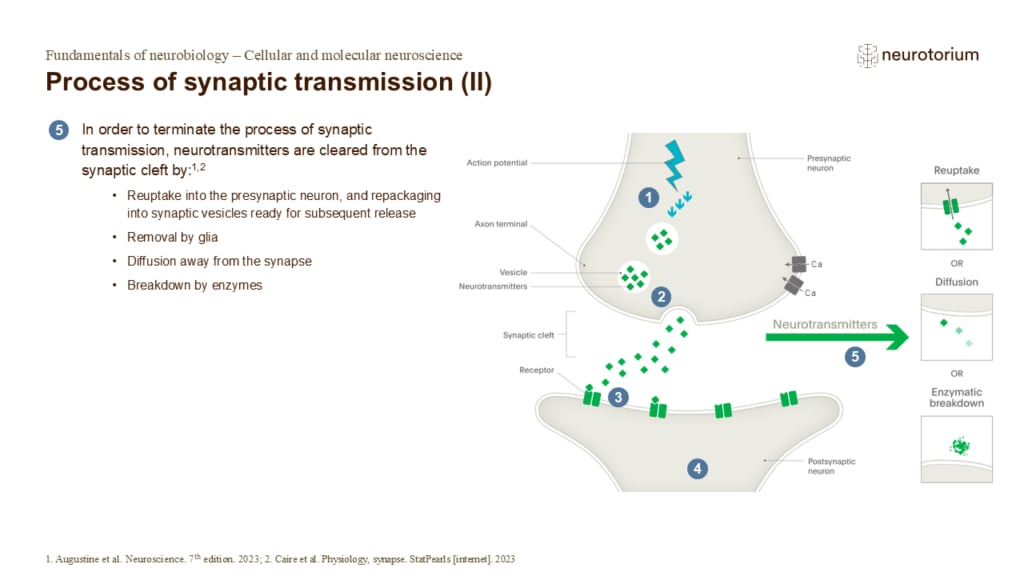
The process of chemical neurotransmission is outlined in brief on the slide. An action potential arrives at the presynaptic terminal, which causes voltage-gated calcium channels to open, leading to a rapid influx of calcium (detail not shown on slide).1 The increased calc…
Process of synaptic transmission (II)
Reuptake is the mechanism by which a neurotransmitter is taken back into the axon terminal from where it was released.1,2
References:
1. Synaptic transmission. In: Augustine GJ, Groh J, Huettel S, et al. (eds). Neuroscience. 7th edition. Oxford University Press, 2023.
2. …
Related content
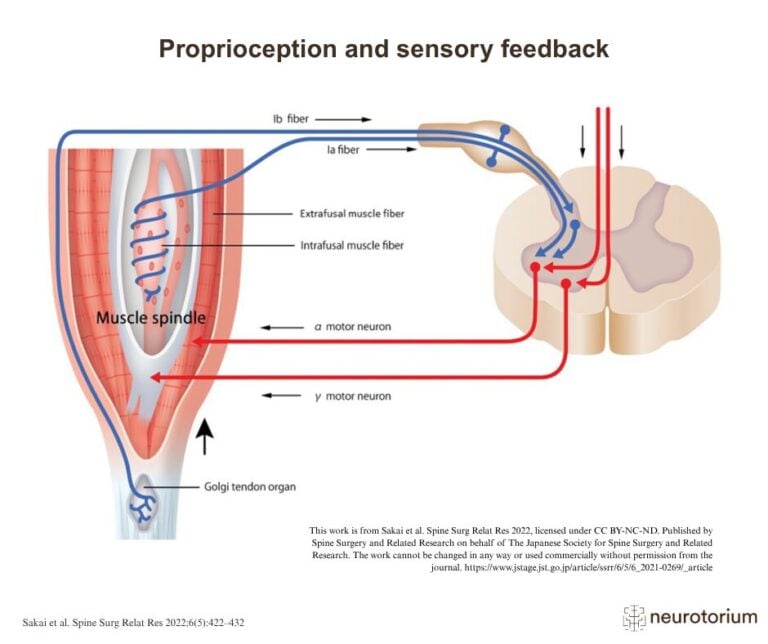
Controlled movement relies on sensory feedback, particularly proprioception (the sense of body position in space and movement).
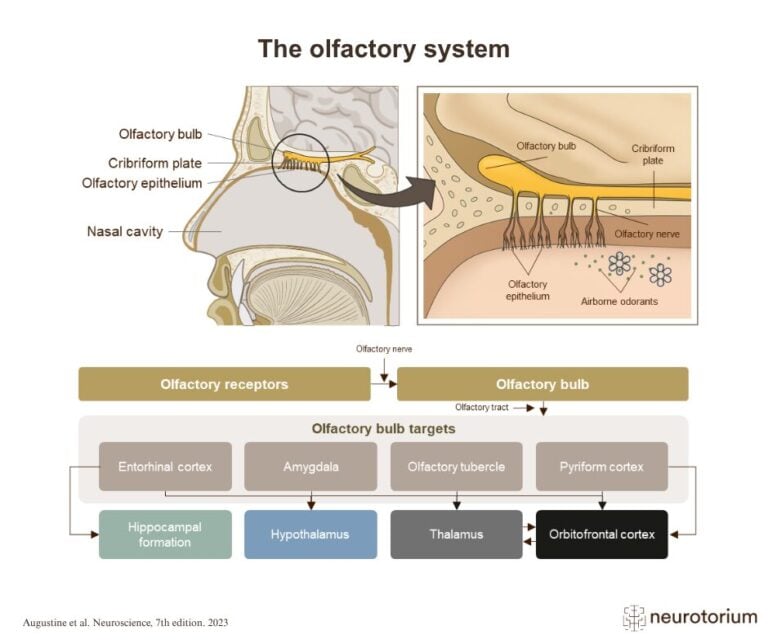
The olfactory system detects airborne odor molecules in the nasal cavity and transmits this information to the olfactory bulb. From there, signals are relayed to several brain regions involved in smell perception, memory, emotion, and behaviour.
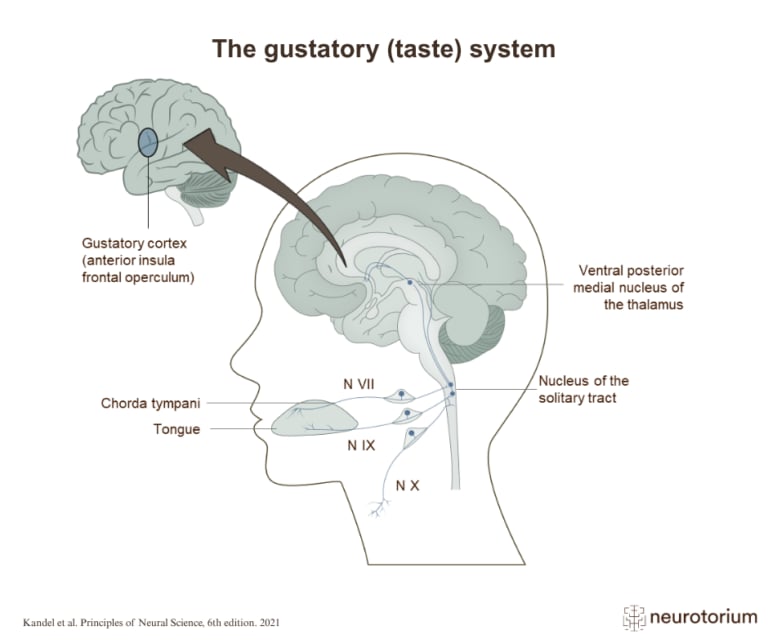
The gustatory system detects taste stimuli on the tongue and relays this information through brainstem and thalamic pathways to the gustatory cortex.