

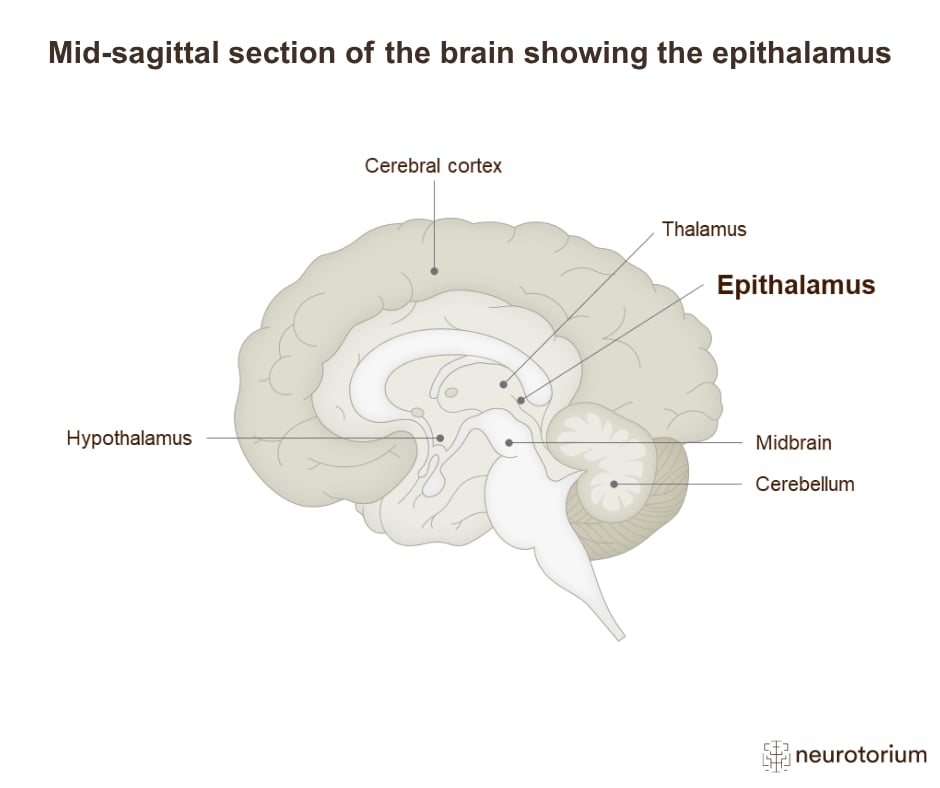
The epithalamus is located at the posterior aspect of the thalamus, near the midline of the brain-1 The epithalamus includes key structures, such as the pineal gland and the habenular nuclei1. The epithalamus plays a central role in regulation of circadian rhythm (largely due to the actions of melatonin secreted from the pineal gland),2 which has been linked to many biological processes, including sleep onset,3 core body temperature regulation,4 and seasonal rhythms5. Given its role of the pineal gland in synthesising melatonin, the epithalamus, particularly the pineal gland, is central to sleep regulation.1 Dysfunction in melatonin production can lead to insomnia or other sleep-related issues2
Related content
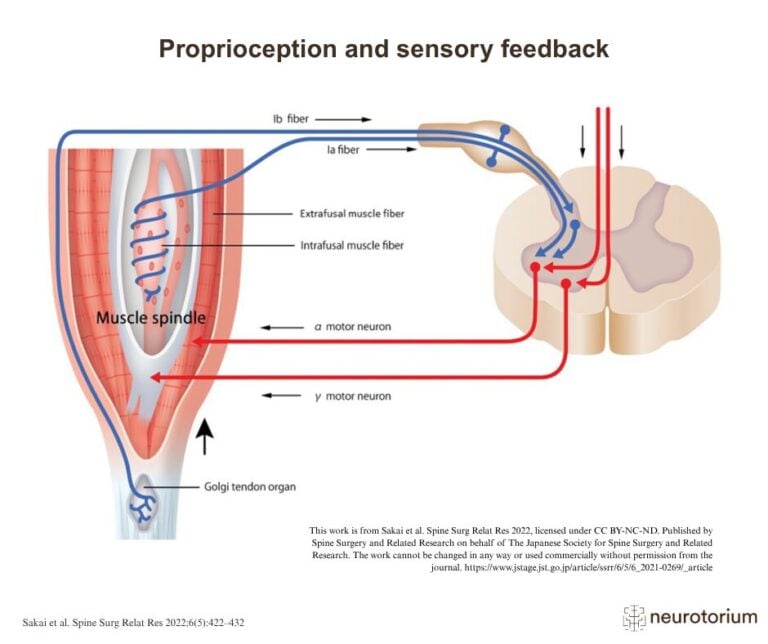
Controlled movement relies on sensory feedback, particularly proprioception (the sense of body position in space and movement).
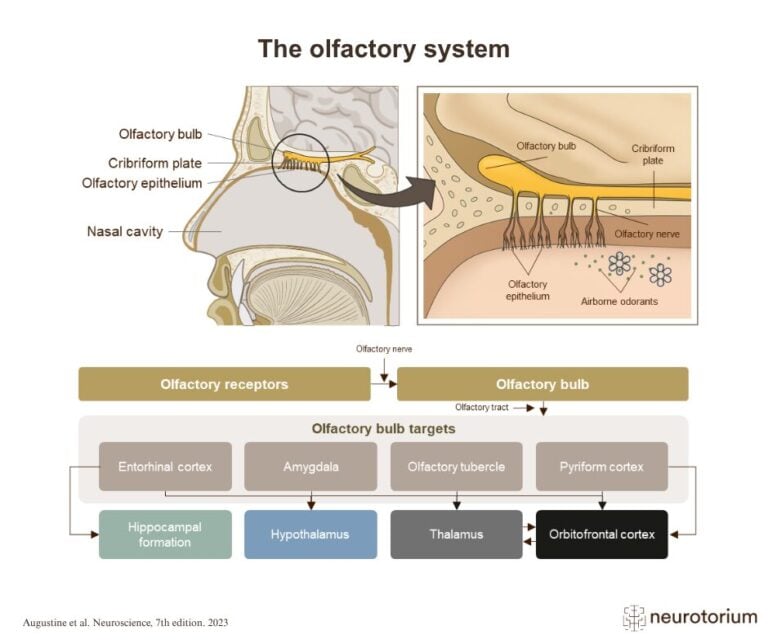
The olfactory system detects airborne odor molecules in the nasal cavity and transmits this information to the olfactory bulb. From there, signals are relayed to several brain regions involved in smell perception, memory, emotion, and behaviour.
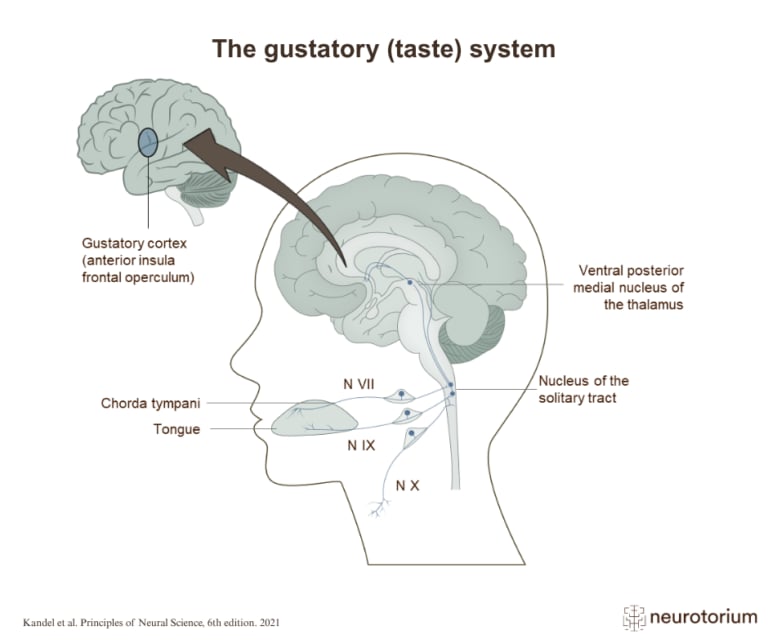
The gustatory system detects taste stimuli on the tongue and relays this information through brainstem and thalamic pathways to the gustatory cortex.