

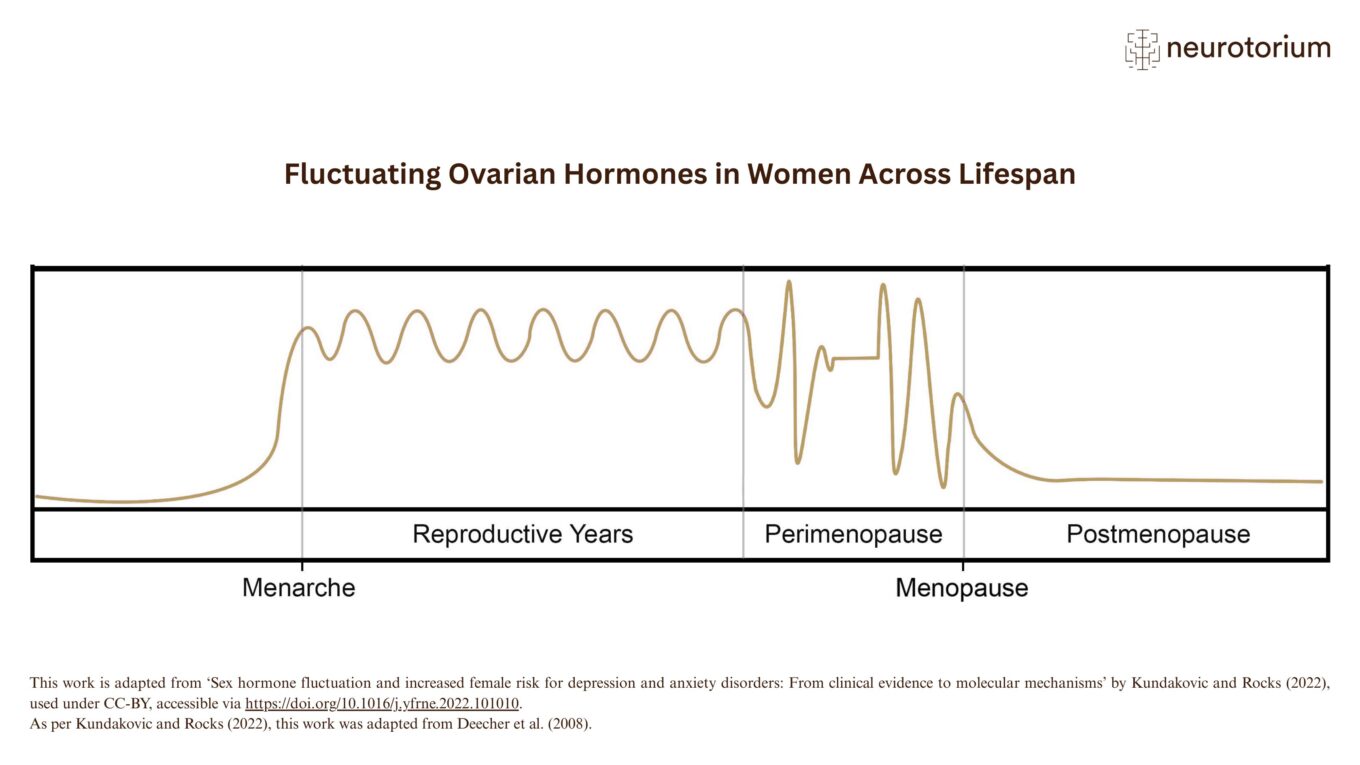
A simplified illustration of ovarian sex steroid fluctuations across the female lifespan, from menarche (i.e., the first menstrual cycle) to menopause. For individuals with periods, menopause is typically marked by the final menstrual period, usually diagnosed after 12 months of amenorrhoea (i.e., the absence of menstruation). Perimenopause is the transitional phase during which the first signs of ovarian function decline become apparent. It is a dynamic period characterised by changes in endocrine function, ovarian reserve, and menstrual cycle regularity.
Although STRAW defines perimenopause as a broader term than menopausal transition — extending to include the first year after the final menstrual period — the two terms are frequently used interchangeably in the literature.
Related content

Summary of the physiological changes associated with reproductive aging and the potential links between the menopausal transition and mental health conditions.
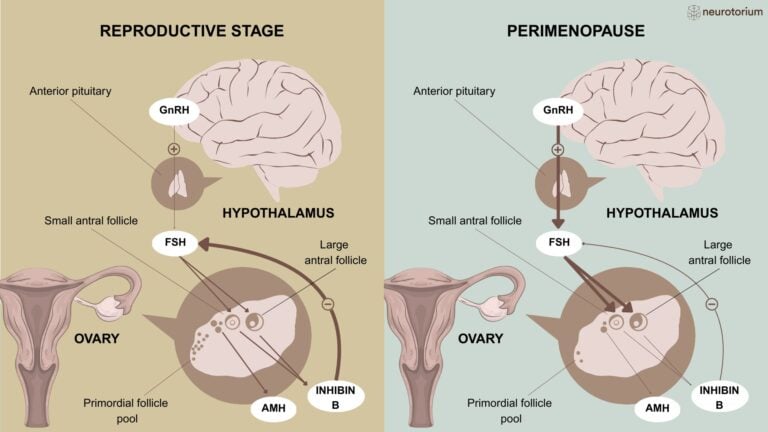
Physiological changes in endocrine function from the reproductive stage to perimenopause

In this video, Professor Christoph Correll, Chair of the Neurotorium Editorial Board, introduces Neurotorium.