

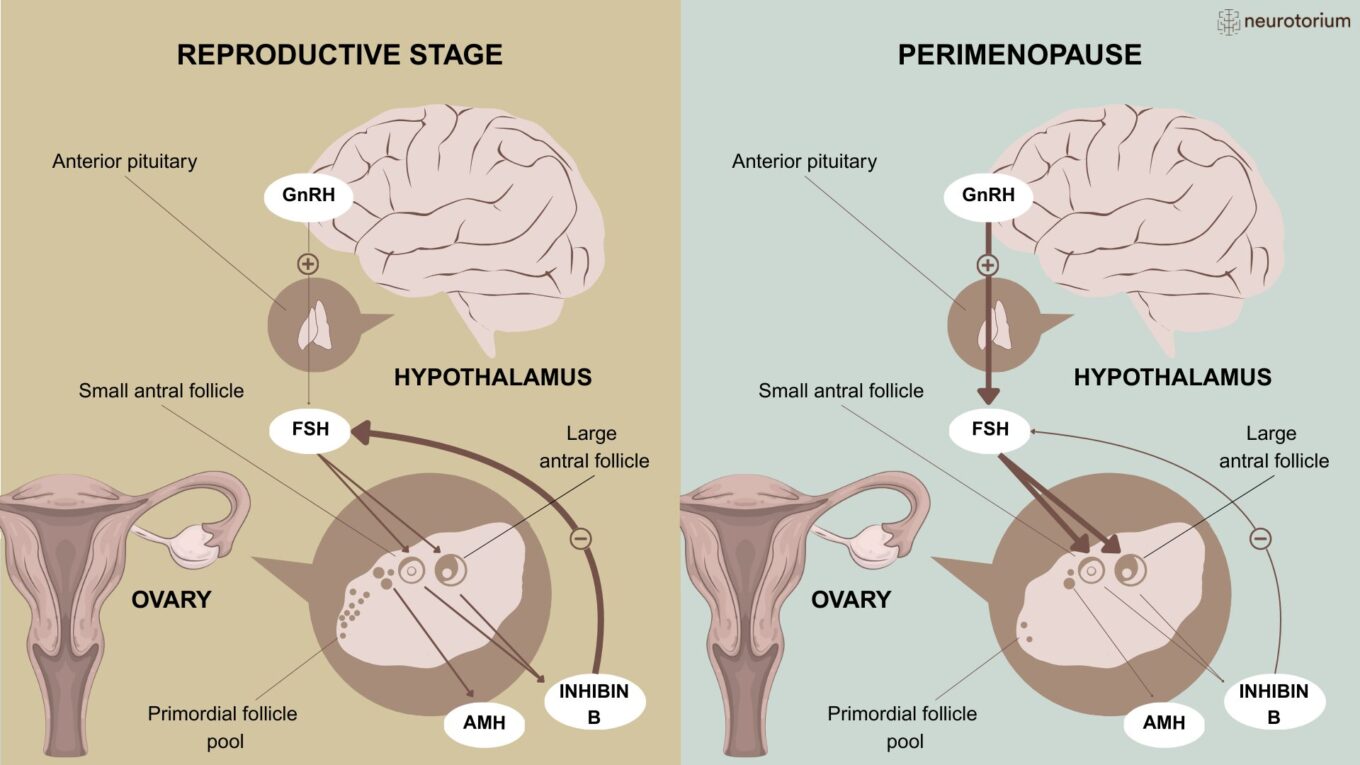
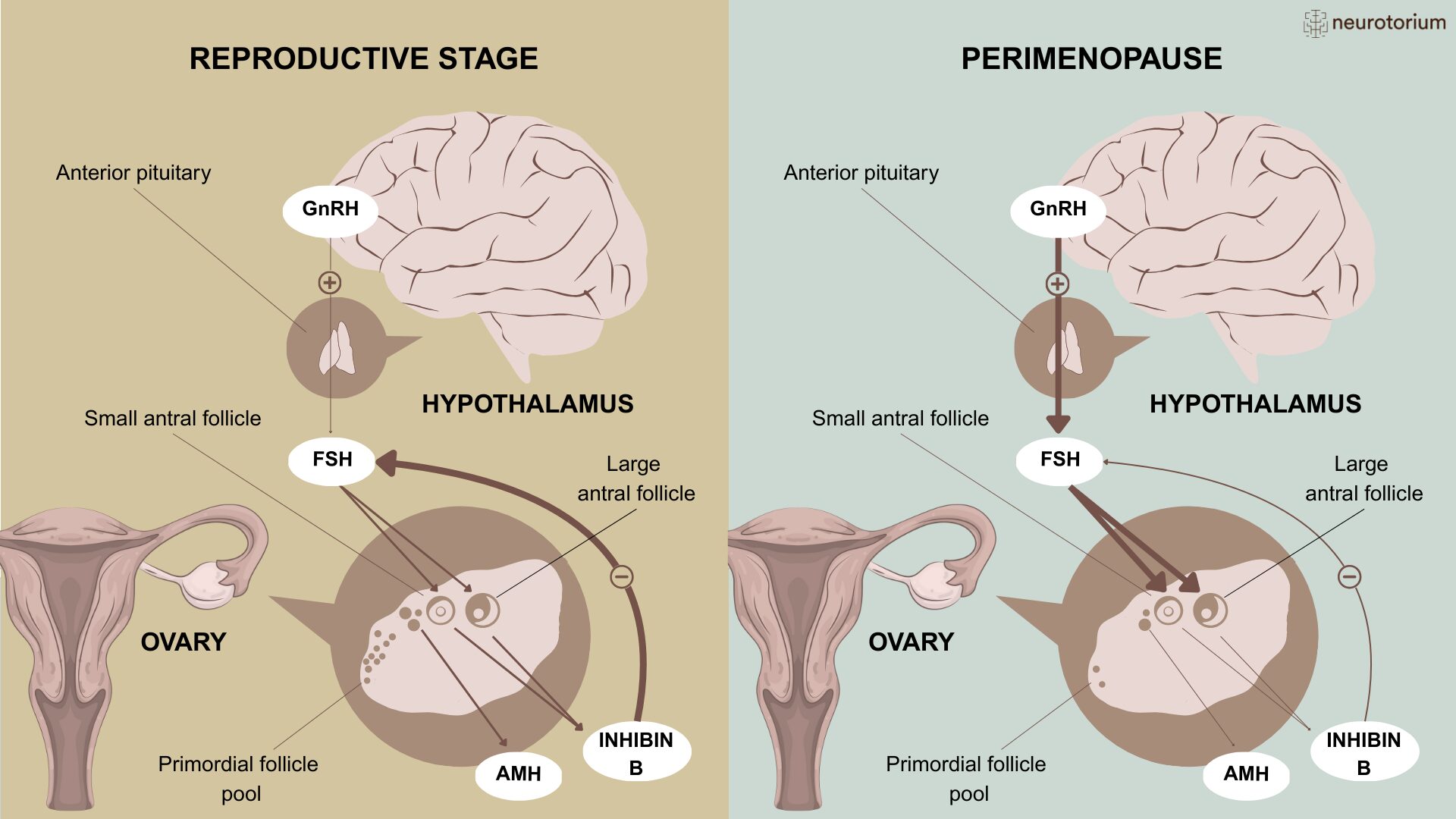
A simplified illustration of the physiological changes in the endocrine function during the perimenopause. The follicle-stimulating hormone (FSH) is produced by the anterior pituitary in response to the gonadotropin-releasing hormone (GnRH) from the hypothalamus and released into the peripheral circulation.
Left Panel
During the reproductive years, FSH stimulates the maturation of ovarian follicles in the follicular phase of the menstrual cycle. The dominant follicle, in turn, secretes oestradiol and inhibin B, suppressing the secretion of FSH via negative feedback (thick lines on the left panel ). The Anti-Müllerian hormone (AMH) produced by small growing ovarian follicles restrains the ovarian effects of FSH, and its plasma levels are correlated with the size of the ovarian reserve.
Right Panel
The ovarian reserve declines from about 250 thousand resting follicles at the time of puberty to less than 1000 by the final menstrual period. The steep decline in the ovarian reserve seen in the late reproductive stages/menopausal transition leads to a reduction of the concentrations of AMH and inhibin B, with loss of negative feedback on FSH (fine line on the right panel ) and therefore increased release of FSH from the pituitary (bold arrows on right panel).
Related content

Summary of the physiological changes associated with reproductive aging and the potential links between the menopausal transition and mental health conditions.
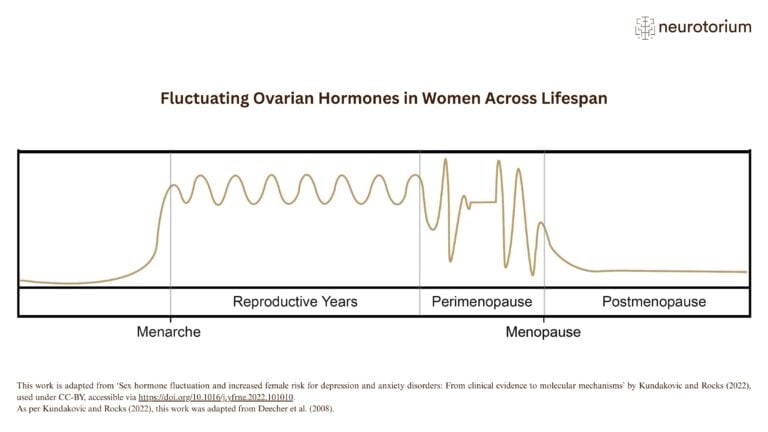
This illustration shows key phases of ovarian hormone fluctuation across the female lifespan, from menarche to menopause.
In this video, Professor Christoph Correll, Chair of the Neurotorium Editorial Board, introduces Neurotorium.