

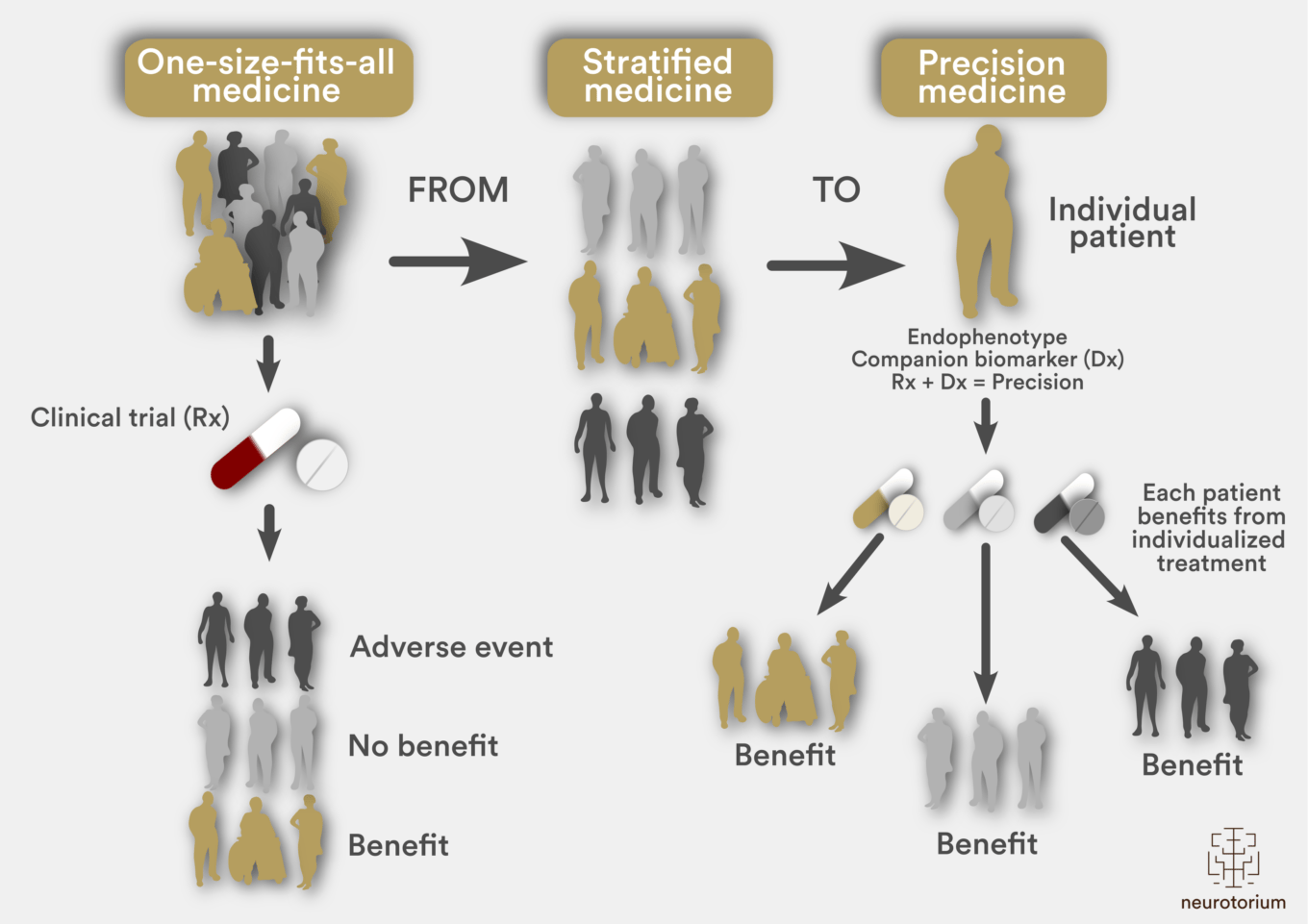
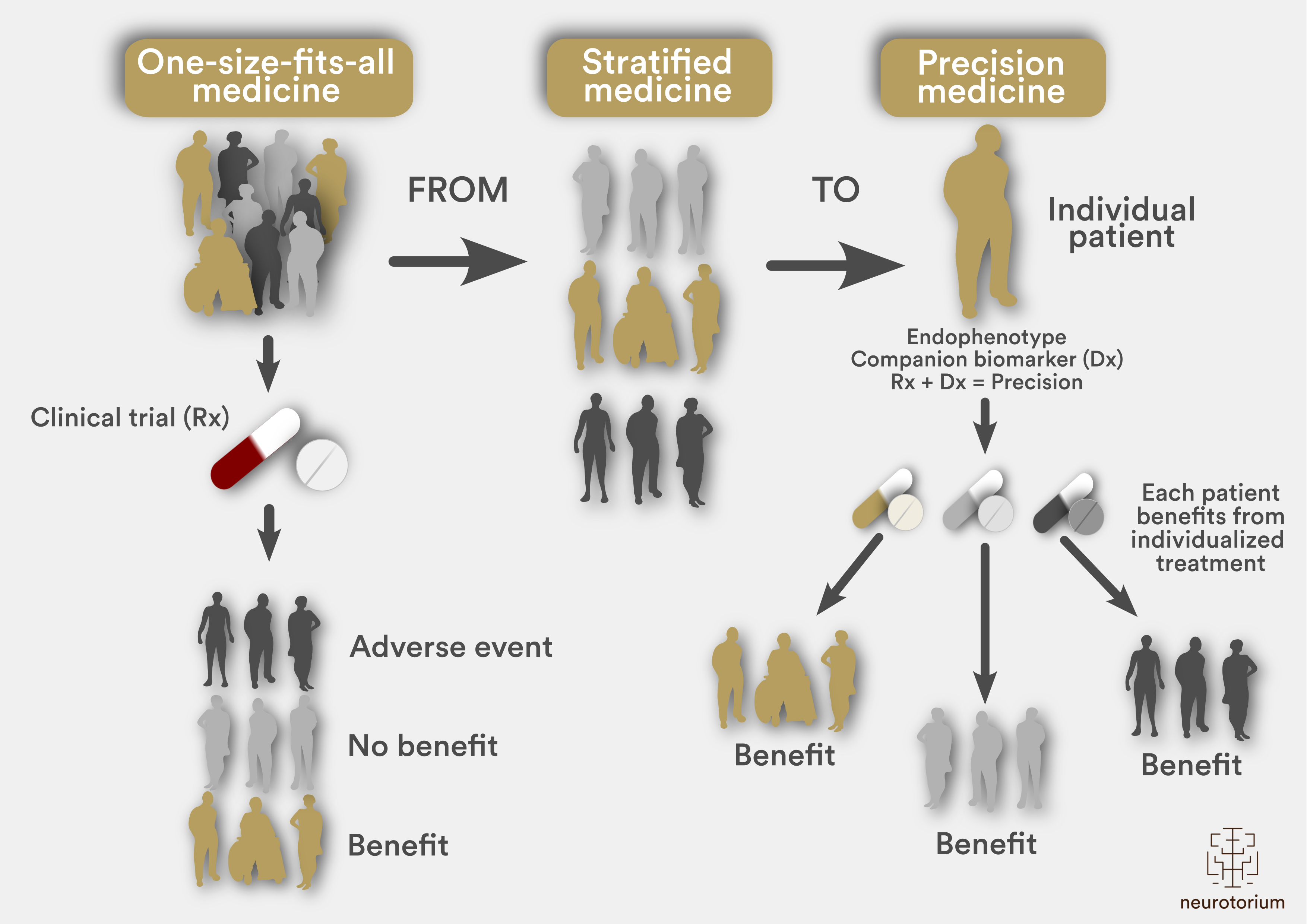
The use of a single treatment in heterogeneous populations has proved problematic in clinical trials undertaken in patients with neurodegenerative diseases. This one-size-fits-all approach (left) leads to a scenario whereby some patients may benefit from therapy but others do not. Stratified medicine (centre) improves on the approach by enabling patients to be separated into more homogeneous groups based on demographics, clinical phenotype and molecular subtypes. More recent advances in technology are enabling a transition to a precision medicine paradigm (right), incorporating phenotypic and genotypic data to guide individualized therapy.
Related content
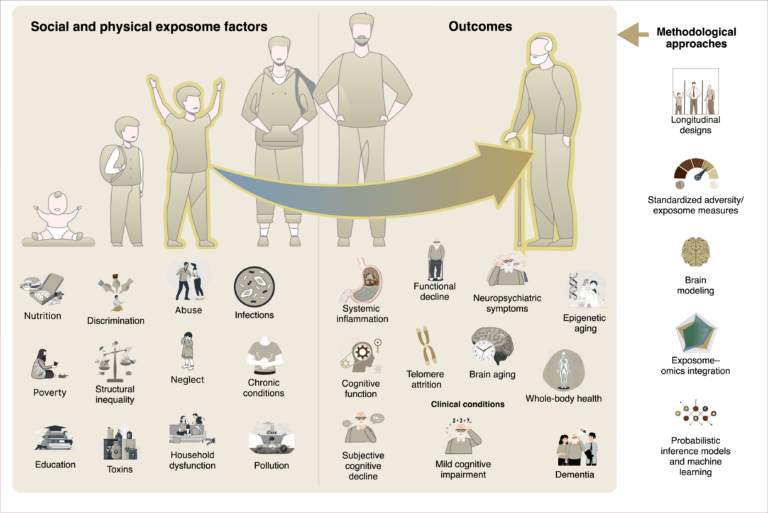
Social and physical exposome factors—like poverty, pollution, and inequality—accumulate over time, shaping biological aging and cognitive decline. Through inflammation and cellular stress, these exposures drive neurodegeneration, highlighting the need for longitudinal, integrative research.

The exposome reframes dementia as the product of cumulative physical and social exposures-like pollution, nutrition, and inequality-across life. These factors shape brain aging through inflammation and epigenetic change. Lifespan, global studies are key to equitable dementia prevention.
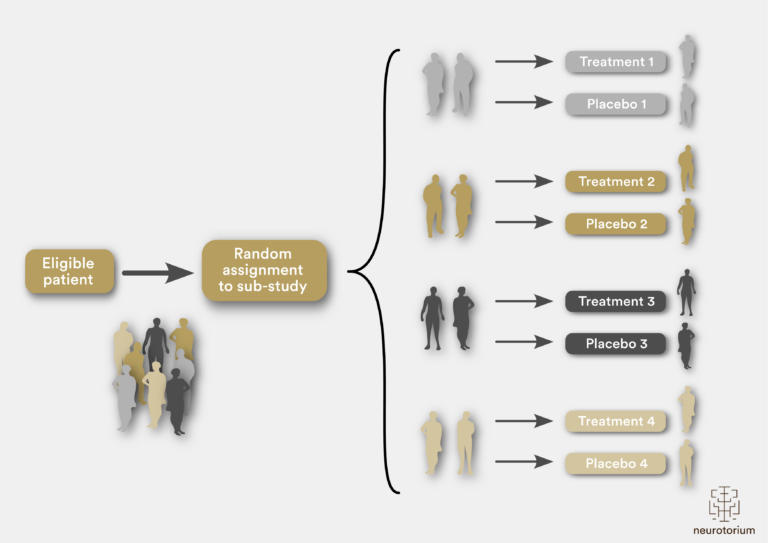
Protocol for a multi-arm, multi-stage platform trial, whereby patients are randomly assigned to one of four sub-studies and then further randomly assigned to receive active treatment or placebo. Such a protocol determines patient selection and outcome measures, incorporating biomarkers across the different sub-studies.