

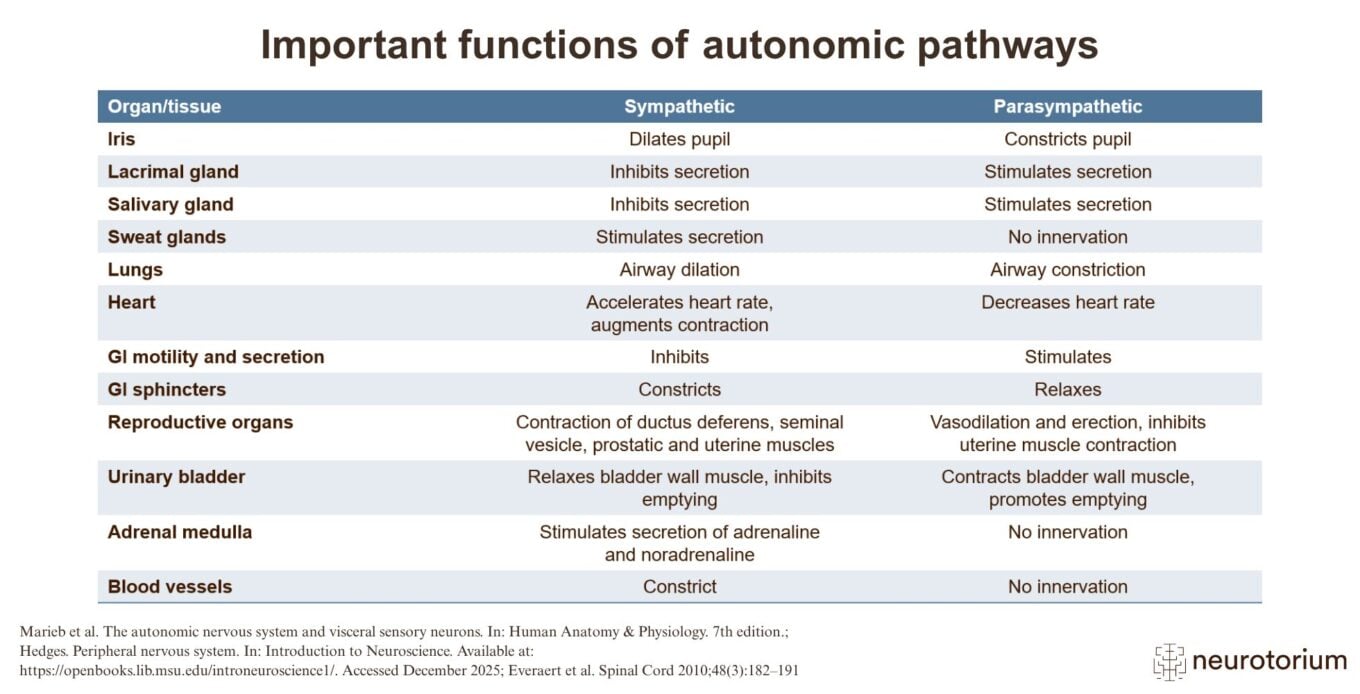
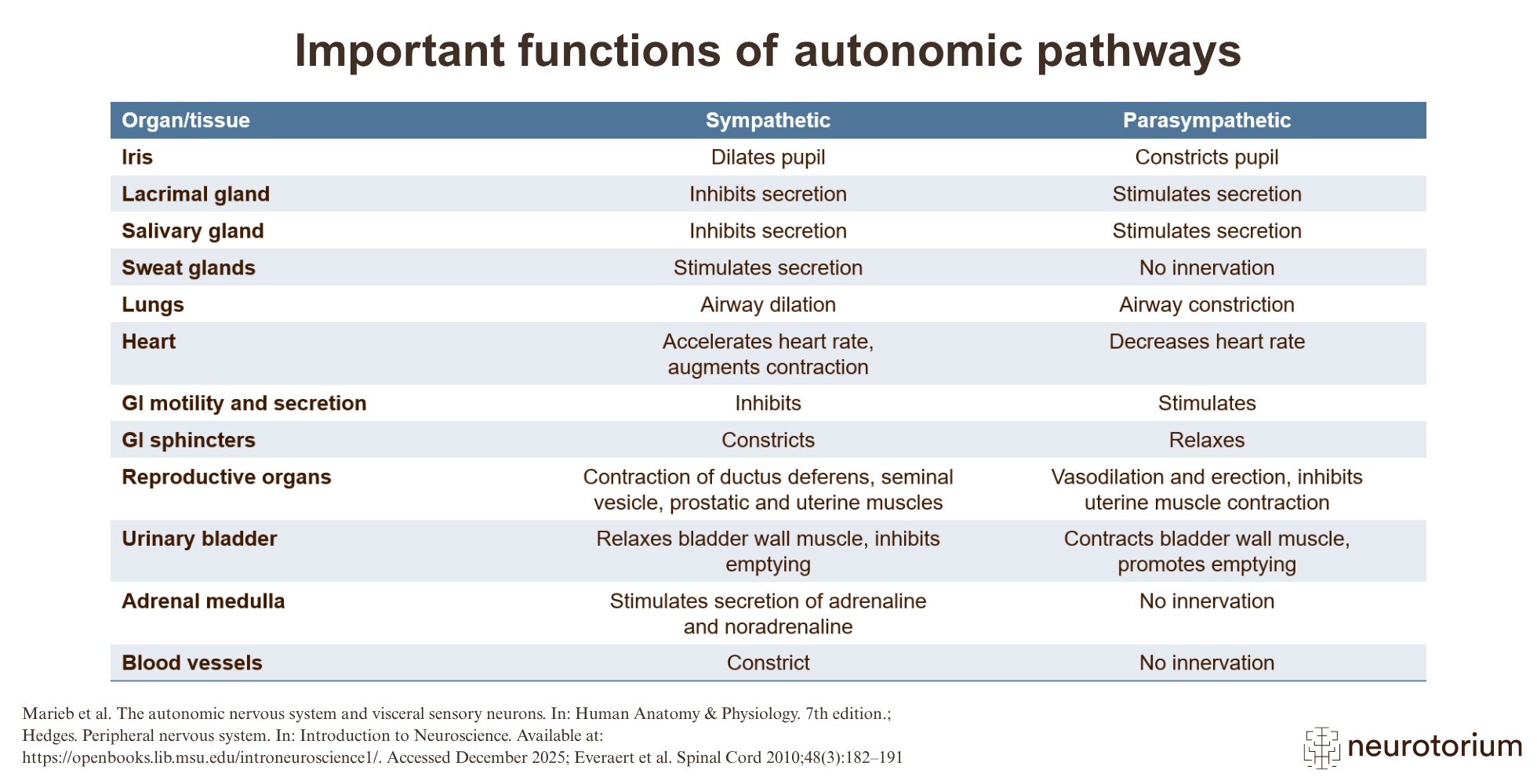
The autonomic nervous system regulates involuntary bodily functions through two complementary divisions: the sympathetic nervous system and the parasympathetic nervous system. The sympathetic division prepares the body for activity and stress by increasing heart rate, dilating the pupils and airways, reducing gastrointestinal activity, and inhibiting bladder emptying. It also stimulates sweating and the release of adrenaline and noradrenaline.1-3
Related content
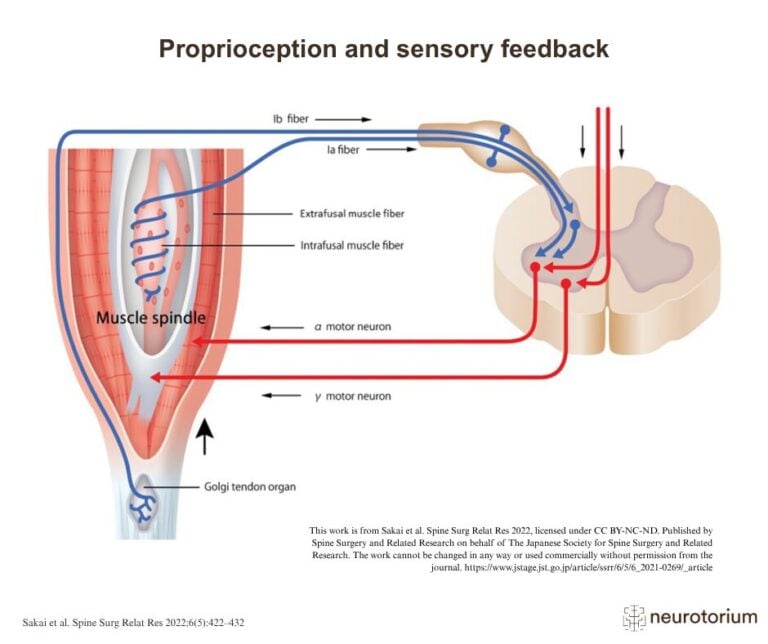
Controlled movement relies on sensory feedback, particularly proprioception (the sense of body position in space and movement).
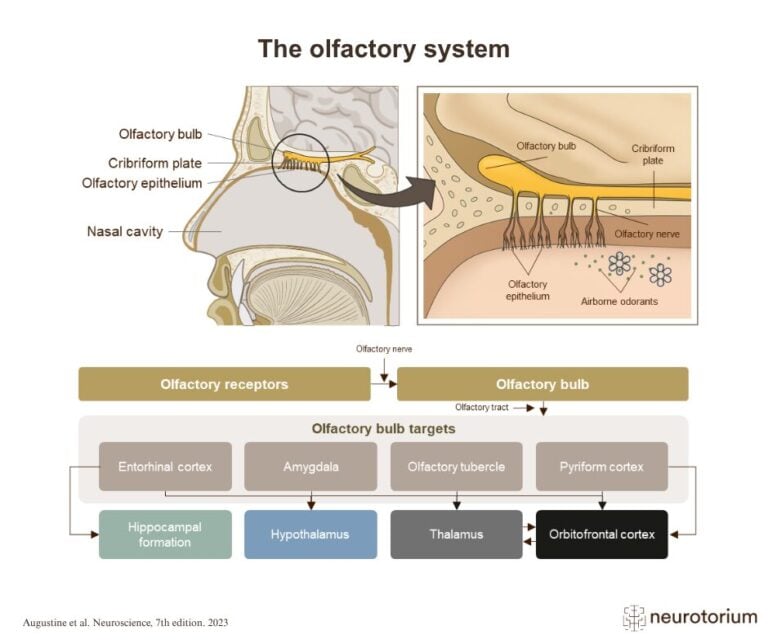
The olfactory system detects airborne odor molecules in the nasal cavity and transmits this information to the olfactory bulb. From there, signals are relayed to several brain regions involved in smell perception, memory, emotion, and behaviour.
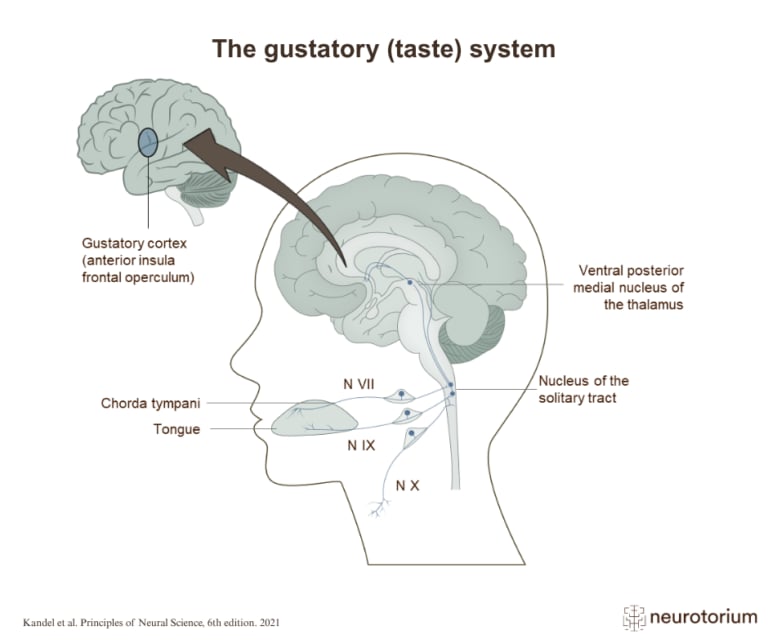
The gustatory system detects taste stimuli on the tongue and relays this information through brainstem and thalamic pathways to the gustatory cortex.