

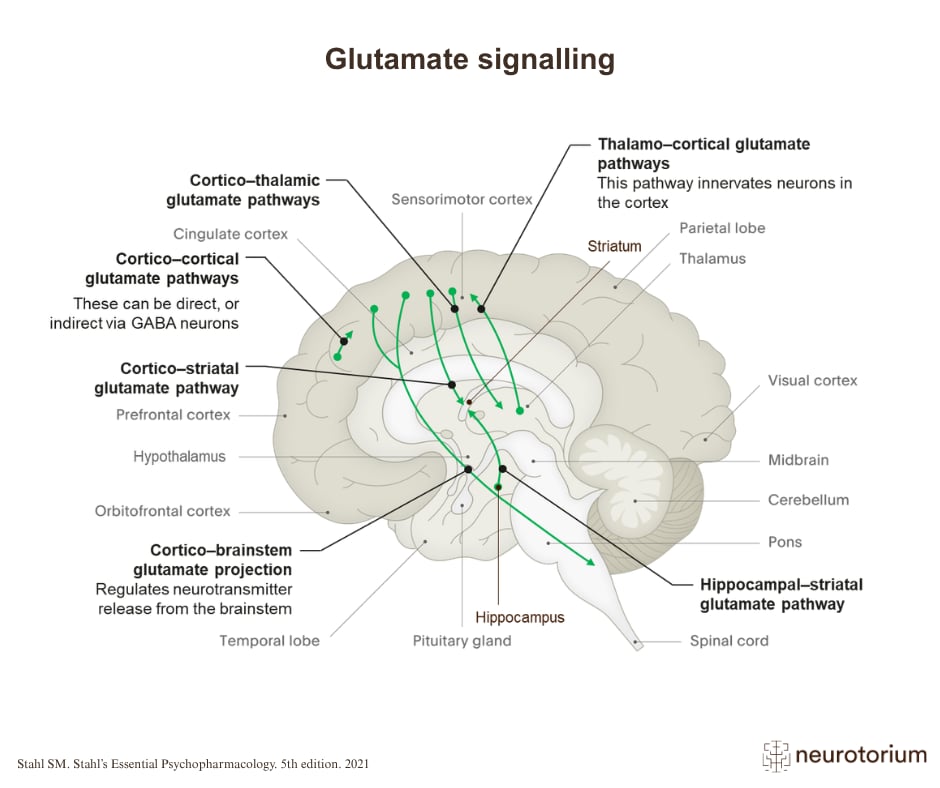
Glutamate is the principal excitatory neurotransmitter in the CNS.1,2 Glutamate plays key roles in nearly every function of the brain3,4. Nearly all excitatory neurons in the CNS are glutamatergic – more than half of the neurons in the brain2,5,6. It is noteworthy, though, that high concentrations of glutamate are neurotoxic, capable of triggering excitotoxicity6. There are three types of receptor to which glutamate can bind (named after the synthetic agonists that activate them), each of which has slightly different properties:3
- NMDA (N-methyl-d-aspartate)
- AMPA (α-amino-3-hydroxyl-5-methyl-4-isoxazole-propionate)
- kainate (kainic acid)
Related content
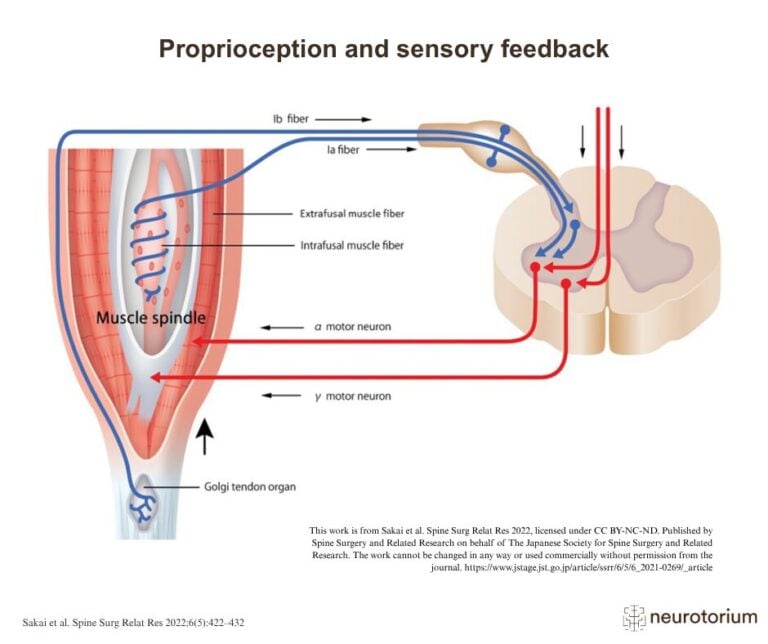
Controlled movement relies on sensory feedback, particularly proprioception (the sense of body position in space and movement).
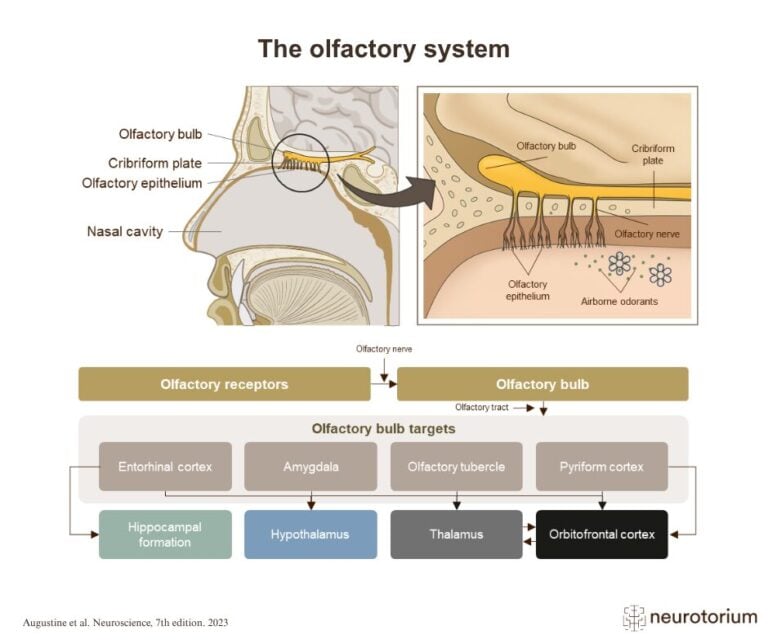
The olfactory system detects airborne odor molecules in the nasal cavity and transmits this information to the olfactory bulb. From there, signals are relayed to several brain regions involved in smell perception, memory, emotion, and behaviour.
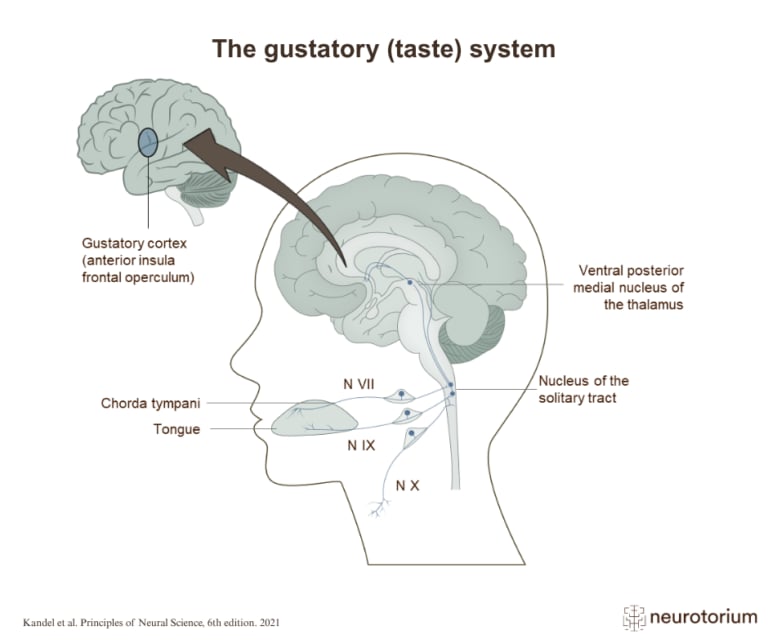
The gustatory system detects taste stimuli on the tongue and relays this information through brainstem and thalamic pathways to the gustatory cortex.