

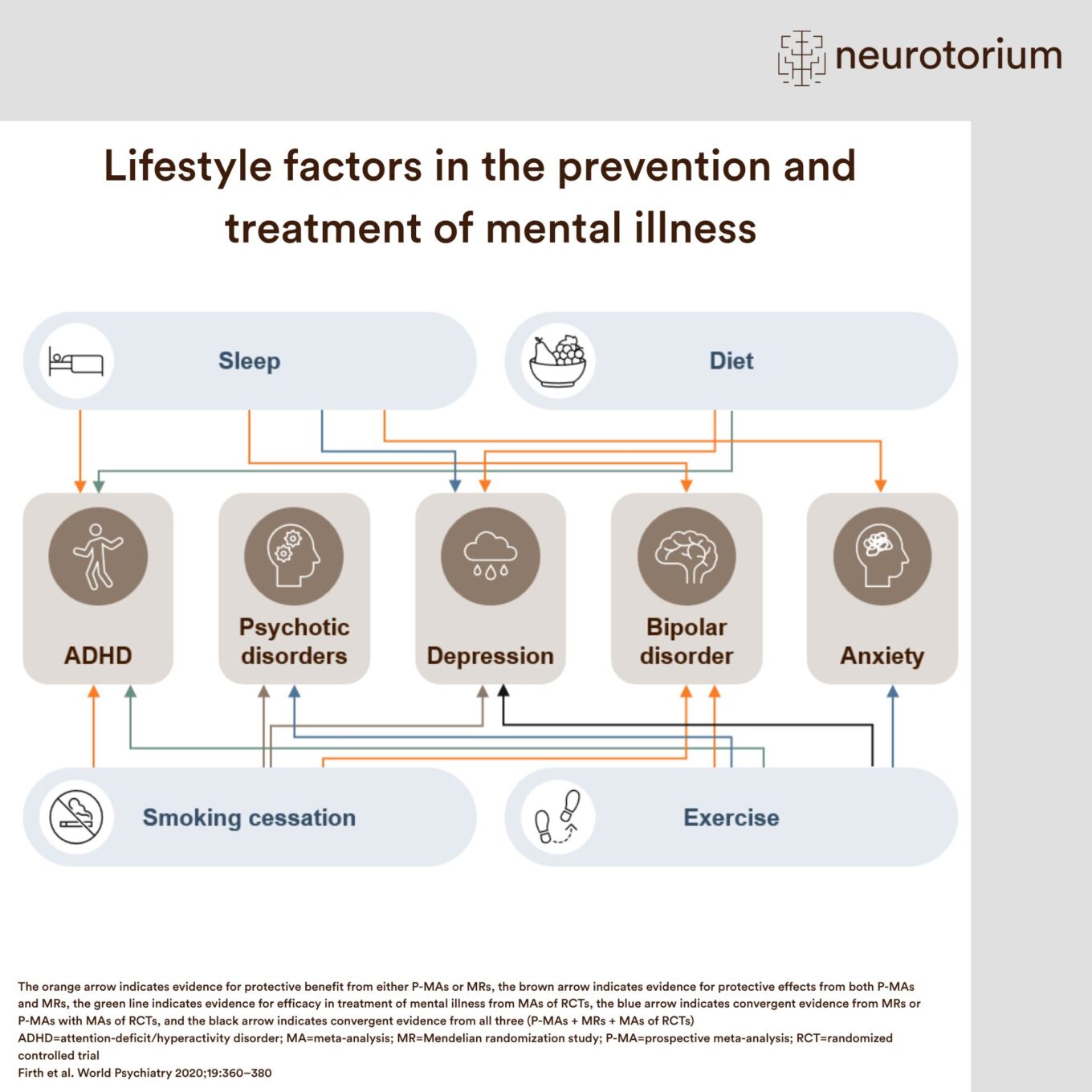
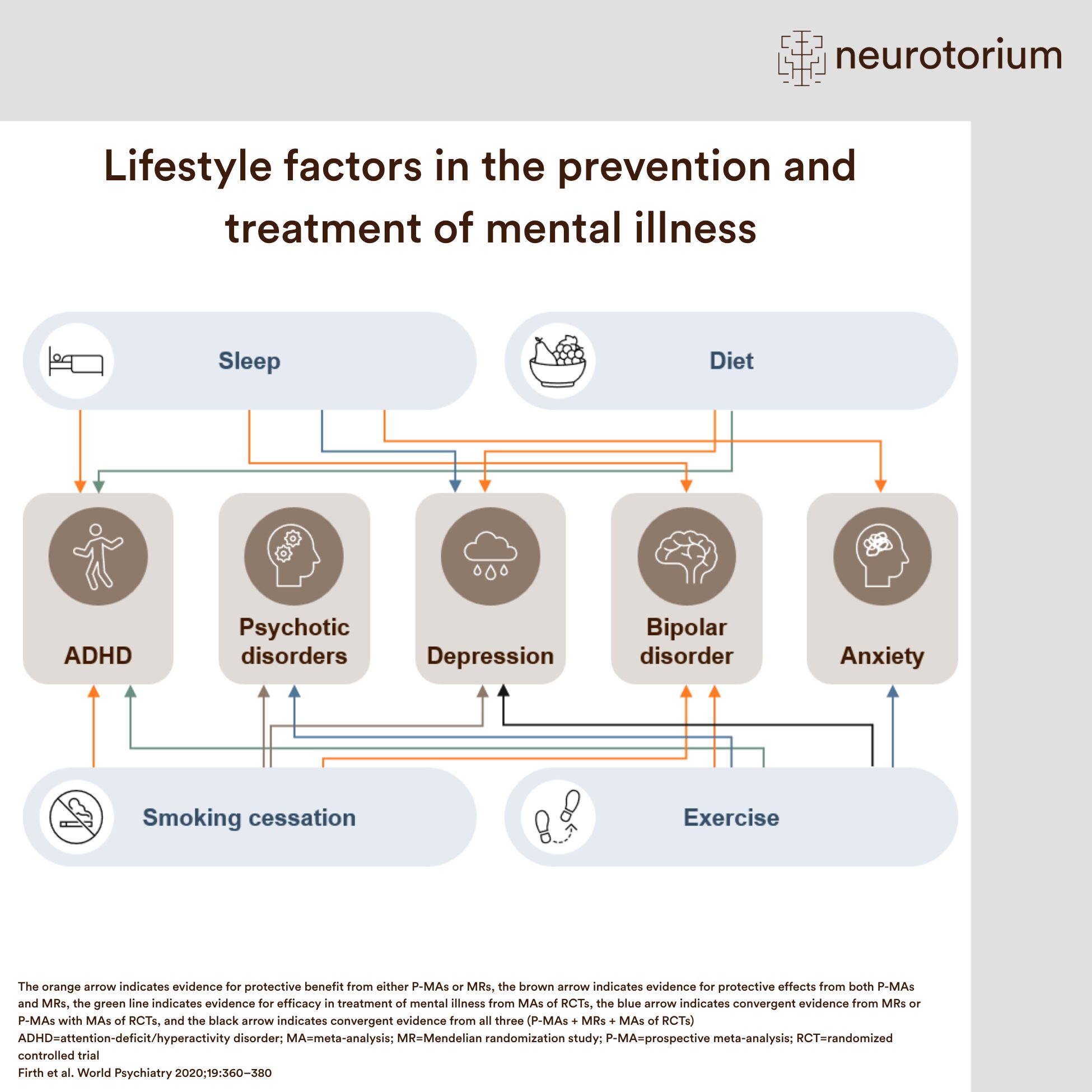
Health behaviors may play an important role in the prevention and treatment of mental illness. Physical activity shows convergent benefits for both prevention and treatment across multiple mental disorders. Tobacco smoking appears to play a causal role in the onset of both common and severe mental illnesses. Clearer causal links between diet and mental illness risk are needed to guide dietary interventions in care. Poor sleep is a risk factor for mental illness, though further research is required to clarify its bidirectional nature and the value of non‑pharmacological
sleep interventions.1
The orange arrow indicates evidence for protective benefit from either P-MAs or MRs, the brown arrow indicates evidence for protective effects from both P-MAs and MRs, the green line indicates evidence for efficacy in treatment of mental illness from MAs of RCTs, the blue arrow indicates convergent evidence from MRs or P-MAs with MAs of RCTs, and the black arrow indicates convergent evidence from all three (P-MAs + MRs + MAs of RCTs).
ADHD=attention-deficit/hyperactivity disorder; MA=meta-analysis; MR=Mendelian randomization study; P-MA=prospective meta-analysis; RCT=randomized controlled trial
Related content
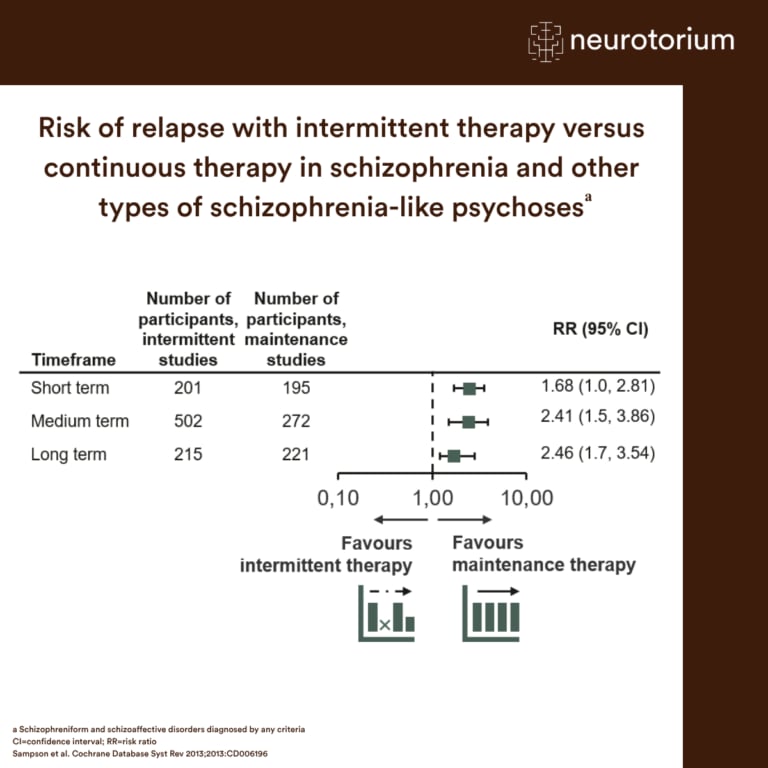
Continuous maintenance therapy is associated with a lower risk of relapse than intermittent treatment, supporting ongoing treatment strategies in schizophrenia and related psychotic disorders.
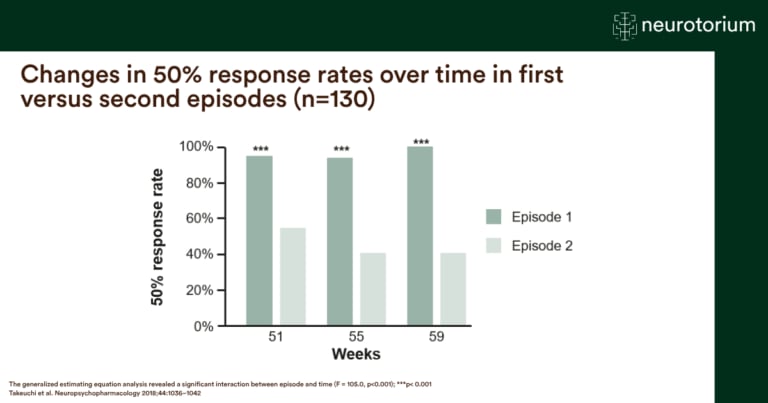
Treatment response tends to be higher during a first episode than during subsequent episodes, emphasizing the importance of early intervention and effective management.
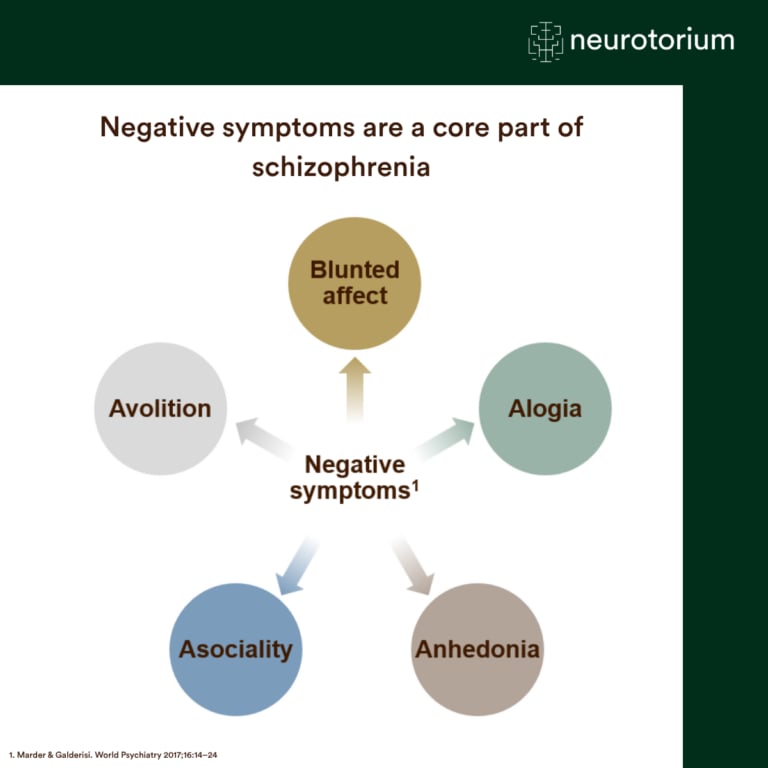
Negative symptoms are a core feature of schizophrenia and can have a profound impact on functioning, social relationships, and quality of life.